


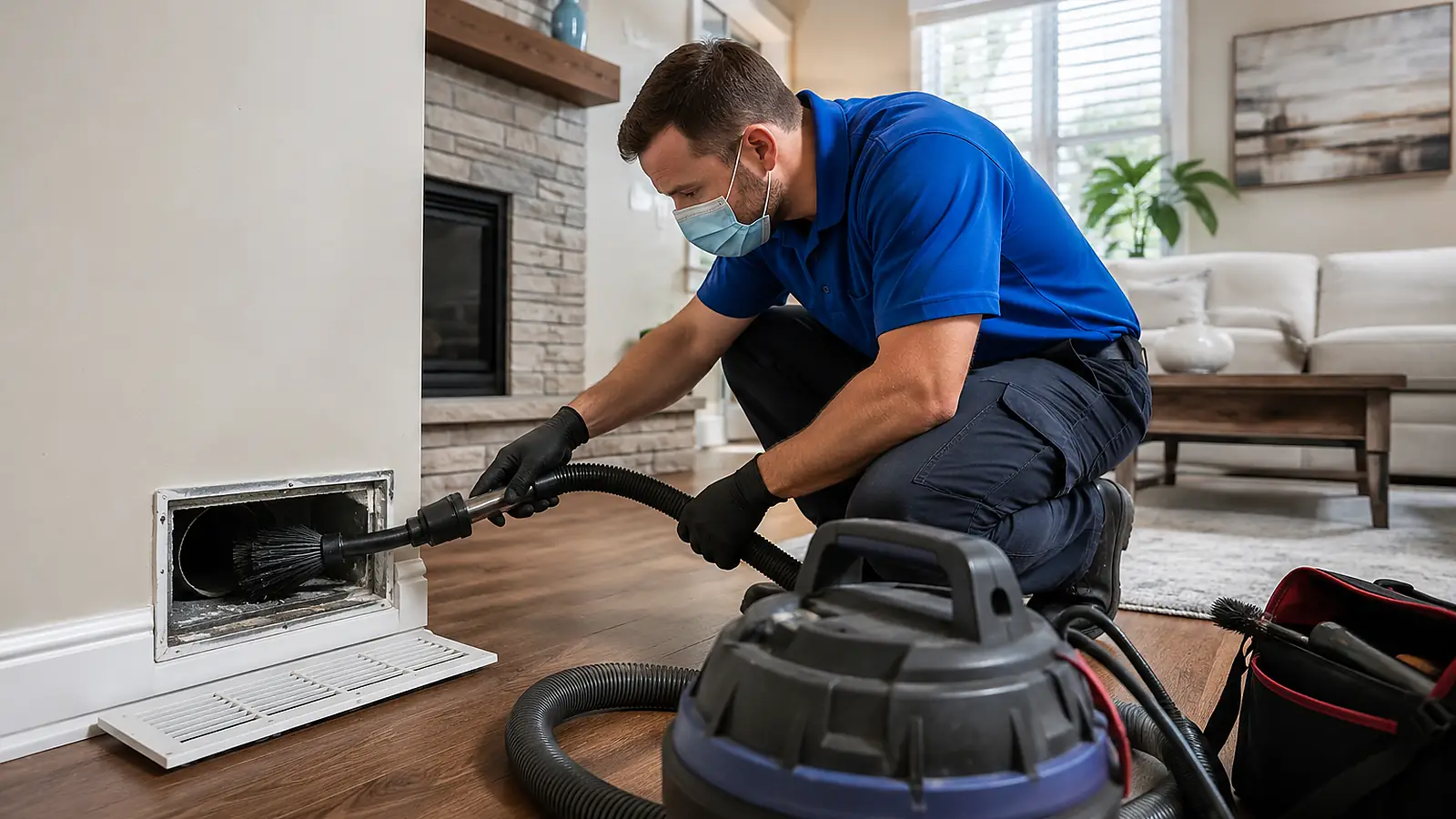
Late summer creates a difficult maintenance overlap. Ragweed pollen moves indoors on clothing, pets, shoes, and outdoor air. Sandhills homes may also carry dust, sand, red clay, pet dander, and debris left from months of open doors and heavy cooling-system use.
Then windows close, heating begins, and indoor air circulates through the same rooms for longer periods. Carpet, rugs, upholstery, vents, and other surfaces can all hold material that has accumulated throughout the year.
That does not mean every property needs air duct sanitizing. In many situations, filter maintenance, surface cleaning, or professional duct cleaning is the more appropriate response. Sanitizing should address a defined concern, not serve as an automatic seasonal add-on.
Start by Separating Cleaning From Sanitizing
The correct decision depends on what is inside the system and what needs to be removed.
Air duct cleaning removes physical buildup
Professional air duct cleaning focuses on dust, dirt, pollen, pet dander, and debris in supply ducts, return ducts, vents, and registers. This is the logical starting point when you can see accumulation, particles repeatedly appear near registers, or dust returns soon after ordinary housekeeping.
Cleaning is a source-removal process. Sanitizing is not a substitute for it. Applying a treatment over dust and debris does not remove the material underneath.
Sanitizing adds a targeted treatment
Sanitizing or deodorizing may follow cleaning when an inspection identifies an appropriate reason for treatment. Examples may include a persistent duct-related odor or a specific microbial concern that has been properly evaluated.
Chemical use inside HVAC systems deserves careful consideration. The EPA’s guidance on disinfectants and sanitizers in HVAC systems explains that product labels must specifically support the intended HVAC application. Ask what product is proposed, where it will be applied, and why it is needed.
At Williams Carpet Care, we clean supply and return ducts, vents, registers, grilles, coils, fans, and blowers. We also offer sanitizing and deodorizing treatments when they fit the condition of the system.
Call 910-476-5459 to discuss the buildup, odors, pet activity, or recurring dust you have noticed.
Does Ragweed Season Automatically Justify Sanitizing?
Seasonal pollen raises the need for inspection and maintenance, but it does not prove that chemical treatment is necessary.
Ragweed pollen can enter through doors, clothing, pet fur, footwear, and outdoor-air pathways. Once inside, it may settle on carpets, area rugs, upholstery, hard floors, registers, and other horizontal surfaces.
Your HVAC system can move loose particles between spaces, but the presence of pollen in the region does not tell you how much material is inside your ductwork. The better decision comes from evidence inside your property.
Look for:
- Dust or debris visible beyond the face of a register
- Fine residue that quickly returns around vents
- Particles released when the HVAC system starts
- A stale or unusual odor linked to system operation
- Heavy pet shedding near return-air pathways
- Recent remodeling or construction dust
- Moisture history involving the HVAC system
A light coating on a register may only require routine cleaning. Widespread buildup deeper inside the system may support professional duct cleaning.
Sanitizing deserves consideration only after the physical material and the reason for treatment have been identified.
The same condition-based approach applies when deciding whether to clean air ducts before full-time seasonal HVAC use.
Closed Windows Change the Indoor Maintenance Picture
When outdoor ventilation decreases, unresolved dust and odors can become more noticeable.
Closed-window season does not create contamination by itself. It changes how you experience existing indoor conditions. Cooking odors, pet smells, stale fabrics, tracked-in soil, and dust may linger because the property receives less outdoor air.
This is why ductwork should not be evaluated in isolation. A dusty room may be affected by loaded filters, carpet traffic lanes, upholstered furniture, pet bedding, area rugs, or ordinary surface dust.
Mud, grass, sand, and red clay brought indoors during wet periods can also break down into fine material that spreads through high-traffic spaces.
A whole-property seasonal reset may include:
- Checking the HVAC filter and replacing it when needed
- Vacuuming registers and accessible return grilles
- Damp-dusting hard surfaces
- Cleaning carpet, rugs, upholstery, tile, and grout as conditions require
- Addressing pet stains and odor sources
- Inspecting ducts when dust or odors return with system operation
The grass pollen home-cleaning guide explains how flooring, fabrics, pets, vents, and entryways form one connected maintenance picture.
A seasonal carpet-cleaning checklist can also help you identify where tracked-in material has settled.
Choosing a Response Plan That Fits the Damage Profile
Match the service to the evidence instead of purchasing the broadest treatment by default.
Questions that can uncover gaps in the plan
- Is the concern limited to dusty register covers, or is buildup visible deeper inside?
- Does the odor appear only when the HVAC system runs?
- Will debris be physically removed before any sanitizing treatment?
- What product is proposed, and is its label appropriate for the intended surface and use?
- Could the filter, coil, drain, moisture source, carpet, upholstery, or another surface be causing the problem?
Common signs the situation is being under-assessed
Be cautious when sanitizing is recommended without an inspection, a reason, or a cleaning plan.
A treatment should not be presented as a cure for every odor, dust complaint, or seasonal concern. Visible moisture, suspected mold, pest activity, damaged duct material, or hazardous contamination may require evaluation by an appropriately qualified specialist.
What to expect from a properly managed job
The scope should distinguish inspection, physical cleaning, optional treatment, and post-service review. You should understand which components are included and why.
Before-and-after observations should relate to accessible conditions rather than broad health promises.
For additional timing context, review how often ducts may need cleaning and the limits of DIY HVAC duct cleaning.
Prepare the Property Before the Heating Season
Simple maintenance can reduce incoming debris and clarify whether professional duct service is warranted.
Check filters monthly during periods of heavy HVAC use. ENERGY STAR heating and cooling guidance recommends regular filter checks because a dirty filter can restrict airflow and allow more dust to collect within the system.
Keep supply registers and return grilles unobstructed. Vacuum entryways more frequently during high-pollen periods. Use walk-off mats to capture soil before it reaches carpet and rugs. Wipe pets after outdoor activity when pollen and dust are heavy.
For commercial interiors, rental properties, and mixed-use spaces, document recurring complaints by room and note whether they coincide with HVAC operation. This helps separate a system-wide concern from localized carpet, upholstery, odor, or housekeeping issues.
Make the Decision Before the Windows Stay Closed
An early inspection leaves room to choose cleaning, treatment, or routine maintenance based on actual conditions.
You should not sanitize air ducts solely because ragweed season is approaching. Start with the filter, accessible registers, recent property history, odors, dust patterns, pets, moisture, and the condition of surrounding surfaces.
When buildup extends into the duct system, professional cleaning may be appropriate. When a defined odor or microbial concern remains after source removal, a properly selected treatment may become part of the plan.
When neither condition exists, routine filter and surface maintenance may be enough.
Schedule an assessment: Williams Carpet Care provides residential and commercial air duct cleaning alongside carpet and rug cleaning, upholstery cleaning, odor treatment, tile and grout cleaning, and dryer vent cleaning.
Call 910-476-5459 or visit our home-services website to discuss the right seasonal cleaning plan for your property.
Frequently Asked Questions
No. Cleaning physically removes dust, pollen, pet dander, dirt, and debris. Sanitizing applies a treatment intended for a specific purpose. When both are appropriate, cleaning should come first so the treatment is not applied over accumulated material.
Not automatically. Use visible conditions, odors, property history, and inspection findings to guide the decision. A seasonal date alone does not prove that sanitizing is necessary or that it will solve the concern you have noticed.
Pollen can enter properties through doors, windows, clothing, pets, and outdoor-air pathways. Some particles may reach registers or ductwork. However, indoor pollen can also settle in carpet, rugs, upholstery, bedding, and entry areas.
No. A sanitizing product does not replace physical debris removal. Dust, pollen, pet hair, construction residue, and other loose material must be removed through an appropriate cleaning process before any optional treatment is considered.
Visible buildup inside accessible openings, particles released from registers, recurring dust near vents, post-renovation debris, or an odor that begins when the HVAC runs deserve attention. First, rule out a dirty filter and ordinary surface dust.
Possibly, but several sources can cause musty odors. Moisture near a coil or drain, damp carpet, upholstery, pet areas, or another hidden source may be involved. Identify and correct the source before relying on deodorizing or sanitizing.
They may belong in the same seasonal plan when they hold visible soil, pet dander, pollen, stains, or odors. Cleaning only the ducts may leave substantial buildup on soft surfaces, especially in busy family homes and pet-friendly properties.
Do not apply a household product unless its label specifically permits the intended HVAC use and surface. An unsuitable spray can create residues or expose occupants when the system operates. Ask a qualified professional to evaluate any proposed treatment.
Document the affected rooms, photograph visible buildup, check whether the odor occurs during HVAC operation, and notify the property manager. Do not open equipment panels or apply chemicals without authorization. The property’s maintenance history may guide the next step.
Facility and property managers should track complaints, inspect filters and accessible vents, and note whether dust or odors affect several spaces. Coordinate carpet, upholstery, hard-floor, and vent maintenance to reduce disruption and avoid treating unrelated problems as one issue.
No service should promise to eliminate allergies or create perfect indoor air. Pollen can enter and settle through several pathways. Duct maintenance may address one part of the indoor environment, while filtration, surface cleaning, and source control address others.
Ask why the treatment is needed, what will be cleaned first, where the product will be applied, and whether its label supports that application. You should also understand which HVAC components are included and what conditions the work is intended to address.