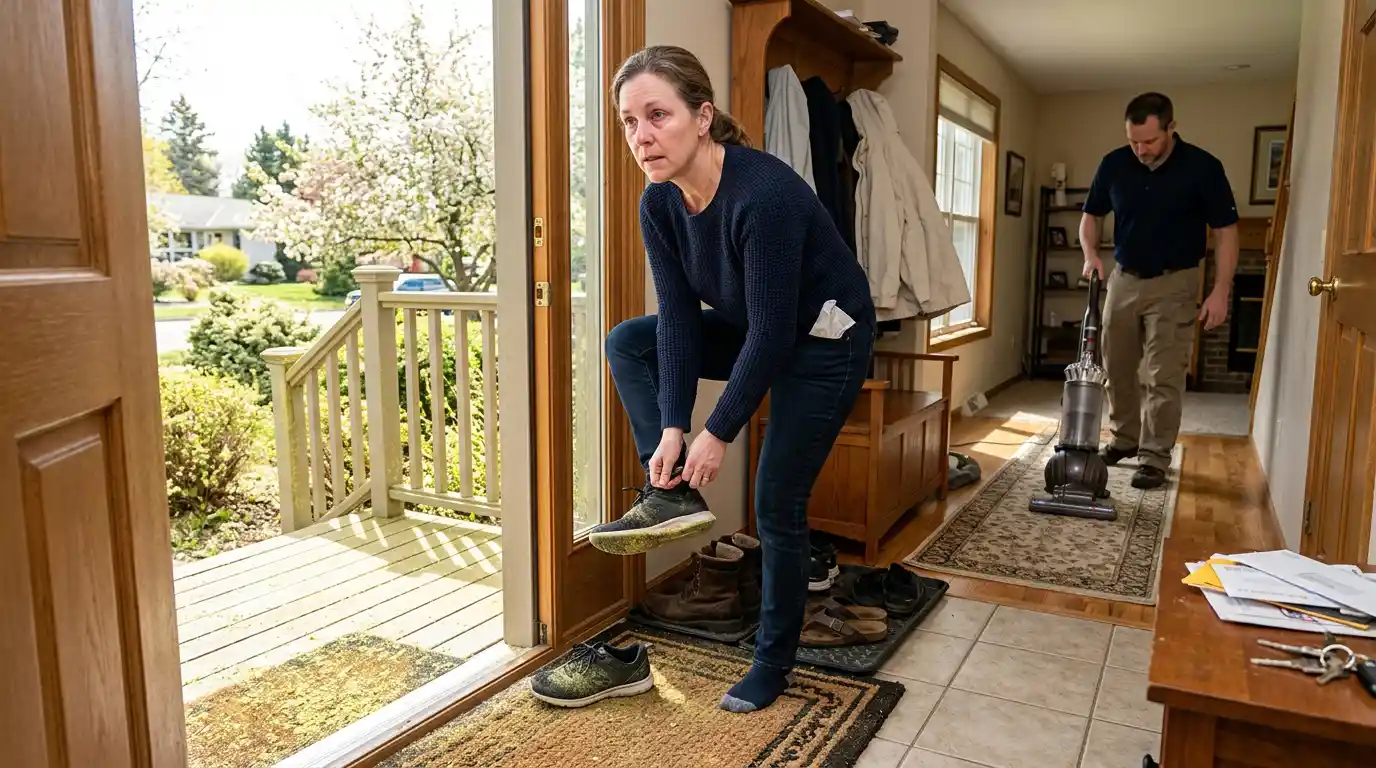
Grass pollen season does not end when you close the front door. In Sandhills homes, rental properties, offices, and mixed-use spaces, buildup often arrives as yellow dust near entries, fine grit in carpet lanes, red clay at the threshold, pet hair on furniture, and stale fabric odors when humidity rises.
Pollen rides inside on shoes, clothing, pets, open windows, and moving air, then settles into surfaces you touch and walk across every day.
Pollen enters through ordinary movement, so the best plan starts with daily entry habits.
Pollen is an airborne allergen, but it does not stay airborne forever. It lands on shoes, porch mats, pant hems, pet paws, bags, and sports gear. In rainy periods, it can mix with mud, sand, and red clay. That mixture is rough on carpet because grit works like a fine abrasive when foot traffic presses it into fibers.
Pet-friendly homes need extra attention during the grass pollen season. Fur, dander, outdoor residue, and paw traffic collect in entry paths, sofa corners, favorite nap spots, hallway turns, and rooms near the yard. Airflow can also shift fine particles from one area to another.
Grass pollen affects materials differently, depending on traffic, moisture, and use.
Wall-to-wall carpet collects foot traffic, dry soil, pet debris, spills, and pollen in layers. Regular vacuuming helps, but it mainly removes loose material near the surface. Dense piles, worn lanes, and entry areas can hold more fine debris than they show.
Area rugs and Oriental rugs need more caution. Their fibers, dyes, backing, and construction can change what cleaning method is safe. If a rug looks muted, smells stale, or still feels gritty after careful vacuuming, carpet and rug cleaning may be more appropriate than repeated DIY cleaning.
Sofas, sectionals, dining chairs, waiting-room seats, and office chairs often collect pollen without showing it right away. Fabric absorbs body oils, dust, pet hair, snack residue, and outdoor particles. Vacuum cushions slowly. Use attachments along seams and armrests.
Pollen is not only a soft-surface problem. Entry tile and grout can hold wet shoe residue, clay, spills, and discoloration. Mopping helps with surface soil, but grout lines can keep buildup in small pores and low spots. When mopping no longer changes the look of grout, the issue may be embedded soil rather than ordinary dust.
A good routine works in layers: stop debris at the door, clean in the right order, and watch for odor patterns.
Do not scrub pollen, mud, or red clay while it is wet unless the material requires immediate blotting. Rubbing can spread the soil and push the color deeper. Let mud dry when possible, then vacuum up any loose material before treating what remains.
For general indoor care, the EPA recommends routine cleaning and personal habits, including vacuuming fabric surfaces, damp-dusting hard surfaces, damp-mopping floors, and washing linens.
Work from high surfaces to low surfaces. Damp-dust shelves, sills, tables, and hard furniture first, so loose particles do not fall onto freshly vacuumed carpet. Then vacuum slowly. Use overlapping passes in entry lanes, pet zones, stairs, and hallways.
A quick pass is useful for crumbs. It is not a deep reset.
The guide on why vacuuming alone is not enough offers helpful decision points for carpets that keep looking dull or smelling stale after routine upkeep.
Pollen itself is rarely the whole odor source. Musty or stale smells usually point to moisture, pet residue, spills, cooking particles, fabric oils, and trapped soil. If an odor returns soon after cleaning, avoid covering it with fragrance.
Look for the source in damp entry rugs, pet zones, upholstery seams, and rooms with poor airflow.
Professional cleaning is most useful when the problem has moved beyond light surface debris.
Consider deeper help when carpet lanes look gray, rugs still feel gritty, upholstery smells stale, or pet areas keep pulling attention back to the same room. The best time is often before peak buildup, not after every surface feels overworked.
The guide on carpet cleaning before allergy season explains how timing can support a cleaner seasonal baseline.
Air ducts can collect dust, pet dander, pollen, and other debris that move through the home when the HVAC system runs. If vents look dusty or fine residue keeps returning after floor cleaning, air duct cleaning may belong in the same maintenance conversation. Dryer vents also need attention when lint buildup restricts airflow.
Commercial interiors, rental turnovers, offices, and mixed-use properties often need a cleaning rotation rather than one large reaction. Entries, hallways, waiting areas, conference rooms, and upholstered seating can show pollen-season wear quickly.
Grass pollen season is easier to manage when you treat it as routine maintenance, not a one-time emergency.
Focus on the path pollen takes. It enters at the door, moves through traffic lanes, settles into fabric and flooring, and can recirculate through indoor airflow. Stop more debris at the entrance. Vacuum slowly where traffic is highest.
Damp-dust instead of pushing fine particles around. Watch pet zones, upholstery, rugs, tile, grout, ducts, and dryer vents as connected parts of the same indoor environment. When routine care stops changing how the room looks, smells, or feels, shift from more scrubbing to better decision-making.
The next right step may be deeper carpet care, rug-specific cleaning, upholstery cleaning, odor treatment, air duct cleaning, carpet stretching, or repair.
Grass pollen may start outside, but your best control point is the way you maintain the surfaces it finds indoors.
Grass pollen can enter on shoes, clothing, pets, and bags through doors or windows. Once inside, it settles on carpet, rugs, upholstery, hard floors, and vents. Entry routines matter because they reduce the amount of outdoor debris that reaches interior surfaces.
Yes, routine cleaning can help manage the pollen, dust, grit, and pet debris that settle into traffic lanes. Vacuuming is the first step, especially near entries, stairs, hallways, and pet zones. If the carpet still looks dull or smells stale, deeper cleaning may be worth considering.
High-traffic zones usually need more attention than low-use rooms. Focus on entries, living areas, pet paths, and rooms where windows or doors open often. Slow, overlapping vacuum passes usually work better than one fast whole-room pass.
Yes, fabric seating can collect pollen, dust, pet hair, body oils, and everyday residue. That buildup can make furniture look dull or smell stale before it looks visibly dirty. Vacuum seams, cushions, armrests, and frequently used seating areas as part of seasonal upkeep.
Yes, rugs can have delicate fibers, dyes, backing, fringe, or construction details that need caution. Repeated scrubbing or the wrong moisture level can create new problems. When a rug looks muted, smells stale, or remains gritty after vacuuming, rug-specific care may be the safer path.
Tiles near entries can collect pollen mixed with damp shoe soil, clay, spills, and daily traffic. Grout lines can hold buildup in pores and low spots that mopping may not fully reach. If grout still looks dark after regular cleaning, embedded soil may be part of the issue.
Pet odor can feel stronger when warmer, humid weather activates existing residue in carpets, rugs, or upholstery. Pollen may be part of the seasonal load, but pet accidents, dander, oils, and damp paw traffic often matter more. If odor keeps returning, source-focused cleaning is usually better than adding fragrance.
Yes, ductwork can collect dust, pollen, pet dander, and other debris over time. When the HVAC system runs, those particles may move through rooms and settle back onto surfaces. If dust returns quickly after cleaning, vents and airflow deserve a closer look.
Dryer vent maintenance becomes important when lint buildup appears to restrict airflow. Heavy laundry use, rental turnover, pet bedding, and large household loads can add pressure to the system. Keep the guidance practical: watch for lint buildup and seek qualified service when airflow seems restricted.
Cleaning can address soil, stains, and odor, but it will not correct loose or rippled carpet. Wrinkles, ripples, loose seams, burns, or damaged areas may need stretching or repair. Flag those issues before deep cleaning so the maintenance plan fits the floor’s condition.
Commercial interiors should focus on entries, hallways, waiting areas, office seating, and high-traffic carpet lanes. A planned rotation is usually easier than reacting only when surfaces look worn. Rental properties and mixed-use spaces may also need move-in, move-out, odor, rug, and upholstery planning.