


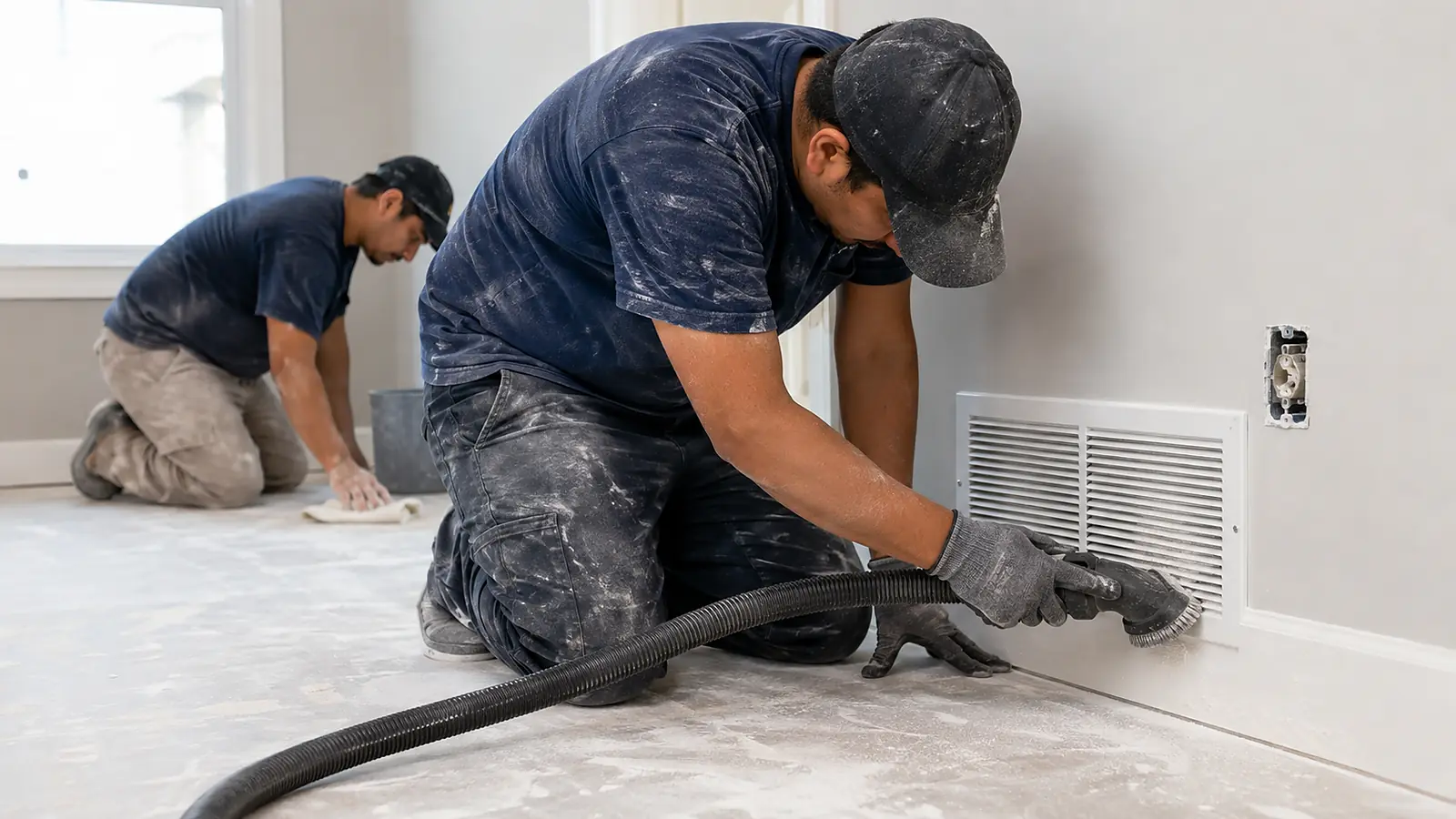
The sanding is finished. The tools are gone. You have vacuumed the floors, wiped the counters, and cleaned every visible ledge. Then the HVAC starts running more often, and a pale film appears again.
This pattern can be especially noticeable in Sandhills homes during heavy cooling periods. Closed windows and longer air-conditioning cycles keep indoor air moving through the same rooms.
Spring pollen, tracked-in sand, red clay, pet hair, and ordinary household dust can also mix with renovation debris. The result may look like one persistent dust problem, even when several sources are involved.
Post-renovation air duct cleaning can be useful in the right situation. It should not replace complete surface cleaning, filter maintenance, or an inspection of the renovation area. The first step is understanding why fine drywall dust behaves differently from heavier construction debris.
Why Drywall Dust Keeps Coming Back
Fine construction particles can settle in hidden areas and return to visible surfaces when airflow or activity disturbs them.
Drywall sanding creates fine, mobile particles
Drywall finishing and sanding release particles that can spread beyond the immediate work zone. Larger fragments usually fall near the project. Finer dust can remain suspended longer and travel into adjacent rooms.
Some dust settles on door trim, cabinet tops, fan blades, curtains, carpet fibers, and upholstery. Other particles may reach supply registers or return grilles, particularly when those openings remain uncovered during construction.
The EPA recommends sealing supply and return registers during dusty renovation work and keeping the heating and cooling system off until the dust has been cleaned up.
That preventive step matters because return airflow can pull airborne debris toward the HVAC system. Review the EPA’s guidance for controlling duct contamination during renovation when planning future projects.
Air movement disturbs settled residue
The dust you see after the renovation may not all come directly from inside the ductwork. Air from supply vents can disturb residue on baseboards, flooring, furniture, and textiles. Foot traffic, ceiling fans, vacuum exhaust, and moving furniture can do the same.
This explains why dust may reappear first near vents without proving that the entire duct system needs cleaning. A broader guide to why dust resettles around fabrics and indoor airflow can help you compare likely sources.
How the HVAC System Can Create a Dust Loop
The system may collect, transport, and redistribute particles when renovation controls or post-project cleanup were incomplete.
Return grilles pull air toward the system
Return grilles draw room air back toward the HVAC equipment. If the system operated during demolition, cutting, or drywall sanding, airborne particles may have traveled toward uncovered returns.
Check the grille face, the accessible area behind it, and the filter compartment. A dirty grille alone does not confirm deep duct contamination. Return grilles naturally collect some surface dust because air moves through them.
A clogged, missing, poorly fitted, or overdue filter can complicate the problem. Replace the filter with a type approved for your system, and make sure air cannot pass around its edges.
Avoid selecting a filter solely because it has the highest rating. Your HVAC manufacturer or a qualified technician can confirm what the system can support.
Supply airflow can redistribute loose material
Supply registers deliver conditioned air to each room. Loose dust near an opening may puff outward when the blower starts. Residue can also collect on the register, wall, ceiling, or flooring around it and then move each time airflow increases.
Inspect several rooms rather than relying on one vent. Repeated dust puffs, visible construction debris inside accessible openings, or rapid resettling throughout the property provide more useful evidence than a dusty grille in one high-traffic room.
Use this guide to recognize air duct warning signs before sustained cooling without assuming that every dusty surface points to the ducts.
Clean the Whole Dust Path, Not One Component
Effective post-renovation cleanup addresses the HVAC pathway and every surface where fine particles can settle.
Start with controlled top-to-bottom cleaning
Turn off the HVAC system before cleaning around registers. Follow equipment instructions and avoid opening mechanical compartments that require technical knowledge.
Begin with high ledges, fan blades, trim, shelving, and hard furniture. Use damp wiping where the material allows it so you collect dust instead of pushing it back into the air. Vacuum appropriate surfaces with a well-maintained machine, then clean hard floors last.
Remove accessible vent covers carefully and clean them according to their material. Basic household maintenance can address the grille and the area immediately inside the opening. It cannot reach an entire duct network.
The limitations of surface-level work are explained in this DIY guide to cleaning vents and accessible duct openings.
Include carpet, rugs, and upholstery
Fine dust settles into soft surfaces as people walk through rooms and the HVAC moves air. Carpet, area rugs, upholstered furniture, drapes, and fabric partitions may continue releasing particles after hard surfaces look clean.
Vacuum slowly using attachments suited to each material. Check care labels before applying moisture or cleaning products. Delicate dyes, fibers, rug construction, and upholstery fabrics may require a more careful process.
Professional upholstery cleaning may be useful when renovation dust remains embedded in seating or fabric-covered office furniture. Carpet and rug cleaning may also belong in the plan when repeated vacuuming does not remove visible residue.
One practical next step: If dust rapidly returns after the filter, vent covers, flooring, carpet, and furniture have been cleaned, arrange an evaluation for air duct cleaning.
Describe the renovation work, whether the HVAC operated, which registers were covered, and where dust reappears. This gives the cleaner a clearer maintenance problem to assess.
Deciding Whether Air Duct Cleaning Is Appropriate
The most useful decision is based on evidence from your property rather than a fixed cleaning interval.
Signs that support a closer inspection
Consider a professional assessment when you find substantial visible debris inside accessible ductwork, repeated dust discharge from multiple registers, or heavy post-renovation buildup that persists after complete surface cleaning.
The timing also matters. If dust returns mainly when the HVAC begins longer seasonal cycles, compare what happens when the system is off with what happens after startup. The guide to checking ducts before full-time AC use offers a practical decision framework.
Odors require separate diagnosis. A dry, chalky construction smell may come from residue on several surfaces. A musty, burning, or electrical odor should not automatically be treated as a cleaning issue.
Shut the system down when appropriate and contact a qualified HVAC, electrical, moisture, or environmental professional for the suspected condition.
When another solution may come first
Duct cleaning may not be the first step when dust appears only in the renovation room, the filter is overdue, the return grille is visibly dirty, or construction residue remains on floors and textiles. Complete those tasks first and watch how quickly the dust returns.
Do not use household liquids, fragrances, disinfectants, or unverified coatings inside ductwork. Avoid aggressive brushing that could damage flexible or internally lined ducts.
If you suspect lead, asbestos, significant biological growth, or another hazardous material, stop ordinary cleaning and consult a properly qualified specialist.
For rental properties and commercial interiors, document where the work occurred, how the renovation zone was contained, when filters were changed, and which rooms show repeat buildup.
This record helps property and facility managers separate a local housekeeping issue from a system-wide concern.
Preventing the Same Problem During Your Next Project
Simple containment and maintenance steps can reduce how much construction dust reaches finished rooms and HVAC components.
Isolate the work zone
Close interior doors when practical and use suitable dust barriers. Protect return and supply openings in the renovation area without operating the HVAC against blocked registers.
Coordinate shutdowns and temporary ventilation with the contractor or an HVAC professional. Keep sanding and cutting equipment within the controlled work zone. Remove debris in sealed containers rather than carrying uncovered material through clean rooms.
Plan the final cleanup before restarting
Clean from high surfaces to low surfaces while the system remains off. Check the filter and replace it when needed. Inspect register covers, nearby flooring, furniture, rugs, and upholstery before returning the system to normal operation.
After startup, observe several HVAC cycles. A small amount of overlooked surface dust may settle again. Persistent dust from multiple registers or continuing visible debris deserves further investigation.
A renovation should leave you with an improved space, not an endless cleaning cycle. Following the dust path from the work zone to the filter, vents, flooring, and fabrics helps you choose the right response without overlooking hidden reservoirs or booking unnecessary work.
Frequently Asked Questions
No. The need depends on the type of work, the amount of dust produced, whether registers were protected, and whether the HVAC operated. Start with an inspection, filter maintenance, and complete surface cleaning. Consider deeper cleaning when clear evidence of duct contamination remains.
Longer cooling cycles increase air movement through rooms. Supply airflow can disturb residue on floors and furniture, while returns draw dusty room air toward the system. The pattern may involve the ductwork, nearby surfaces, the filter, or a combination of sources.
Yes. Fine particles can settle below the visible surface, especially in dense carpet or high-traffic areas. Several slow vacuuming passes may help. Persistent residue, dullness, or embedded soil may justify professional carpet or rug cleaning.
Inspect the filter after dusty work and replace it when it is dirty or according to the equipment manufacturer’s instructions. Confirm that it fits securely without gaps. Use only a filter type that your system is designed to handle.
You can clean register covers and vacuum the accessible area near an opening after turning the system off. A household vacuum cannot reach the complete duct network. Avoid inserting sharp tools or applying liquids, fragrances, or chemicals inside the ducts.
Clean the register and surrounding surface, then observe several HVAC cycles. Look for visible puffs or rapid dust accumulation at multiple vents. One dusty grille may reflect normal return airflow or residue in that room rather than widespread contamination.
Yes. Airflow and foot traffic can move fine particles into sofas, chairs, rugs, and other textiles. Vacuum with material-appropriate attachments and follow care labels. Delicate rugs, dyes, and fabrics may require professional assessment before deeper cleaning.
No single service addresses every dust source. Construction residue may remain on shelves, trim, carpet, upholstery, rugs, filters, and hard flooring. A complete plan should clean the affected surfaces and correct the pathway that allowed dust to spread.
Document the work area, visible residue, filter condition, and any dust coming from registers. Report persistent problems to the property manager in writing. Do not open HVAC equipment or approve alterations that fall outside your lease responsibilities.
Facility managers should coordinate final cleaning, filter inspection, vent checks, and surface care before reopening the renovated zone. Document which systems operated during construction. Schedule disruptive floor, upholstery, or duct work around occupancy and operational needs.
Odor treatment alone does not remove drywall residue. First identify and clean the material holding the dust, which may include carpet, rugs, upholstery, vents, or hard surfaces. Unusual musty, burning, or electrical odors require evaluation by the appropriate qualified professional.
Seal registers in the dusty work area and avoid running the heating or cooling system during dust-producing activities. Isolate the project zone, collect debris at the source, and complete top-to-bottom cleaning before restoring normal HVAC operation.