
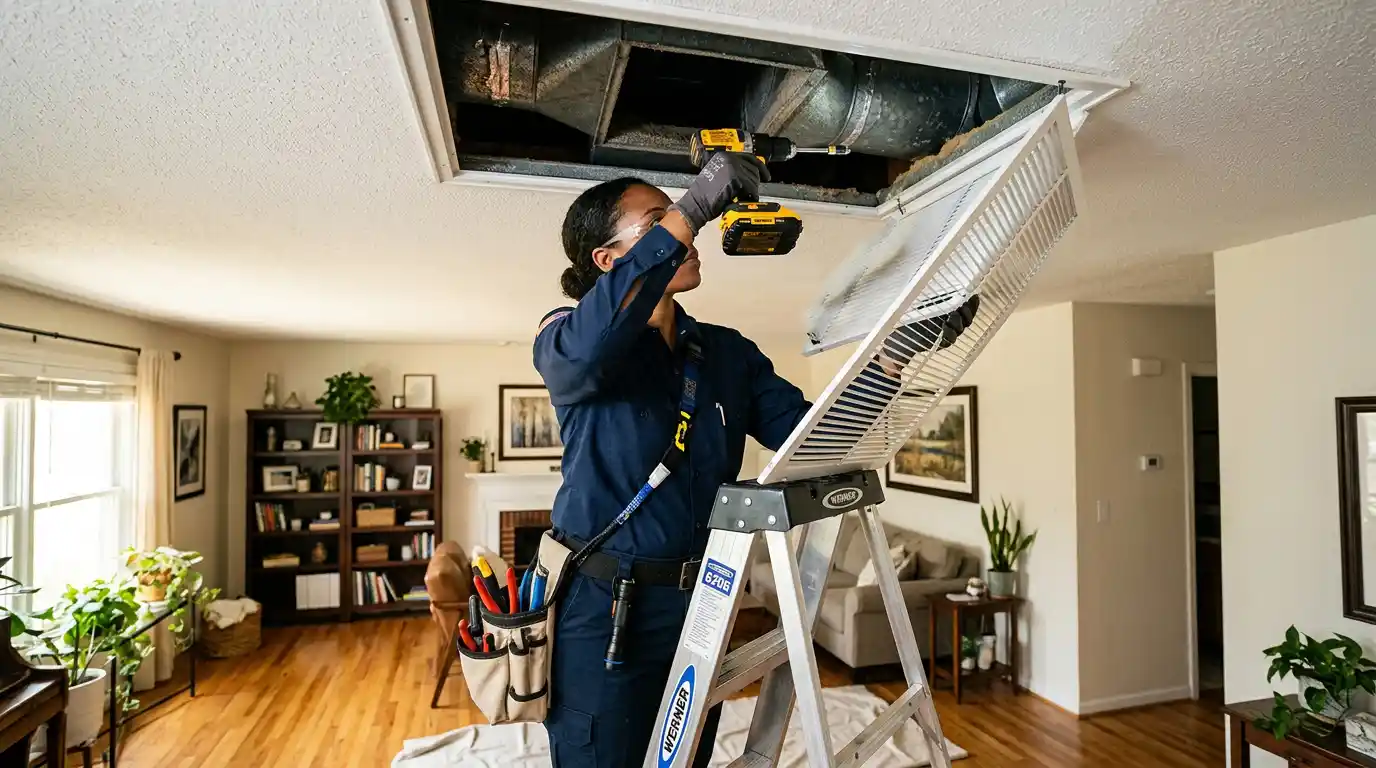
Seasonal dust, spring pollen, damp-weather grit, pet dander, and stale fabric odors often build quietly before hot weather pushes HVAC systems into longer daily run times. Air moving through dusty ducts can carry particles back into rooms that were just cleaned. It can also make carpet, upholstery, area rugs, and hard floors feel dusty again faster.
The goal is not to clean air ducts out of panic or habit. Look for specific signs, compare them with the rest of your interior, and decide whether you need air duct cleaning, surface cleaning, odor treatment, dryer vent cleaning, or a combination.
Our air duct cleaning service focuses on dust, pet dander, pollen, and other buildup that can collect in ductwork and recirculate when the system runs.
Air Duct Cleaning
If summer heat is about to put your HVAC system back into heavy use, now is a practical time to schedule a professional inspection.
Call 910-476-5459
Use these signs as a pre-summer checklist, especially if normal cleaning no longer keeps up with dust or stale odors.
If tables, shelves, electronics, and vent covers look dusty soon after wiping, ducts belong in the inspection. Check return grilles, supply vents, filter fit, carpet traffic lanes, upholstery, rugs, pets, and tracked-in sand or red clay.
Look at registers and grilles with the HVAC system off. Dust around edges, dark debris in openings, or buildup that returns after vacuuming can signal a need for closer attention. A deeper review of how often air ducts should be cleaned can help you judge timing.
A smell that appears only when the system runs can point to dust, dampness, old debris, or odor sources near the return path. In humid weather, stale smells can also come from carpet, rugs, upholstery, pet spots, or moisture-affected materials.
Uneven comfort may be due to HVAC performance issues, airflow restrictions, filter issues, closed vents, or dust buildup. If one room feels stale while another feels normal, note which vents serve each room. That helps separate duct concerns from surface dust.
Pet-friendly homes often need a wider cleaning plan. Dander, hair, repeated accident spots, and odors can affect carpets, area rugs, upholstery, and ducts. If pet odor returns after surface cleaning, pet odor and stain treatment may belong in the plan.
Renovations, repairs, move-ins, move-outs, tenant turnover, and commercial refreshes can push fine debris into vents and across flooring. Afterward, check vent covers, filters, carpet edges, rugs, and upholstery before summer cooling begins.
Dryer vent cleaning is not the same as air duct cleaning, but the timing often overlaps with seasonal maintenance. Lint, dust, and debris can reduce airflow and increase drying time. Keep dryer concerns separate, and review dryer fire prevention messages if airflow seems restricted.
A good plan starts with the problem, not the service name.
One dusty room needs different scoping than a whole-home refresh, rental turnover, or commercial cleaning need. Document room-by-room concerns, visible problem areas, delicate rugs, carpet ripples, loose seams, stale odors, and business disruption limits.
In the Sandhills area, service-area fit should be part of the first conversation.
For process context, review how air duct cleaning works.
These questions keep the scope practical and reduce overlooked follow-on needs.
A calm second look can prevent a mismatched service plan.
Use air duct cleaning decision guidance when you want a cautious framework for deciding whether ducts need cleaning because of visible dust, debris, moisture, pests, or other specific concerns.
A well-managed job should begin with clear scoping. You should be able to explain what you see, where it happens, and what changed before the problem appeared. The service plan should connect those observations to the right surface or system.
Expect practical communication before work begins. That can include room-by-room notes, visible problem areas, pet-related concerns, rug-care flags, dryer vent concerns, and follow-on needs such as deodorization, stretching, repair, or surface cleaning.
A good result is not a vague promise. It is a cleaner, better-documented starting point for maintaining floors, fabrics, vents, and indoor comfort.
For homeowner preparation, the homeowner air duct cleaning guide and safe air duct cleaning steps can help you organize what to check before you schedule.
Not automatically. A pre-summer check is useful because cooling systems often run longer once the heat settles in. Look for visible dust, stale odors when air starts moving, pet dander buildup, or recent dust-heavy activity before deciding on service.
Visible buildup around vents or particles coming from supply registers deserves attention. Pair that observation with other signs, such as dust returning quickly after cleaning or rooms feeling stale when the HVAC system runs.
They can contribute to dust movement, but they are rarely the only source. Carpet traffic lanes, upholstery, rugs, pets, open doors, and tracked-in grit can also add dust. A whole-room view helps you choose the right cleaning path.
Notice when the odor appears. If it starts when air moves through the vents, ducts may need inspection. If it is strongest near pet spots, damp carpet, upholstery, rugs, or high-use rooms, surface cleaning or odor treatment may be more relevant.
Pet-friendly homes often collect more hair, dander, and odor sources across several surfaces. Ducts may be part of the issue, but carpets, rugs, upholstery, and repeat accident spots also need attention. A combined plan may work better than one isolated service.
No. Dryer vent cleaning addresses lint, dust, and debris in the dryer vent path. Air duct cleaning addresses HVAC ductwork and related airflow areas. Both can matter before summer if the home has dust concerns and laundry airflow issues.
Check high-traffic carpet lanes, entry areas, upholstered seating, vents, tile and grout, and any areas with recurring odors. Note tenant schedules, access limits, sensitive areas, and business disruption concerns before choosing a scope.
Yes. Notes and photos can help clarify where dust, stains, odors, or airflow concerns appear. Documentation also helps property managers decide whether the issue involves ducts, flooring, upholstery, dryer vents, or routine turnover cleaning.
You can vacuum registers and keep filters changed, but deeper duct cleaning involves areas you cannot easily reach. Avoid pushing debris farther into the system. If you see heavy buildup, persistent odors, or airflow concerns, a professional inspection is the safer next step.
Write down which rooms feel dusty, stale, or uneven. Point out pet spots, rugs, upholstery, carpet damage, grout buildup, and dryer airflow concerns. Clear access where possible, and keep your notes focused on visible problems and timing.