


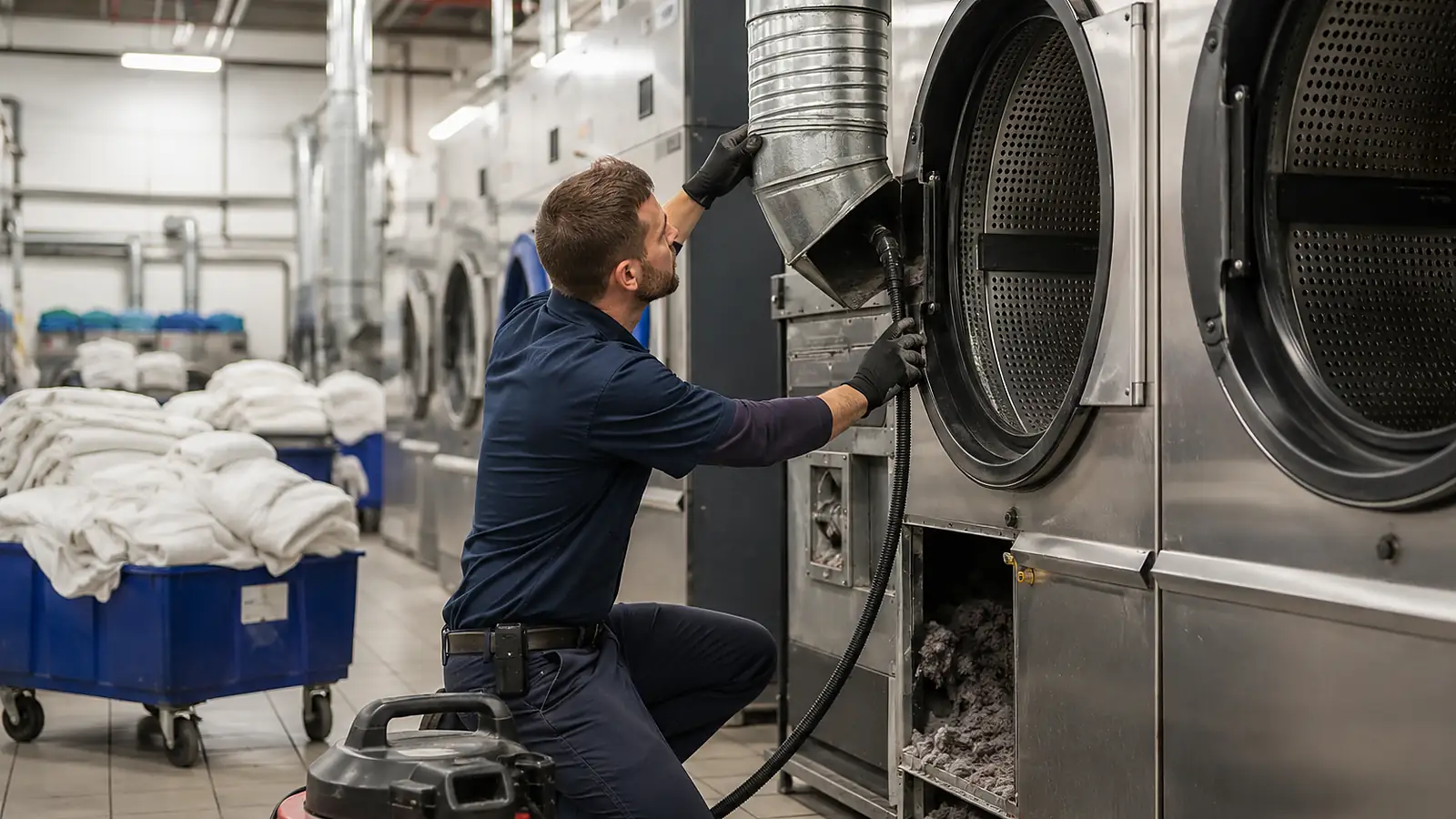
In a high-use laundry room, lint does not get much time to settle before the next load starts. Apartment communities, rental properties, hospitality facilities, salons, gyms, care facilities, and other commercial interiors may run dryers repeatedly throughout the day.
That workload places steady demand on the exhaust system. Long duct runs, multiple turns, roof exits, and shared laundry schedules can make lint control more complicated than cleaning the screen between loads.
Seasonal conditions can add to the workload. Rainy periods bring mud, sand, grass, and red-clay residue into busy properties. Towels, uniforms, mats, bedding, and cleaning textiles may then require more frequent washing.
Pet-friendly rentals and mixed-use spaces may also process fabrics that shed hair and fine fibers.
Commercial dryer vent cleaning should therefore be treated as routine facility maintenance, not as a task reserved for obvious blockages.
Why High-Use Laundry Rooms Build Up Lint Faster
Repeated loads create a different maintenance pattern from occasional household laundry.
Every Load Releases More Than the Screen Captures
A lint screen captures a large portion of loose fibers, but it does not collect everything. Fine lint can move beyond the filter and enter the exhaust line.
When dryers run back-to-back, this process repeats many times in a short period. The amount escaping during one cycle may appear minor. Over weeks or months, however, residue can collect along duct walls, elbows, joints, transition sections, and exterior outlets.
Cleaning the filter before each load remains essential, but it does not replace cleaning the complete dryer exhaust path.
Bulky Fabrics Increase the Workload
Towels, blankets, bedding, uniforms, pet bedding, and floor-care textiles may release more lint than lightweight clothing. They can also hold more moisture.
A high-moisture load requires the dryer to move a substantial volume of warm, damp air. Restricted airflow makes that process slower. Staff may respond by adding time or starting another cycle, which sends even more heated air through the same restricted line.
Understanding why a dryer takes longer to dry can help you separate vent-related warning signs from loading, fabric, or equipment problems.
Long Dryer Vent Runs Need More Attention
Distance, bends, and termination points affect how easily lint leaves the building.
Longer Routes Create More Collection Points
Some laundry rooms sit close to an exterior wall. Others connect to ductwork that travels through ceilings, utility areas, upper floors, or rooflines.
The longer the route, the more surface area lint encounters. Bends and elbows can interrupt smooth airflow and create places where fibers collect. A partially restricted exterior cover can add another choke point near the end of the system.
A maintenance plan should account for the actual route rather than relying only on the age of the dryer.
A Clean Opening Does Not Prove a Clean Duct
Visible lint around the dryer connection or exterior outlet deserves attention, but a clean-looking opening does not confirm that the middle of the line is clear.
A long run may hold buildup beyond the reach of a household vacuum or short brush. Cleaning only the first few feet may leave compacted material around an elbow or near the termination point.
Professional dryer vent cleaning addresses the vent line from the dryer connection toward the exterior outlet. This is particularly useful when the route is long, difficult to access, or repeatedly loses airflow.
Warning Signs in a Commercial Laundry Room
Operational changes often appear before a complete obstruction develops.
Loads Take Longer Than Normal
Drying time is one of the most practical performance indicators. Similar loads should generally follow a reasonably consistent pattern.
When towels or linens suddenly need extra time, review the load size, selected cycle, lint screen, and vent airflow. If several dryers connected to similar routes begin slowing down, the maintenance history also deserves review.
Do not assume that adding more cycle time solves the cause. It only compensates for the symptom.
The Room Feels Hotter or More Humid
A laundry room may naturally become warm during busy periods. A noticeable change in heat or humidity, however, can suggest that damp exhaust air is not moving out as effectively as before.
Check for disconnected or damaged transition sections, blocked exterior covers, overloaded machines, and accumulated lint. Persistent odors, visible damage, unusual equipment heat, or electrical concerns should be evaluated by the appropriate qualified professional.
Lint Appears Outside Normal Collection Areas
Lint around the back of a dryer, wall connection, ceiling penetration, or exterior vent may indicate leakage or restriction.
Treat repeated accumulation as useful maintenance evidence. Vacuuming the floor may improve appearance, but it will not correct buildup inside the exhaust path.
The guide to how often dryer ducts should be cleaned explains why frequent use, long routes, and complicated duct paths may justify closer monitoring.
Build a Practical Lint-Control Routine
Daily housekeeping and documented inspections help reduce avoidable buildup.
Assign Daily and Weekly Tasks
Staff should clean the lint filter according to the dryer manufacturer’s instructions, generally before each new load. They should also remove lint from the surrounding floor and accessible equipment surfaces.
Weekly checks can include the visible transition duct, the area behind the dryer, and accessible exterior outlets. Look for crushed sections, loose connections, damaged covers, unusual lint deposits, or flaps that do not move normally.
Avoid inserting improvised objects deep into the duct. They may become stuck, damage a connection, or push material farther into the line.
Keep a Simple Laundry Maintenance Log
A maintenance log does not need to be complicated. Record the date, dryer number, common load type, unusual drying times, visible lint, odors, heat complaints, and completed cleaning tasks.
Patterns matter more than isolated observations. If one dryer regularly needs longer cycles, the log may help you identify whether the problem follows certain loads or appears regardless of use.
The comparison of DIY and professional dryer vent cleaning provides useful decision points for accessible maintenance versus full-line cleaning.
For a high-use laundry room with repeated slow cycles, visible lint, or a long exhaust route, schedule a complete vent assessment and cleaning so the maintenance plan can be based on the actual duct configuration and workload.
Coordinate Vent Care With the Rest of the Property
Laundry maintenance works best as part of a broader interior-cleaning plan.
Commercial laundry rooms often support buildings with high-traffic carpets, upholstered seating, area rugs, tile floors, and shared indoor spaces. Muddy shoes, sand, pet hair, spills, and seasonal dust do not remain confined to one surface.
Schedule commercial cleaning services according to traffic, surface condition, tenant turnover, and operating needs. Cleaning carpets, upholstery, rugs, and tile can reduce the loose debris that moves through busy interiors and eventually reaches laundry loads.
Dryer exhaust and HVAC ductwork serve different purposes and should not be treated as the same system.
Air ducts can collect dust, pollen, pet dander, and other debris, while dryer vents carry heat, moisture, and lint away from a dryer. Each requires its own inspection and maintenance decisions.
When Professional Dryer Vent Cleaning May Be Useful
Complex access and recurring airflow problems can exceed routine staff maintenance.
The Vent Has Multiple Bends or Limited Access
A short, straight duct may be easier to inspect than one routed through walls, ceilings, or a roof. Long or concealed runs can make it difficult to determine whether the full line has been cleared.
Professional methods may be more appropriate when brushes cannot safely reach the termination point, when the route is uncertain, or when lint repeatedly returns soon after basic cleaning.
An overview of tools used for professional dryer vent cleaning explains how full-line agitation, collection, inspection, and airflow checks differ from vacuuming the accessible opening.
The Same Symptoms Keep Returning
Recurring slow drying may involve more than surface lint. The system may have a crushed transition duct, a difficult routing pattern, an obstructed outlet, or another equipment-related issue.
A dryer technician may need to evaluate the appliance itself. A qualified building or mechanical professional may be appropriate when the concern involves duct design, installation, electrical components, gas connections, or code questions.
Commercial dryer vent cleaning is most effective when it supports a complete maintenance process. Track dryer performance, control lint at each load, inspect accessible components, and act when operating conditions change.
Frequently Asked Questions
There is no single schedule that fits every laundry room. Usage volume, fabric type, vent length, bends, equipment condition, and operating environment all affect buildup. Track drying performance and visible lint, then set a recurring inspection and cleaning schedule based on actual conditions.
No. The screen collects much of the lint released during drying, but some fine fibers can enter the exhaust duct. Cleaning the screen before each load supports airflow, while periodic vent cleaning addresses material that collects farther inside the system.
Long routes create more surface area and may include several bends, joints, or vertical sections. These features can slow airflow or create collection points. A long route can also place hidden buildup beyond the reach of short consumer brushes and vacuum attachments.
Watch for longer cycles, damp laundry after a normal setting, unusual heat, excess humidity, visible lint outside collection areas, or weak movement at the exterior outlet.
These signs can have multiple causes, so inspect both the appliance and the exhaust route.
Yes. Each load can release fine fibers beyond the lint screen. Running dryers repeatedly increases the number of lint-producing cycles completed each day.
Bulky towels, bedding, uniforms, and pet fabrics may add to the maintenance demand.
A basic log can reveal gradual changes that staff might otherwise overlook. Record cleaning dates, dryer numbers, cycle complaints, visible lint, unusual odors, and repairs. The record can also help you plan service around occupancy, tenant turnover, or lower-use periods.
Staff can usually handle lint-screen cleaning, surrounding housekeeping, and accessible visual checks. Full duct cleaning may be harder when runs are long or concealed. Do not force tools through bends or attempt work involving electrical, gas, mechanical, or inaccessible building components without appropriate qualifications.
No. Equipment volume, room ventilation, outdoor weather, load size, and dryer condition can all affect room temperature. A new or worsening heat problem should prompt a review of dryer operation, exhaust airflow, connections, and the room’s ventilation.
A dryer vent is designed to move warm, moisture-laden exhaust outside. Damaged or disconnected sections can release heat, moisture, and lint into the laundry area.
Dryer exhaust is separate from HVAC air ducts, so each system needs its own maintenance approach.
A property turnover is a practical time to review visible vent connections, lint buildup, dryer performance, and maintenance records. This can be coordinated with carpet, upholstery, rug, tile and grout, odor, or general commercial cleaning based on the property’s condition.
Pet bedding, blankets, towels, and removable furniture covers can carry hair and loose fibers into the laundry process. Clean the lint screen carefully after these loads and monitor whether the dryer begins taking longer to complete similar cycles.
Contact an appliance technician for dryer malfunctions. Use qualified electrical, gas, mechanical, or building professionals for concerns involving those systems. Stop using equipment when you notice burning odors, smoke, sparking, damaged wiring, gas odors, or other immediate hazards.