
In Sandhills homes, rentals, offices, and other busy spaces, early summer can reveal the mess spring left behind. Pollen settles deep in carpets. Rainy shoes bring in sand, red clay, grass, and mud. Pets shed hair, rest near doors, and carry moisture inside. Then warm, humid air moves in. A room that looks clean can start to smell stale.
This is not always one recent spill. North Carolina has a humid climate with very warm summers, so moisture can make the buildup of older material more noticeable. Carpet, upholstery, rugs, vents, and entry paths collect material over time.
When indoor humidity rises, those hidden layers can release odors that were quiet during cooler, drier weeks.
Early-summer odor usually starts when moisture meets soil, spills, body oils, pet residue, and poor airflow.
Carpet and upholstery catch fine dust, pollen, food crumbs, skin oils, pet dander, and tracked-in soil. Dry particles may not smell strong at first. Add humidity, and odor can move more easily through fibers and into the room.
A musty smell can point to dampness, poor ventilation, old spills, a wet rug pad, a pet accident, or moisture under the carpet. Sprays may change the scent briefly, but they do not remove damp soil or residue. If the same area keeps smelling musty, check the room, not just the surface.
Musty odor often moves through connected surfaces, so a room-by-room view works better than chasing one spot.
Wall-to-wall carpet has more than one layer. The face fiber may feel dry while the backing, pad, or subfloor area holds moisture. The guide on why carpet can feel damp even with no visible leak is useful when humidity, subfloor moisture, old spills, or over-wetting may be involved.
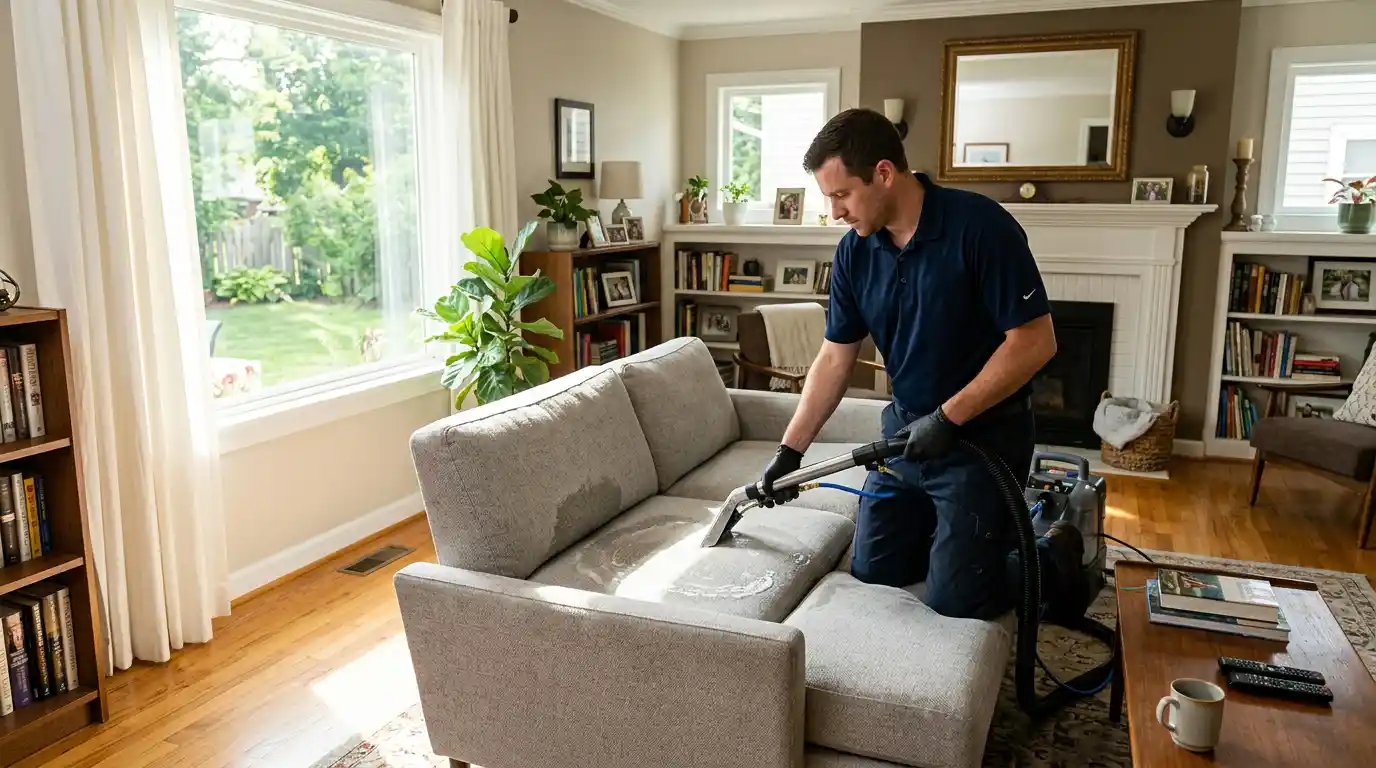
Sofas, dining chairs, waiting-room seating, and office chairs collect oils, dust, pet hair, and airborne debris. Fabric can look acceptable while it holds a stale smell. Area rugs and Oriental rugs can hold soil, moisture, and odor in fibers, backing, fringe, and pads.
Delicate fibers, dyes, and construction need careful handling, so do not treat every rug like an installed carpet.
For mixed surfaces, professional carpet and rug cleaning may fit into a broader maintenance plan that also considers upholstery, rugs, and odor sources.
A short inspection helps you decide whether routine cleaning is enough or moisture control should come first.
The key to indoor moisture control is finding and fixing the water source.
Closed rooms, blocked vents, dirty returns, and dusty ducts can make a stale room feel worse. Air ducts can collect dust, pollen, pet dander, and other debris that recirculate through the home. Dryer vents can also collect lint and restrict airflow.
These issues do not replace carpet or upholstery cleaning, but they may belong in the same maintenance plan.
Odor treatment, carpet cleaning, upholstery cleaning, and pet odor treatment can help when fibers hold residue. Carpet stretching or repair may be more relevant when ripples, wrinkles, loose seams, burns, or damaged areas remain after cleaning.
If the carpet is physically loose or damaged, more deodorizer will not solve the structural problem.
The negative home-cleaning reaction can make a humidity problem harder to solve.
More water does not mean a deeper clean. Over-wetting can push moisture into the padding and slow drying. That matters even more in humid weather. If you use a home machine, avoid repeated wet passes and keep airflow moving.
Scrubbing pet accidents can spread residue and rough up carpet fibers. Blot fresh accidents first. Then treat the spot based on the material involved. The guide to carpet care for pet owners explains how pet hair, dander, tracked-in soil, and favorite resting spots often combine into one odor pattern.
Air fresheners, scented powders, and sprays may cover odor briefly. They do not remove soil, moisture, or residue from carpet backing, upholstery fibers, grout lines, or rugs. If the musty smell returns after the fragrance fades, the source is still there.
Professional help is most useful when odor returns after routine care, moisture may be below the surface, or several surfaces need attention together.
A maintenance-led plan may include carpet cleaning, upholstery cleaning, area rug cleaning, Oriental rug cleaning, pet odors and stains treatment, tile and grout cleaning, odor treatment, air duct cleaning, dryer vent cleaning, carpet stretching, or carpet repairs.
Professional Odor Treatment
If early-summer humidity has brought back a musty smell in carpet, rugs, or upholstery, use a source-focused cleaning plan instead of masking the odor.
Call 910-476-5459
Small habits reduce the buildup that humidity can reactivate, especially in high-use spaces.
Vacuum high-traffic lanes, entry paths, stairs, pet areas, and upholstery edges before soil works deeper into fibers. Dry grit acts like fine sandpaper. It can dull carpet and make fibers hold more residue.
A seasonal reset can help after pollen season, before humid weather settles in, after holiday traffic, or during move-in and move-out turnover. A broader spring cleaning plan for carpets, upholstery, and rugs can help you think beyond one room when multiple surfaces feel stale.
Family homes, rentals, offices, waiting areas, and other commercial interiors may not have one obvious spill. Odor can come from repeated traffic, fabric seating, entry mats, breakroom spills, and closed HVAC cycles.
Warm water can improve soil removal when it fits the material and cleaning method, but drying conditions matter in humid weather.
The guide on the best temperature to clean carpets explains why temperature, fiber type, soil level, and drying conditions work together.
Early-summer musty odor is rarely just “old house smell.” It is usually a signal that moisture, soil, airflow, and soft surfaces need attention at the same time. Start with dry soil control, check for dampness, avoid over-wetting, and choose cleaning based on the source.
Early-summer humidity can make the older buildup smell stronger. Carpet fibers may already hold pollen, dust, pet dander, body oils, tracked-in soil, or residue from spills. When moisture in the air rises, those trapped materials can release a stale or musty odor.
Yes. Upholstery can hold dust, oils, pet hair, and airborne debris before it shows visible discoloration. Humidity can make that hidden buildup more noticeable. Fabric seating in homes, offices, rentals, and waiting areas often needs attention before it looks heavily soiled.
Start by checking for cool, damp, or clammy spots underfoot. Look near doors, windows, pet areas, concrete slabs, closed rooms, and places with weak airflow. If the same area keeps smelling musty, moisture below the surface may need attention before cleaning.
They can be. Pet hair, dander, accidents, muddy paws, and favorite resting spots can all add residue to carpet and upholstery. Humidity may make those odors more noticeable, especially when a room stays closed or airflow is limited.
No. Too much water can push moisture deeper into the carpet backing or padding. In humid weather, that moisture may dry slowly and make the odor problem worse. Use controlled cleaning, good airflow, and avoid repeated wet passes with home machines.
Regular cleaning focuses on soil, appearance, and surface buildup. Odor treatment focuses more directly on smells from dampness, pet issues, smoke, spills, or stale soft surfaces. It may be useful when a carpet or upholstery piece smells bad even after routine cleaning.
Yes. Rugs can hold moisture, grit, spills, pet residue, and odor in fibers, backing, fringe, and pads. Delicate rugs may need more careful cleaning than installed carpet because fibers, dyes, and construction vary. Always check underneath a rug after wet weather or spills.
They can contribute to the overall feeling of a room, especially near kitchens, bathrooms, entries, and high-traffic areas. Grout lines can hold dirt, spills, discoloration, and buildup that mopping may not fully remove. If both soft surfaces and hard floors feel stale, review the whole room.
They can be part of the bigger maintenance picture. Air ducts can collect dust, pollen, pet dander, and other debris that move through the home when the HVAC system runs. Duct cleaning does not replace carpet or upholstery care, but it may help address dusty, stale airflow patterns.
The right schedule depends on traffic, number of pets, accidents, outdoor soil, and odor history. Pet-friendly homes often need more frequent attention because hair, dander, muddy paws, and body oils build up faster. A maintenance routine works better than waiting for a strong odor or visible staining.
Cleaning helps with soil and odor, but it does not fix physical damage. Ripples, wrinkles, loose seams, burns, tears, or damaged sections may need carpet stretching or repair. If the carpet still looks uneven after cleaning, the issue may be structural rather than soil-related.