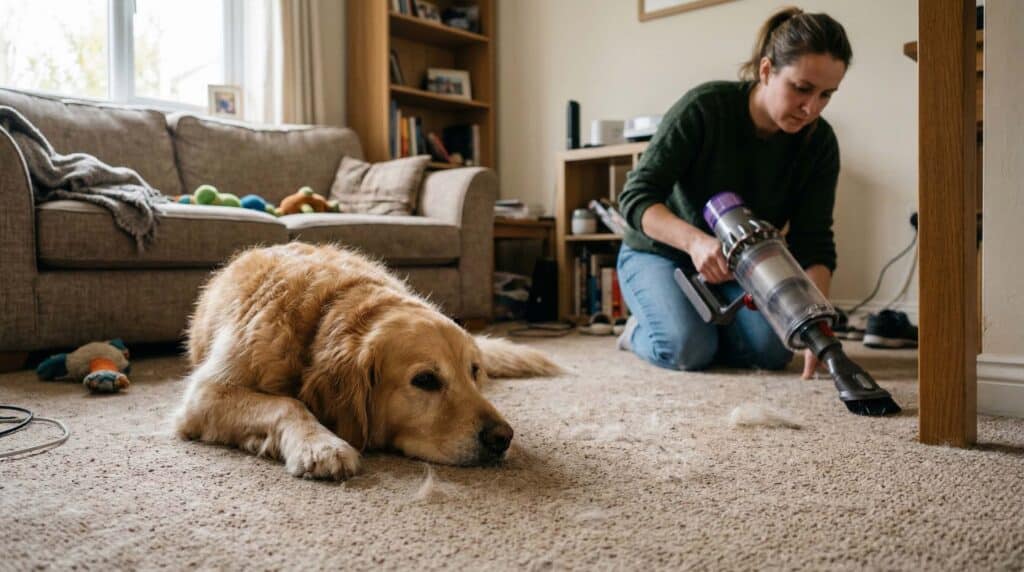
In pet-friendly homes, carpet has to handle more than everyday traffic. It catches pet hair, holds onto dander, picks up muddy paw prints, and absorbs the mix of outdoor grit, pollen, red clay dust, and wet shoes that comes with real life. That buildup does not stay neatly at the entry. It spreads into living rooms, bedrooms, rental units, offices, and other shared interiors where odor and wear can build gradually instead of all at once.
Pets also change how carpet wears. The issue is not only accidents. Repeated pacing, favorite nap spots, tracked-in debris, and body oils can leave fibers looking flat, dull, or stale long before the room looks obviously dirty. That is why good carpet care for pet owners works best as a maintenance routine, not just as a reaction to the last stain.
The best pet-carpet plan starts by controlling loose debris before it mixes with moisture and oils.
Pet hair, dust, grit, and outdoor debris settle into the carpet before the room looks messy. Once that dry soil gets walked into the fibers, it becomes harder to remove and can contribute to premature wear.
Routine vacuuming matters even more in homes with pets because carpets and rugs can trap dirt, allergens, and odors that ordinary surface care does not fully address.
Start with the places your pet uses most often: doors, feeding areas, favorite lounging spots, hallways, and the route to the yard. Those are usually the first zones to show traffic shading, tracked-in dirt, and odor buildup.
A practical approach is to vacuum those sections more often than lower-use rooms instead of waiting to do the whole house at once.
Pet-related buildup rarely stays on the carpet alone. Upholstered seating, area rugs, and fabric surfaces collect dust, body oils, and odors too. That is one reason upholstery cleaning often makes sense alongside carpet care in pet households.
Fast action helps, but aggressive cleaning can push the problem deeper into the carpet.
When a pet accident happens, the goal is to lift as much material as possible without grinding it into the pile. Scrubbing can spread the stain, rough up the fibers, and leave the area looking worn even after the spot lightens. Controlled blotting and repeat passes are usually safer than heavy-handed rubbing.
A pet spot can look better before it is actually resolved. If odor keeps returning, the issue may be deeper than the visible stain. That is where pet odor and stain treatment becomes more useful than repeated surface cleanup, especially in rooms where pets return to the same area.
Area rugs and Oriental rugs may need more careful handling because construction, dyes, and fiber types can differ from wall-to-wall carpet. That is why pet-related rug issues are often better approached separately from broad-room carpet cleanup. A helpful starting point is how to remove pet odors and stains from rugs.
If pet smells keep resurfacing, hair keeps settling into furniture, or high-traffic areas never seem fully clean, it may be time to schedule a maintenance visit that looks at the carpet and adjacent fabrics together instead of chasing one spot at a time.
Lingering smell usually points to buildup in fibers, padding contact areas, or adjacent soft surfaces.
A new accident and an old odor problem are not the same thing. Fresh spills call for quick removal. Older odor issues usually involve repeated exposure, dried residue, or buildup spread across more than one surface. That is why pet-related carpet care needs a decision-making step, not just a bottle of cleaner.
Pet households tend to layer issues together. Hair, dander, tracked-in dirt, food crumbs, moisture from outdoors, and ordinary foot traffic can all settle into the same fibers. Over time, carpets may hold onto smells even after the original mess is gone.
The resource on what a lingering carpet odor can mean is useful for understanding why odor can outlast the visible problem.
Pet homes often need more attention during pollen season, rainy stretches, and humid periods when debris and odors build faster. In the Sandhills, that can mean more frequent attention to carpets, upholstery, and workhorse rooms that see pets, guests, and outdoor traffic every day.
A broader refresher on this maintenance mindset appears in carpet cleaning and pets.
Pet-related carpet care is also about what settles, circulates, and resettles indoors.
Carpet is only one part of the system in a pet-friendly home. Ductwork can also collect dust, pet dander, pollen, and other pollutants that circulate when the HVAC system runs. That does not mean every home needs the same solution, but it does mean odor and dust complaints are sometimes bigger than one carpeted room.
The same logic applies in busy commercial interiors, rentals, and mixed-use spaces. If you are managing repeated traffic, pets, and fabric-heavy furnishings, the goal should be coordinated upkeep rather than isolated emergency cleanups.
Looking into how often to clean carpets in a pet home is a useful reference point for thinking about frequency and routine.
Some pet-related carpet issues need repair or specialty care instead of more cleaning.
Not every pet problem is a stain. Claw snags, pulled seams, worn entry spots, chewed corners, and ripples from repeated traffic can leave carpet looking rough even after it is clean. When that happens, more spot treatment is unlikely to fix the underlying issue. Pet owners should think about wear patterns as carefully as stain patterns.
Vacuum before soil settles in, address accidents quickly, treat odor as a separate problem from appearance, and step back when the carpet is showing physical damage or repeated re-soiling.
Pet households usually need more frequent carpet attention than homes without pets because hair, dander, tracked-in dirt, and occasional accidents build up faster. The right schedule depends on traffic, the number of pets, and whether odor is an active issue. A maintenance approach works better than waiting until the carpet looks heavily soiled.
One common mistake is treating every problem like a visible stain only. Pet-related carpet issues often involve dry soil, odor, and wear happening at the same time. If you only chase spots and ignore buildup in traffic lanes or pet zones, the carpet can still look and smell tired.
Surface cleanup may remove what you can see without fully addressing what settled deeper into the fibers or surrounding materials. Odor can linger after the stain fades, especially when pets revisit the same area. That is why recurring smell often needs a more targeted odor-focused solution.
Yes. Pets do not interact with carpet only. Rugs, sofas, chairs, and other upholstered surfaces also collect hair, oils, and odor. In many homes, the most effective maintenance plan looks at carpet, rugs, and upholstery together instead of treating them as separate problems.
They can be, because rug fibers, dye stability, and construction vary more than many homeowners expect. A rug that looks similar to carpet may still need a different cleaning approach. Delicate and specialty rugs often benefit from more careful handling than standard wall-to-wall carpet.
Start by removing as much of the material as possible without scrubbing it into the carpet. Blotting is generally safer than aggressive rubbing because it limits spread and helps protect the carpet face fibers. The sooner you act, the easier it is to keep the problem from setting in.
It becomes part of a larger indoor-air conversation when dust, dander, pollen, and odor are settling into soft surfaces and also circulating through the home. Carpet can hold debris, while ductwork may recirculate particles over time. Not every home needs the same response, but the connection is worth noticing.
Yes, especially in homes where pets track in moisture, grit, and outdoor debris after walks or yard time. Wet paws and muddy entries can speed up soiling and add odor to already busy traffic lanes. Seasonal conditions matter because they change how quickly carpet collects residue.
That is usually a repair issue rather than a cleaning issue. Snags, ripples, tears, and worn areas often need patching, stretching, or other corrective work. Repeated spot cleaning will not solve physical damage to the carpet structure.
They usually need a more structured plan because turnover schedules, shared interiors, and higher foot traffic make reactive cleaning less efficient. A routine that covers traffic lanes, odor-prone areas, and adjacent upholstery helps keep spaces more presentable between deeper services.
Absolutely. Pet-related buildup often settles before the room looks obviously dirty. Hair, dander, dust, and odor can remain in the fibers even when the color of the carpet still looks acceptable. That is why maintenance decisions should not rely on appearance alone.
In many pet homes, upholstery upkeep, rug cleaning, and occasional air-duct or dryer-vent attention fit naturally into the same maintenance cycle. The point is not to do everything at once, but to recognize that pet-related debris and fibers do not stay in a single room or on a single surface.