
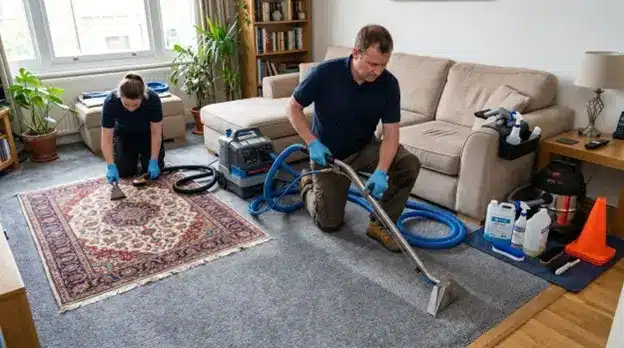
Spring is when soft surfaces stop hiding what they collected all season. In Sandhills homes, that usually means pollen settling into fibers, rainy-day grit and red clay coming in at the door, pet dander building up in favorite spots, and furniture fabrics holding onto oils and stale odors.
As temperatures rise, soft surfaces can also start smelling heavier than they did during cooler months. The result is a home or workplace that may look mostly fine at a glance, but feels dull, dusty, or not quite fresh.
That is why spring cleaning for carpet, upholstery, and rugs should not be treated as one generic task. Each surface holds debris differently, wears differently, and responds to moisture differently. The best plan starts by deciding which surface is doing the most work in your space, then matching the cleaning or maintenance approach to that material instead of using one method across everything.
Start is a spring carpet cleaning checklist so you can separate light maintenance from deeper buildup before you book service.
Each soft surface needs a different level of care because traffic, fiber structure, and construction change what gets trapped and how safely it can be cleaned.
Wall-to-wall carpet usually takes the biggest beating. It carries foot traffic, entry grit, muddy shoes, pet accidents, and traffic-lane wear across the largest surface area in the room. It also hides a lot of embedded soil before it looks obviously dirty, especially in busy family homes, rentals, and commercial interiors.
When your main complaint is flattened walk paths, dingy entries, stale odor, or buildup that keeps coming back after vacuuming, carpet is often the first priority.
Upholstery gets under-cleaned because it does not always show dirt as quickly as flooring. But sofas, sectionals, dining chairs, and office seating can hold dust, body oils, spills, pet hair, and allergens long before the fabric looks noticeably soiled.
The key difference is that furniture fabrics need a more fabric-specific approach. Delicate linens, cottons, synthetics, and leather do not respond the same way, which is why inspection matters. If your seating looks dull, smells stale, or feels rougher than it used to, upholstery cleaning is usually the better starting point than another round of DIY spot work.
If your spring refresh includes flooring, seating, and odor-heavy zones in the same cycle, our full range of cleaning services can be scoped into one visit.
At Williams Carpet Care, we clean for both residential and commercial customers across our Sandhills service area, and you can request a free quote.
Call 910-476-5459
Area rugs sit somewhere between carpet and upholstery, but they often need the most caution. Even everyday rugs may have different fiber types, dye stability, backing materials, or construction details than wall-to-wall carpet. Specialty and Oriental rugs need even more care because age, weave, and material can change what is safe.
If the rug has fringe, delicate fibers, odor problems, color concerns, or sentimental value, it deserves its own plan. That is also why a rug can look small and still be the wrong place to experiment. A helpful next step is reviewing the signs in rugs that need a professional touch before you decide whether simple maintenance is enough.
The right cleaning scope depends less on the season itself and more on what the season leaves behind.
If the problem is mostly visible traffic lanes, tracked-in soil, and dull carpet across larger rooms, carpet cleaning usually delivers the biggest immediate reset. In pet-friendly homes, hallways, doors, feeding zones, and favorite nap areas often show the first signs of buildup, which is why a pet-home carpet routine works better than waiting for obvious staining.
Furniture and rugs require more caution because the wrong product, too much moisture, or aggressive scrubbing can distort texture, affect color, or leave fabrics feeling sticky. In the region, spring often blends into periods of high humidity, and the humid climate can make stale smells linger longer in cushions and rugs than many people expect.
If the real complaint is not appearance but lingering smell, the plan may need to expand. Pet odor, musty soft surfaces, or recurring stale air can call for odor treatment after cleaning, and sometimes air duct cleaning belongs in the same conversation because ducts can collect dust, pet dander, pollen, and other pollutants that keep recirculating.
In other cases, carpet ripples or loose areas are not a cleaning problem at all and may need stretching or repair first. If tracked-in debris is the bigger issue, a simple spring cleaning strategy can help you keep the reset from fading too fast.
This topic creates a real scope decision because carpet, furniture, and rugs do not always need the same level of care at the same time.
Start by matching the surface to the actual problem.
Then look at urgency: restricted dryer airflow, worsening odor, rug delicacy, or carpet ripples should move up the list.
Finally, scope the work by property type and size, whether that means one room, a full home, a rental turnover, or a commercial interior, and document problem zones so follow-on services like odor treatment, carpet stretching, carpet repair, air duct cleaning, or dryer vent cleaning are added only where they truly help.
Need one plan for carpet, upholstery, rugs, odor treatment, air ducts, dryer vents, or repair follow-up? Williams Carpet Care can help.
Call 910-476-5459
A spring cleaning plan is often too small-
For commercial interiors and rental properties, under-assessment usually shows up as incomplete scoping, missed seating areas, or no clear distinction between quick appearance work and deeper maintenance.
A well-managed soft-surface cleaning job should feel clear before it starts.
You should know which rooms, rugs, or furniture pieces are included, which visible problem areas need extra attention, and whether any follow-on service makes sense after the first cleaning pass.
During the walkthrough, a strong plan separates delicate materials from heavy-use zones, explains what is likely to improve, and leaves you with practical next steps for airflow, routine upkeep, and preventing fast re-soiling.
Start with the surface carrying the heaviest combination of traffic, odor, and visible wear. Carpet usually leads when entries and walk paths look dull, upholstery leads when seating feels stale or oily, and rugs lead when the piece is delicate or showing localized odor or staining. The best order comes from the material and the problem, not from what is most visible first.
Yes, that can make sense when the goal is a full spring reset instead of piecemeal cleaning. We offer carpet and rug cleaning, upholstery cleaning, odor treatment, air duct cleaning, dryer vent cleaning, and both residential and commercial services, so multi-area planning is possible when the surfaces and needs line up.
A rug should be treated separately when the fiber type, construction, dye stability, or overall condition makes it more delicate than carpet. That is especially true for fine wool, silk, blended fibers, handmade rugs, and Oriental rugs that need a more tailored approach than a large floor surface.
Usually, yes. Upholstery can hold dust, body oils, spills, pet hair, and allergens long before discoloration becomes obvious. A sofa or chair may still look acceptable while the fabric feels dull, smells stale, or contributes to that not-quite-clean feeling in the room.
That usually means the plan should focus on the source, not just the surface look. We offer odor treatment for carpets, rugs, and upholstery, and that can matter when pet issues, dampness, smoke, or recurring stale smells are the real complaint. In some homes, air duct cleaning is worth considering if dusty airflow is part of the pattern.
It makes sense when the property has dust-heavy airflow, pollen buildup, pet dander, or stale air that seems to keep returning after surface cleaning. Since ducts can collect and recirculate those particles, they may be part of the broader indoor-air issue rather than a separate maintenance topic.
Yes. Humid conditions can make soft surfaces feel heavier and smell more noticeable, especially if they already hold embedded soil, pet-related residue, or old moisture. That is one reason spring cleaning often turns into an odor-control decision as the season warms up.
Cleaning may improve appearance, but it will not correct the structural issue. Ripples, bulges, and wrinkles usually point to a need for carpet stretching, and damaged sections may need repair. It is better to identify that early so the cleaning plan is matched to the condition of the floor.
Yes. We provide service for residential and commercial customers, and that matters because homes, rentals, offices, and mixed-use interiors often need different scoping and scheduling decisions. Commercial interiors may also need a plan that groups high-traffic flooring and seating without unnecessary disruption.
A simple prep routine helps. Pick up small items, note the stains or odor zones that matter most, and make sure the cleaner can easily access the rooms, rugs, or furniture being serviced. Clear communication before the walkthrough usually leads to a more accurate scope and a smoother job.