


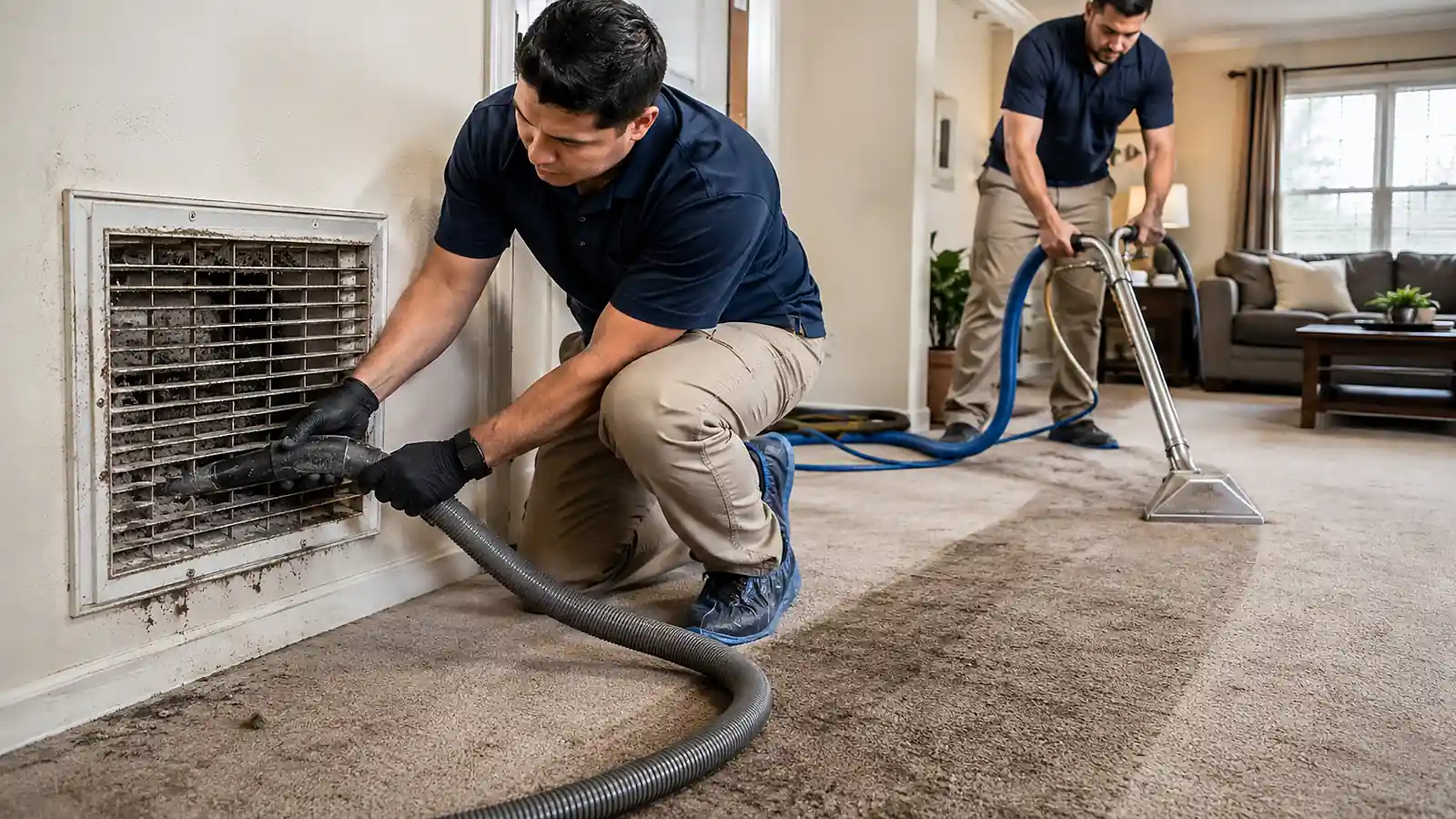
In Sandhills homes, dust rarely comes from one source. Spring pollen slips indoors on shoes, clothing, pets, and open-door traffic.
Rainy periods add sand, red clay, grass, and dried mud. Busy family homes, rental properties, offices, and pet-friendly spaces also generate fibers, hair, crumbs, and everyday debris.
That mix settles on vent covers, collects near return grilles, drops into rugs, and works deeper into high-traffic carpet. When dust returns soon after cleaning, trace how particles enter, where they collect, and what moves them again.
Start With the Dust Pattern, Not the Dust Cloth
Where dust appears first can tell you more than how much dust you see.
Dust Near Supply Vents
Supply vents push conditioned air into a room. A dusty ring around the grille may come from particles already in the room that cling to the cover. It may also point to buildup in nearby ductwork or debris disturbed by airflow.
Turn the HVAC system off before inspecting a grille. Look for dust along the edges and buildup that returns soon after careful vacuuming. Do not push tools deep into ductwork.
Dust on Return Grilles
Return grilles pull room air back toward the HVAC system. They often collect dust faster because air carries loose fibers, pet hair, and fine debris toward them. A dirty return does not automatically mean the entire duct system needs cleaning.
Check whether the filter fits correctly, whether it is overdue for replacement, and whether gaps allow air to bypass it. Follow the filter manufacturer’s instructions and your HVAC professional’s guidance. If visible buildup, stale odors, or rapid dust return continue, review the signs that air ducts may need attention before summer.
Check the Surfaces That Store and Release Dust
Carpet, rugs, and upholstery can hold debris long after hard surfaces look clean.
High-Traffic Carpet Acts Like a Dust Reservoir
Entryways, hallways, stairs, living rooms, and office corridors take repeated impact. Shoes carry in grit. Pets follow familiar routes. Each step can press particles deeper into the pile or stir loose material back into the room.
Vacuum these lanes slowly, overlap passes, and edge-clean near baseboards and furniture. When carpet remains dull or gritty after routine vacuuming, professional carpet and rug cleaning may be useful for embedded soil.
Area Rugs Catch Debris Before It Travels Farther
A rug near an entrance protects the flooring behind it, but it also becomes a collection point. Vacuum the surface and, when safe to move, the floor beneath it.
Treat delicate, Oriental, or unfamiliar rugs cautiously. Fiber type, dyes, fringe, backing, and construction affect cleaning decisions. Avoid aggressive scrubbing or soaking.
The same seasonal debris that settles into carpet can affect rugs and furniture, as explained in this guide to spring pollen in carpet, rugs, and upholstery.
Upholstery Can Keep a Room Feeling Dusty
Sofas and chairs collect dust from clothing, pets, open doors, and normal use. Vacuum seams, cushion edges, and areas under removable cushions. Check the care label before applying moisture or cleaner.
If fabric looks dull, smells stale, or releases dust when cushions move, surface vacuuming may not address the full buildup. Avoid masking the issue with fragrance. Identify the source and choose a method that fits the fabric.
Use a Whole-Room Dust Reset
A coordinated routine prevents you from cleaning the same dust twice.
Clean from high to low. Start with fan blades, ledges, blinds, and upper shelves. Use a slightly damp microfiber cloth where the surface allows it, so you collect dust instead of launching it into the air. Then clean vent covers and furniture. Vacuum carpet and rugs last.
Work by traffic zone. Entry paths, pet areas, sofa fronts, and shared spaces usually need more attention than closed guest rooms.
Place mats outside and inside busy entrances. Remove shoes when practical, wipe pet paws after outdoor activity, and keep windows closed when pollen or dust is visibly heavy.
When dust returns quickly despite filter checks, careful dusting, and traffic-zone vacuuming, schedule a focused evaluation of the areas that keep collecting it.
A practical plan may include air duct cleaning for visible duct and vent buildup, along with carpet or rug care for embedded soil. Start with the rooms and pathways showing the clearest pattern instead of treating every surface automatically.
Know When the Problem Is More Than Dust
Odor, moisture, damage, and restricted airflow need different decisions.
Musty Odor Needs Source Control
Humid weather can make old spills, pet residue, damp soil, and fabric odors more noticeable. If an area smells musty, check for recent moisture, wet shoes, spills, or slow-drying spot treatments. Improve airflow and let materials dry fully.
Do not keep adding water or cleaner to a damp spot. Persistent moisture, visible growth, sewage, or extensive water damage calls for an appropriately qualified specialist. For seasonal care, review how humidity affects carpet, rugs, and upholstery.
Carpet Ripples and Loose Seams Are Repair Issues
Wrinkles, ripples, loose seams, burns, and damaged sections are not dust problems. Vacuuming and deep cleaning will not correct lost tension or physical damage.
Stabilize the carpet first. Stretching or repair may be more appropriate before cleaning the surrounding area.
Dryer Lint Belongs to a Separate System
A dryer vent is not part of the HVAC duct network. Lint around the laundry area, restricted airflow, or changing drying performance should be evaluated separately.
Keep lint screens clean and follow the appliance manufacturer’s maintenance instructions. Seek qualified service when the vent path needs inspection or cleaning.
Build a Schedule Around Use, Not a Generic Calendar
Your cleaning frequency should reflect traffic, pets, seasons, and surface condition.
A quiet bedroom and a busy entryway should not follow the same routine. Inspect high-use carpet weekly and vacuum based on visible debris, pet activity, and foot traffic.
Check rugs near doors more often during pollen, rain, holiday hosting, move-ins, move-outs, and tenant turnover.
In commercial interiors, lobbies, corridors, waiting areas, shared seating, and entry mats usually load faster than private offices. Plan maintenance around traffic and operational needs.
Use condition signals to decide when deeper help may be useful. Watch for dust that returns soon after a top-to-bottom clean, vent buildup that quickly reappears, dull traffic lanes, gritty rugs, or stale upholstery.
A broader seasonal approach can connect indoor air, upholstery, and area rug care without assuming every dusty room needs every service.
A Cleaner House Starts With the Dust Route
Reducing fast dust buildup means interrupting movement, storage, and recirculation.
Control what enters at the door. Clean returns and vent covers safely. Maintain the HVAC filter correctly. Vacuum high-traffic carpet slowly. Include rugs and upholstery in the cleaning plan.
You may not eliminate household dust, but you can make it easier to manage. The most useful question is not simply, “Why is my house so dusty?” It is, “Where does the dust enter, where does it settle, and what keeps moving it again?”
Once you answer those three questions, your maintenance plan becomes more targeted and less repetitive.
Frequently Asked Questions
Dust may still be entering on shoes, clothing, pets, and outdoor air. It may also remain in carpet, rugs, upholstery, vent covers, or overlooked upper surfaces. Clean from high to low and examine where buildup appears first.
Not necessarily. Room dust can cling to a supply register or collect on a return grille even when the deeper duct system is not the main problem. Check the filter, grille, surrounding carpet, and visible buildup before deciding what needs attention.
Entry carpet receives soil from every person and pet crossing the doorway. Sand, pollen, red clay, grass, and dried mud can settle into the pile. Interior and exterior mats, shoe removal, and slower vacuum passes can reduce the buildup.
Area rugs can collect loose soil, pet hair, fibers, and seasonal debris. Walking across them may disturb particles that have settled into the pile. Vacuum according to the rug’s construction and clean underneath movable rugs when it is safe to do so.
Base the schedule on actual use rather than one rule for the whole property. Entryways, hallways, stairs, pet routes, and commercial corridors may need attention more often than quiet rooms. Increase cleaning when visible soil or grit returns quickly.
Yes. Pets can contribute hair and dander while carrying soil, grass, pollen, and moisture indoors on their paws and coats. Pay close attention to entry routes, resting areas, carpeted paths, rugs, sofas, and recurring accident locations.
Dust and fabric debris can settle in cushion seams, folds, and areas beneath removable cushions. Movement may disturb that material. Use a suitable upholstery attachment and follow the fabric care label before attempting spot or moisture-based cleaning.
Humidity can make embedded soil, old spills, pet residue, and damp fabric odors more noticeable. It can also slow the drying of carpet, rugs, and upholstery. Address moisture first and avoid repeatedly wetting an area that remains damp.
No. Wrinkles, ripples, loose seams, burns, and damaged sections are physical carpet problems. Carpet stretching or repair may need to occur before cleaning. Repeated vacuuming or spot cleaning will not restore lost tension.
Start with the busiest zones, including entrances, lobbies, corridors, waiting areas, shared seating, and carpet transitions. Track where soil and dust return first. Plan floor, rug, upholstery, and vent maintenance around traffic patterns and operational needs.