


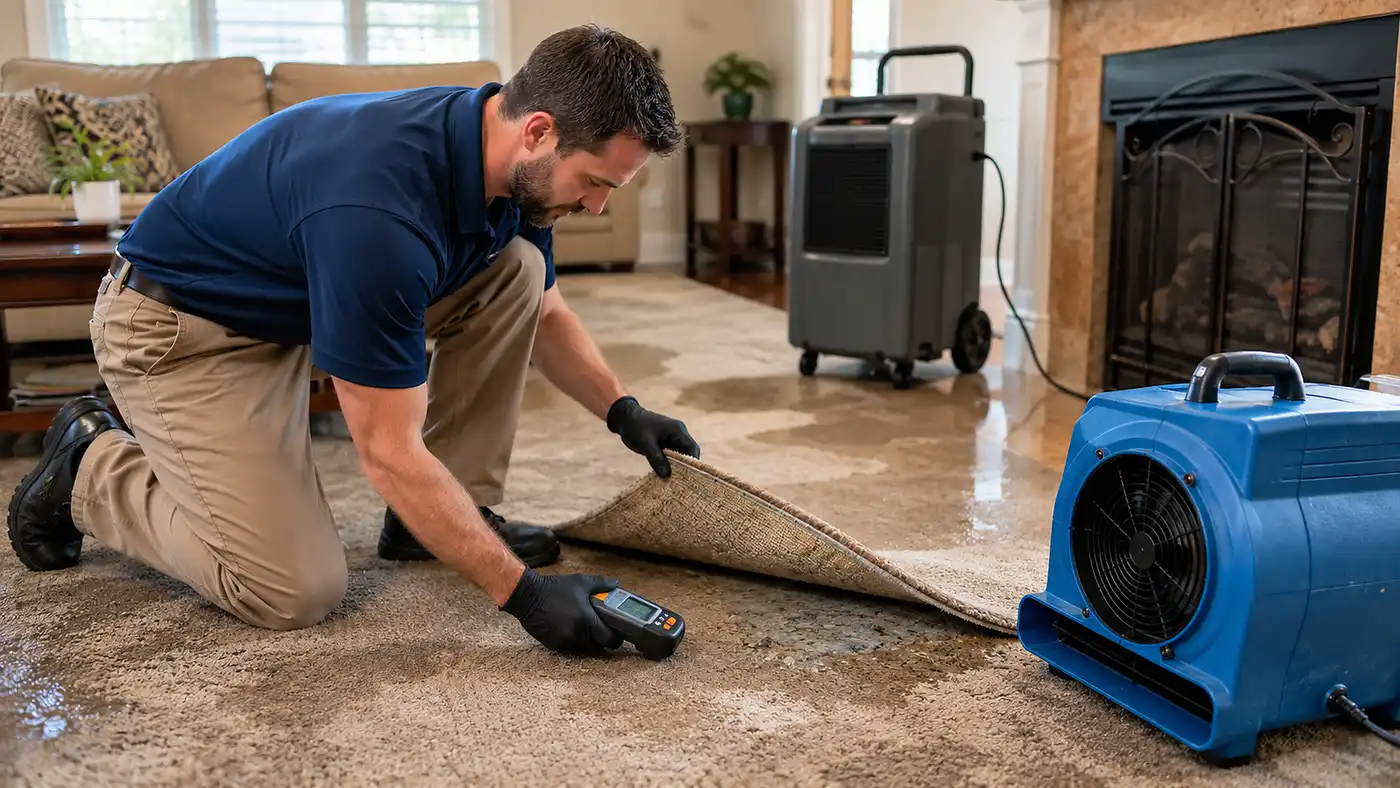
A freshly cleaned carpet should make a room feel renewed. Yet in some Sandhills homes, rental properties, and commercial interiors, an earthy or sour odor appears several hours later.
The carpet may look cleaner while the room smells damp, stale, or worse than it did before cleaning.
Humid weather can make this problem more noticeable. Carpet may dry slowly when moisture levels are high, airflow is limited, or too much cleaning solution reaches the backing and pad.
Rainy-season mud, red clay, pet accidents, spills, pollen, and daily traffic can also leave odor-producing material beneath the visible fibers.
A returning smell does not always mean the carpet needs another full cleaning. First, determine whether the problem is excess moisture, old contamination, cleaning residue, or a source outside the carpet.
Why a Musty Smell Can Appear After Carpet Cleaning
The odor usually develops when moisture interacts with material that was already in the carpet or remains trapped during drying.
Humidity Slows Moisture Evaporation
Carpet dries when moisture moves from the fibers into the surrounding air. When that air already contains substantial moisture, evaporation slows.
This commonly affects closed rooms, finished basements, interior offices, rental units between tenants, and spaces with weak air circulation.
A carpet may feel dry on top while its backing or pad remains damp. The odor can become stronger when the HVAC system cycles or the room warms.
Humid conditions can also intensify odors from soil, body oils, food spills, and pet activity. Practical guidance on humidity and indoor soft surfaces explains why carpet, rugs, and furniture may smell heavier during warm, damp periods.
Over-Wetting Pushes Moisture Below the Surface
Over-wetting happens when more liquid enters the carpet than the cleaning process can remove effectively.
Repeated passes, an overfilled spot treatment, incorrect machine use, or cleaning a small area too aggressively can soak the carpet backing.
Once moisture reaches the pad, surface fans may not be enough. The carpet pile can appear nearly dry while deeper layers continue holding water.
Thick carpet, dense padding, low room temperature, and furniture placed back too soon can lengthen the problem.
Using more water does not automatically produce a cleaner carpet. Effective professional carpet cleaning should account for fiber condition, soil level, stains, moisture, and the condition of the material below the pile.
Slow Drying Gives Old Odors Time to Reappear
Cleaning moisture can reactivate odor sources that were not noticeable when dry. Common examples include old pet accidents, drink spills, food residue, muddy traffic lanes, and moisture that previously reached the carpet pad.
The cleaning may remove visible soil from the face fibers without reaching every affected layer. As the remaining moisture moves upward during evaporation, the odor may return with it.
This is why a carpet can smell acceptable immediately after cleaning but become musty the next morning. The problem may not be the cleaning product itself. The deeper source may simply become easier to detect while damp.
What Else Can Make a Clean Carpet Smell Bad?
Before cleaning the carpet again, check for residue, hidden moisture, nearby fabrics, and recurring contamination.
Cleaning Residue Can Hold Soil and Moisture
Too much detergent or incomplete rinsing may leave a sticky film on carpet fibers. That residue can hold fine soil, attract new dirt, and make the surface feel stiff or tacky.
Adding another household cleaner may compound the problem. Different products can leave additional residue, affect dyes, or produce an unpleasant mixed fragrance.
Avoid layering powders, deodorizers, soaps, and heavily scented sprays without understanding the material and the original cleaning method.
Pet Odors May Extend Into the Carpet Pad
Pet urine can travel farther than the visible spot. Moisture may reach the backing, pad, seams, nearby rugs, or upholstered furniture. Humidity and cleaning moisture can then make the old odor noticeable again.
Blot fresh accidents rather than scrubbing them outward. For recurring areas, identify every affected surface instead of repeatedly treating the carpet pile.
Guidance on warm-weather pet stains and odors can help you decide whether the concern involves a spot, an entire room, or several soft surfaces.
How to Respond When the Odor Returns
Acting early can improve drying and help you distinguish a temporary damp smell from a deeper moisture problem.
Improve Air Movement Across the Carpet
Run ceiling fans or portable fans so air passes across the carpet rather than blowing into one small spot. Keep interior doors open when doing so will improve circulation. Use air conditioning or a dehumidifier when outdoor air is warm and humid.
Avoid opening windows automatically. Outdoor air may slow drying when humidity is higher outside than indoors.
Lift lightweight furniture or keep it out of the room until the carpet is dry. Do not cover damp areas with rugs, plastic mats, storage bins, or furniture skirts.
Check More Than the Carpet Surface
Press a clean, dry white towel against several areas. Compare the center of the room with edges, traffic lanes, pet areas, and spots near exterior doors.
Inspect nearby baseboards, walls, upholstery, and rugs. Look for plumbing leaks, condensation, appliance problems, roof entry, or damp flooring.
A smell that returns after storms may require the broader checks outlined in this guide for musty carpet after summer storms.
Do not assume every musty odor is a routine cleaning issue. Visible growth, contaminated water, widespread saturation, or an unknown leak calls for an appropriately qualified moisture, building, or remediation professional.
Choose Source-Based Odor Care
Fragrance may temporarily cover a smell, but it does not resolve damp padding, pet contamination, residue, or a leak. Proper odor control begins by identifying the affected material and correcting the moisture source.
For carpet that remains damp, develops a returning musty smell, or releases an older pet or spill odor after cleaning, schedule an assessment for odor treatment and deodorization.
Describe when the carpet was cleaned, where the smell is strongest, and whether the area has a history of spills, pets, leaks, or storm-related moisture.
How to Prevent Musty Carpet After Future Cleaning
Plan the cleaning around soil conditions, indoor humidity, airflow, and the needs of the carpet or rug.
Remove Dry Soil First
Vacuum slowly before applying moisture. Sand, red clay, pollen, pet hair, and gritty traffic soil are easier to manage while dry.
Removing loose material also reduces the amount of muddy residue created during wet cleaning.
Treat spills and pet areas according to the source rather than using one product throughout the room. Test any household product in an inconspicuous area first.
Plan for Drying Before You Start
Check indoor humidity and prepare fans or dehumidification before cleaning. Clean during a period when the room can remain open and undisturbed. Use the least moisture appropriate for the task, and extract as much as the equipment allows.
Do not return furniture, area rugs, or floor protectors until the carpet is dry. For seasonal planning, these post-winter carpet freshening steps help separate routine soil removal from odor, moisture, and deeper cleaning needs.
Treat Rugs and Upholstery as Separate Materials
An area rug may contain delicate fibers, dyes, backing materials, or construction that require different care from wall-to-wall carpet. Avoid soaking a rug on top of hardwood, laminate, or another moisture-sensitive floor.
Upholstery can also hold stale odors, pet residue, dust, and spills. If the carpet smells better but the room does not, check sofas, chairs, curtains, pet bedding, and nearby rugs before cleaning the carpet again.
When Recleaning Is Not the Best First Step
Persistent odor often calls for inspection and moisture correction rather than another immediate wet-cleaning cycle.
Wait before adding more water when the carpet still feels cool, damp, or unusually heavy. Recleaning too soon can extend drying time and move moisture farther into the backing.
Look for patterns. An odor concentrated near one wall may point to a leak or exterior entry. A smell in a pet’s preferred area may involve the pad.
A room-wide odor after DIY cleaning may indicate over-wetting, limited extraction, or weak airflow.
Cleaning can address soil and many odor sources. It cannot correct an active plumbing leak, damaged building material, severe contamination, or every form of permanent carpet damage.
The right decision may involve cleaning, focused odor treatment, carpet repair, padding evaluation, or guidance from another qualified trade.
Frequently Asked Questions
A temporary damp scent may occur while carpet is drying. It should become less noticeable as moisture leaves the fibers. A smell that grows stronger, turns earthy or sour, or returns after the surface feels dry deserves closer inspection.
Moisture may have reached old spills, pet residue, backing, or padding. The surface can dry before those deeper layers. As moisture and odor move upward, the room may smell worse several hours after the cleaning is complete.
Yes. Moist air accepts additional moisture more slowly than dry air. Air conditioning, dehumidification, and steady airflow across the carpet may improve drying when opening windows would introduce warmer, wetter outdoor air.
Not while it remains damp. Another wet-cleaning cycle may push additional moisture into the backing or pad. Improve drying first, identify the odor source, and decide whether residue removal, odor treatment, or another type of help is appropriate.
Yes. Cleaning moisture can reactivate older pet contamination below the visible fibers. Repeated accidents may affect the carpet backing, pad, nearby rugs, upholstery, or floor beneath the carpet, so surface treatment alone may not resolve the source.
Upholstery can hold moisture, body oils, dust, spills, and pet residue. If the carpet dries but the room still smells stale, inspect sofas, chairs, cushions, curtains, pet bedding, and other fabrics before assuming the carpet needs recleaning.
Powder may absorb limited surface odor, but it cannot correct damp padding, a leak, deep pet contamination, or excess cleaning residue. It can also leave material in dense carpet if vacuuming does not remove it completely.
Move the rug only when doing so will not spread moisture or damage the floor below it. Avoid soaking delicate or Oriental rugs with an unfamiliar household product. Fiber, dye, construction, and backing should guide the cleaning method.
Grout can hold spills, soil, and buildup that ordinary mopping may not fully remove. Check kitchens, bathrooms, entries, and adjoining hard floors when the odor seems broader than the carpeted section of the room.
Air ducts do not automatically cause a carpet odor, but collected dust, pollen, pet dander, and debris may contribute to an overall stale indoor environment. Investigate moisture and carpet-specific sources before assuming duct cleaning will solve the problem.
Stretching may be relevant when carpet develops ripples, wrinkles, or loose areas. Repair may suit damaged seams, burns, or isolated damage. These services address physical carpet problems, while odor concerns require separate source and moisture evaluation.
Schedule cleaning when traffic can remain off the carpet and air can circulate freely. Consider entrances, corridors, waiting areas, and other heavily used sections separately. Do not reopen a damp area simply because the face fibers look dry.