
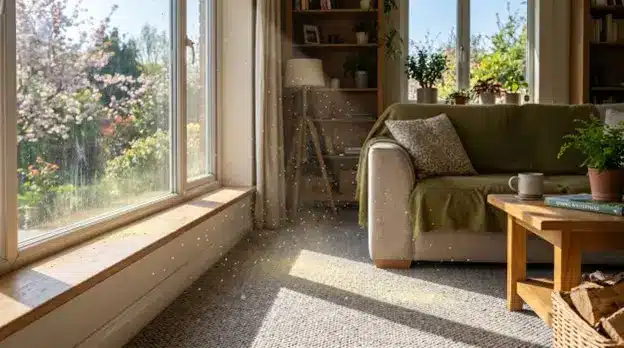
Spring in the Sandhills does not stay outside. The same yellow film that lands on your porch rail, windshield, and patio furniture also rides indoors on shoes, pets, open windows, and moving air. Once it gets past the threshold, it rarely settles on one surface alone.
It mixes with red clay dust, tracked-in grit, fabric oils, and everyday traffic, then disappears into carpet piles, rug foundations, and upholstered seating. In homes, rentals, offices, and mixed-use spaces, that buildup can make soft surfaces look dull, feel gritty, and seem stale long before they look obviously dirty.
How spring pollen gets indoors and why it clings to carpet, rugs, and upholstery.
Pollen does not need a dramatic event to get indoors. It can enter through windows, doors, and ventilation systems, and it can also be carried in through household dust, clothing, shoes, and pet traffic.
In the Sandhills, spring buildup often arrives alongside outdoor grit and red clay, so what lands in your carpet is usually a mix of fine particles and tracked-in soil, not a single yellow dust on its own.
Carpet and rugs can hold dust, dirt, pollen, and other particles deep in the fibers. That only works in your favor when cleaning stays consistent. When maintenance slips, those particles build up and can be stirred back into the room during foot traffic, vacuuming, or furniture movement.
That is one reason high-traffic lanes near entries, hallways, and living areas often look dingier first and feel rough underfoot sooner than quieter rooms. If you want a deeper look at that problem, looking into whether dirty rugs cause allergies expands on what hides below the surface.
Soft furniture collects the same fine debris that settles on floors, especially on seat cushions, arms, and fabric seams. Upholstery also catches body oils, pet dander, dust, and outdoor residue from clothing.
Over time, that combination can leave furniture looking flat, feeling less fresh, and contributing to a room that never quite feels fully clean, even after the floors are vacuumed. That is why upholstery cleaning matters in spring, not just floor care.
The practical signs that pollen and fine debris have settled into the surfaces you use every day.
Most spring buildup starts quietly. You may notice traffic lanes that look gray even after vacuuming, rug fibers that feel sandy, or a sofa that looks tired faster than expected. Entry rugs often show it first because they catch the first wave of pollen, grit, and moisture.
In busy households and commercial interiors, the cycle speeds up because the same particles are ground deeper into soft surfaces all day. A simple spring carpet cleaning checklist can help you spot those trouble areas early.
Pollen by itself is not usually the full odor story. Soft surfaces hold onto multiple sources at once, including pet residue, cooking particles, spills, and dampness from wet shoes or rainy spring days. When that mix settles into carpet backing, rug fibers, or upholstery, the result can be a stale or musty smell that routine surface cleaning does not fully change.
Vacuuming is essential, but it has limits. A good vacuum removes loose debris from the surface and upper pile. It does not always remove what has settled deeper into dense carpet, delicate rugs, or cushioned furniture.
That is why a room can look picked up and still feel dusty again quickly, especially when spring pollen is active, and HVAC cycles keep air moving through the space.
If spring buildup has reached the point where vacuuming, lint rolling, and spot cleaning are not changing how your carpet, rugs, or seating feel,
Call Now – 910-476-5459
Let’s understand the practical maintenance approach for controlling pollen, grit, and odor without overcleaning or guessing.
The easiest pollen to remove is the pollen that never spreads through the house. Use mats at exterior doors, leave shoes near the entrance, and wipe pet paws before they cross onto carpet or rugs. On high-pollen days, it also helps to be selective about when you open windows, because outdoor biological contaminants can move indoors through doors, windows, and ventilation pathways.
A spring vacuum routine works best when it is slow and deliberate. Focus on entries, hallways, seating areas, and the spaces around beds and sofas. A HEPA-filter vacuum is worth using when you have one, and repeated passes in traffic lanes matter more than one quick sweep.
Fabric-covered furniture deserves attention too, because pollen and dust do not stop at the floor line.
Wall-to-wall carpet, area rugs, and upholstered furniture do not all respond to the same treatment. Area rugs often need more careful handling based on fiber, dye stability, and construction.
Upholstery should be cleaned with fabric-appropriate methods that remove embedded soil without over-wetting the material. If a rug is delicate or still feels gritty after careful vacuuming, area rug cleaning usually makes more sense than aggressive DIY scrubbing.
If you clean your floors and furniture, but dust seems to settle again right away, the whole problem may not be at floor level. Air ducts can collect dust, dirt, pollen, pet dander, and other debris that recirculate when your HVAC system runs.
In that situation, soft-surface cleaning can help, but it may not be the only maintenance step worth considering. For a better explanation, look into how air duct cleaning works.
Decide when routine upkeep is enough and when deeper cleaning or specialty care is the better call.
Deeper cleaning may be useful when traffic lanes stay dull after repeated vacuuming, the carpet feels sticky or gritty, or odors return quickly after spot treatment. The same applies when entry areas take on that compacted look where fibers seem crushed rather than simply dusty. In a season when pollen arrives with outdoor grit, appearance and texture often change together.
Rugs often need specialty attention when fine grit remains after vacuuming, colors look muted, or the piece has delicate fibers or fringe. Upholstery may need the same level of care when cushions smell stale, armrests darken from use, or fabric starts looking tired in the spots you use every day. Those are cleaning-decision signs, not just cosmetic annoyances.
The goal is not a perfectly sealed home. The goal is better control over what settles indoors and how long it stays there. In practice, that means less tracked-in debris, fresher seating, cleaner traffic lanes, and fewer particles being stirred up every time daily life moves through the room.
When you think about spring maintenance that way, carpet, rugs, upholstery, and ducts start to feel less like separate chores and more like one connected indoor-care plan.
Pollen moves indoors in several ordinary ways. It comes through doors, windows, and ventilation paths, and it also tags along on shoes, clothing, pets, and household dust. In the Sandhills, it often mixes with grit and soil at the entry point, which is why soft surfaces can load up quickly.
Vacuuming helps, especially when it is done slowly and consistently, but it mainly handles loose and reachable debris. Fine particles can remain deeper in carpet pile, dense rugs, and upholstered seating. That is why surface improvement and full removal are not always the same thing.
A solid baseline is weekly vacuuming on carpet and fabric-covered furniture, with more attention in busy homes, pet-friendly spaces, and rooms near main entries. Technique matters too: slower passes, edge work, and repeat cleaning in traffic lanes usually outperform one quick pass.
Fine dry soil can settle deep into a rug even when the surface looks neat. In delicate or dense rugs, debris may cling to the fibers and foundation, which is why dry soil removal and fiber-specific cleaning matter. Visual cleanliness and actual grit removal are not always the same thing.
Yes. Area rugs often need a more customized approach based on fiber type, dyes, weave, and overall condition. That is especially important for delicate or handmade pieces, where aggressive DIY cleaning can do more harm than good if the material is not assessed first.
Yes. Upholstered furniture collects fine debris on cushions, arms, seams, and fabric folds, and it also holds body oils and everyday residue from clothing and use. That is why a room can still feel dusty or stale even after the floor has been vacuumed.
A stale smell usually means more than one source is sitting on the same surface. Pollen can combine with dampness, tracked-in soil, spills, pet residue, and normal fabric use. When those sources settle into carpet, rugs, or upholstery, odor often lasts longer than routine surface cleaning can handle.
If dust returns quickly after cleaning, vents seem dirty, or your HVAC system appears to recirculate debris, it makes sense to think beyond floors and furniture. Duct systems can collect pollen, dust, and pet dander, so soft-surface cleaning may work better when ventilation maintenance is considered.
Pets can add another transport layer because paws and fur move outdoor debris across rugs, carpet, and seating. Spring cleaning works better when you treat entry control, vacuuming, fabric care, and odor decisions as one routine instead of separate issues. Wiping paws and staying ahead of buildup usually prevents the season from feeling heavier indoors.
Busy offices, rental turnovers, waiting rooms, and other shared interiors typically see faster buildup because foot traffic keeps grinding fine debris into soft surfaces. A practical plan focuses on entries, traffic lanes, seating, and any HVAC-related dust pattern, rather than waiting for the whole space to look obviously dirty.