


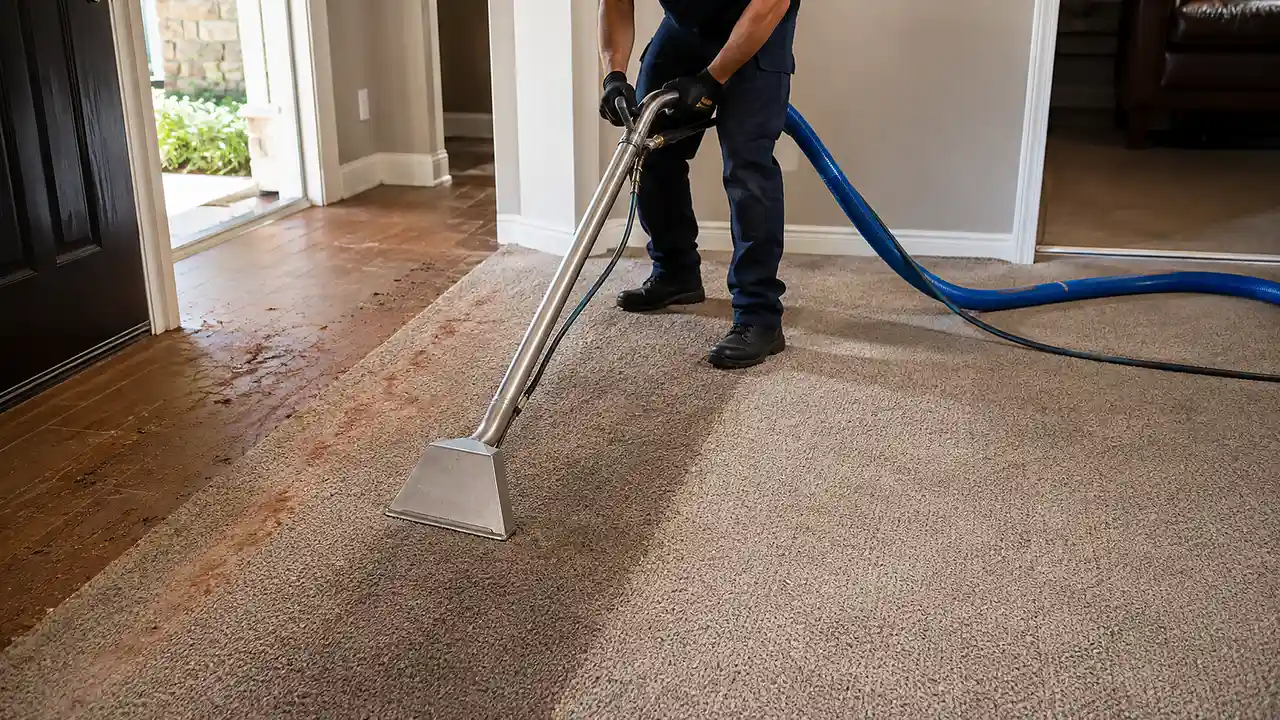
By the end of summer, the busiest carpet lanes often tell a detailed story. Sand has crossed the entryway.
Red clay has dried near the back door. Damp shoes have carried soil through hallways. Bare feet, pets, visitors, and daily routines have pressed the mixture deeper into the pile.
This pattern is common in Sandhills homes, rental properties, offices, and other high-traffic interiors. The carpet may look darker down the center of a hallway or flatter beside a sofa.
Vacuuming may improve the surface without correcting the dull, compacted appearance underneath. The problem is not one large mess.
It is repeated pressure over fine particles. Understanding how that process works can help you clean more effectively and decide when routine maintenance is no longer enough.
Why Summer Soil Creates Dark, Flat Carpet Lanes
Summer traffic combines loose grit, moisture, body oils, and repeated footfall in the same narrow paths.
Sand and dry grit act beneath your feet
Sand and gritty soil settle between carpet fibers, where they may be difficult to see. Every footstep presses those particles against the yarn. Pivot points near doors, stairs, chairs, and hallway turns receive even more friction.
Over time, the pile can lose its upright appearance. Light reflects differently from crushed or matted fibers, making the lane look gray even after surface debris is removed.
Frequent vacuuming matters because loose soil is easier to collect before it becomes embedded.
Use slow, overlapping passes rather than rushing through the room. Concentrate on entrances, stairs, hallway centers, furniture approaches, and the paths between frequently used rooms.
A back-to-school shoe-traffic plan can also help you adjust your routine when summer activity transitions into busier fall schedules.
Red clay behaves differently from loose sand
Dry sand often remains granular. Red clay can create a more stubborn problem because moisture helps it cling to fibers. Muddy residue may spread as you wipe or scrub it. Once dry, the remaining fine particles can continue collecting in the carpet pile.
Avoid aggressive rubbing. Scrubbing may distort the pile and move damp soil across a larger area. Remove loose material first. Blot moisture with a clean, light-colored cloth, working from the outside of the spot toward the center.
Do not combine random household products. Different carpet fibers, dyes, backing materials, and existing residues can react differently to moisture and cleaning agents.
Oils make traffic lanes look darker
Summer carpet does not collect only outdoor soil. Bare feet, socks, pet paws, food residue, and ordinary contact leave small amounts of oil behind. Those oils can help dust and grit adhere to fibers.
This is why a busy lane may darken faster than the carpet along the walls. A quick vacuum collects some dry particles, but it does not always address the residue holding deeper soil in place.
The effects of summer foot traffic and damp textiles become most visible in family rooms, bedrooms, play areas, entries, and waiting spaces.
How to Inspect Carpet Before You Deep Clean
A careful inspection helps you separate removable soil from permanent wear, structural damage, and moisture-related problems.
Compare the lane with a protected area
Look at carpet beneath a movable chair, beside a baseboard, or inside a low-traffic room. Compare its texture and color with the busy lane.
If the high-use area looks darker but the pile still responds when gently lifted, embedded soil may be a major factor. If fibers remain crushed, frayed, discolored, or sparse after cleaning, physical wear may be contributing to the appearance.
Cleaning can remove soil. It cannot rebuild yarn that has been worn away.
Check the full route, not one visible spot
Follow the traffic path from the exterior door into the building. Inspect the mat, hard-floor transition, first section of carpet, hallway, stairs, seating area, and nearby rugs. Soil frequently moves across connected surfaces.
A dirty entrance mat can become a new soil source. Grout beside a carpeted room may hold tracked-in residue. An area rug may release grit back onto the surrounding floor if it has not been cleaned appropriately.
Use the end-of-summer carpet reset to organize inspections across carpet, rugs, upholstery, entry tile, and other high-use surfaces.
Look for ripples, loose seams, and damaged sections
A flattened lane is not always only a cleaning issue. Carpet may also develop ripples, wrinkles, loose seams, burns, tears, or damaged patches.
Heavy furniture movement and repeated pivoting can make an existing problem more noticeable.
Do not treat raised or loose carpet as a stain. A carpet stretching assessment may be more appropriate when the material no longer lies flat.
Repairs may require a different plan when seams, edges, or individual sections are damaged.
When vacuuming no longer improves dark lanes, request a professional carpet and rug cleaning evaluation focused on the soil load, traffic pattern, fiber condition, spots, odors, and any visible damage.
A maintenance-led assessment can help you determine whether the next step should involve deeper cleaning, targeted treatment, stretching, or repair.
Build a Smarter High-Traffic Carpet Maintenance Plan
The best routine intercepts soil at the door, removes it often, and treats each surface according to its construction.
Create two lines of defense at entrances
Place a scraping mat outside and an absorbent mat inside. The outdoor mat should collect larger grit and dried mud. The indoor mat should capture finer soil and dampness that remain on shoes.
Choose mats large enough for several footsteps. Clean them before they become saturated with debris. Keep shoe storage, pet towels, and wet-item drop zones close to the entrance so dirt does not travel through the building.
Vacuum according to traffic, not room size
A large guest room may need less attention than a small hallway used all day. Set the schedule around actual use.
Give extra passes to entry lanes, stair centers, sofa approaches, desk areas, checkout paths, waiting rooms, and pet routes.
Empty the vacuum bin or replace the bag before it becomes overfilled. Remove hair and thread from the brush roll, and follow the carpet manufacturer’s guidance for vacuum height and brush use.
The goal is to collect fine soil while it remains loose. Waiting until the carpet looks gray allows more material to settle below the visible surface.
Respond carefully to spots and odors
Blot fresh spills instead of scrubbing. Remove solids gently, use minimal moisture, and avoid saturating the carpet or pad. A spot that repeatedly returns may involve residue, incomplete rinsing, or material below the visible fibers.
Odor also requires source-based thinking. Covering a smell does not remove the material causing it. Pet accidents, damp footwear, food spills, and moisture trapped in soft surfaces may need different treatment decisions.
Summer households with children, pets, crafts, snacks, and outdoor activity can use these carpet-care steps for spills and heavy traffic to prevent rushed cleanup from making a spot larger.
Include nearby fabrics, hard floors, and airflow
Carpet is only one part of an interior maintenance plan. Upholstery can hold dust, oils, pet debris, and stale odors.
Tile and grout near entrances can retain tracked-in discoloration and buildup that routine mopping leaves behind.
Area rugs and Oriental rugs may require more careful handling because fibers, dyes, fringe, backing, and construction vary. Avoid soaking or aggressively scrubbing a rug without understanding its materials.
Air ducts may collect dust, pollen, pet dander, and other debris. Dryer vents collect lint and can experience restricted airflow.
These systems do not cause every carpet problem, but they deserve separate inspection when dust or airflow concerns continue after surface cleaning.
Know When Maintenance Has Reached Its Limit
Professional help may be useful when the problem extends beyond loose surface soil.
Consider a deeper evaluation when traffic lanes stay dark after thorough vacuuming, spots return after drying, odors reappear, or carpet feels gritty after repeated maintenance.
The same applies when a valuable rug needs fiber-specific care or a commercial interior requires coordinated cleaning across several high-use areas.
Cleaning should also be separated from repair decisions. Ripples, loose seams, burns, tears, and missing fibers will not disappear through deeper washing.
Moisture that continues, spreads, or creates a persistent musty smell may require investigation beyond ordinary carpet care.
An effective fall reset starts with an honest assessment. Remove what is loose. Treat fresh spots carefully. Document recurring problems.
Then match the service to the actual condition instead of assuming every dark lane needs the same solution.
Frequently Asked Questions
Repeated foot traffic presses sand, dry soil, and other debris against the carpet pile. Oils and moisture can help particles stick to the fibers. Cleaning may improve soil-related dullness, but worn or damaged yarn may remain flat.
Vacuuming can collect loose red-clay particles after the material has dried completely. It may not remove residue that bonded to fibers while damp. Avoid scrubbing, and use a cleaning method appropriate for the carpet’s construction.
Base the schedule on use rather than treating every room equally. Busy entrances, halls, stairs, pet paths, and commercial walkways usually need more attention than low-use rooms. Slow, overlapping passes improve dry-soil pickup.
Fine soil may remain below the visible pile, or residue may be holding particles to the fibers. The pile may also be crushed or physically worn. A closer inspection can help distinguish removable soil from permanent texture change.
No. Scrubbing can spread the soil, distort fibers, and push moisture deeper. Remove solids gently, blot the area, and work from its outer edge toward the center. Avoid soaking the carpet and pad.
Yes. Pets follow repeated routes and can carry sand, clay, grass, moisture, and outdoor debris on their paws and fur. Favorite resting places may also collect oils, dander, stains, and odors that need targeted care.
Not always. Rug fibers, dyes, fringe, backing, age, and construction can affect the suitable cleaning method. Delicate, handmade, Oriental, or valuable rugs should receive a careful inspection before washing or spot treatment.
Stretching may be appropriate when carpet has ripples, wrinkles, or loose areas. Cleaning addresses soil, spots, and some odor concerns, but it does not correct material that no longer lies flat or remains properly secured.
Repair may help with burns, tears, loose seams, or localized damage when the condition allows it. General thinning across a large lane may reflect broader wear. The carpet’s age, available matching material, and damage pattern affect the decision.
Include upholstery when seating looks dull, smells stale, or collects dust, pet debris, spills, and body oils. Coordinating the work can make sense in family rooms, offices, rental properties, waiting areas, and other connected high-use spaces.
Inspect entrances, lobby lanes, checkout paths, corridors, waiting areas, office chairs, breakroom tile, and transition zones. Plan work around the areas with the greatest soil load and use rather than applying one schedule to the entire property.
Air-duct cleaning and carpet cleaning address different maintenance concerns. Ducts can collect dust, pollen, pet dander, and debris, while carpets collect tracked-in soil and surface fallout. Recurring dust concerns should be evaluated across both airflow and surfaces.