


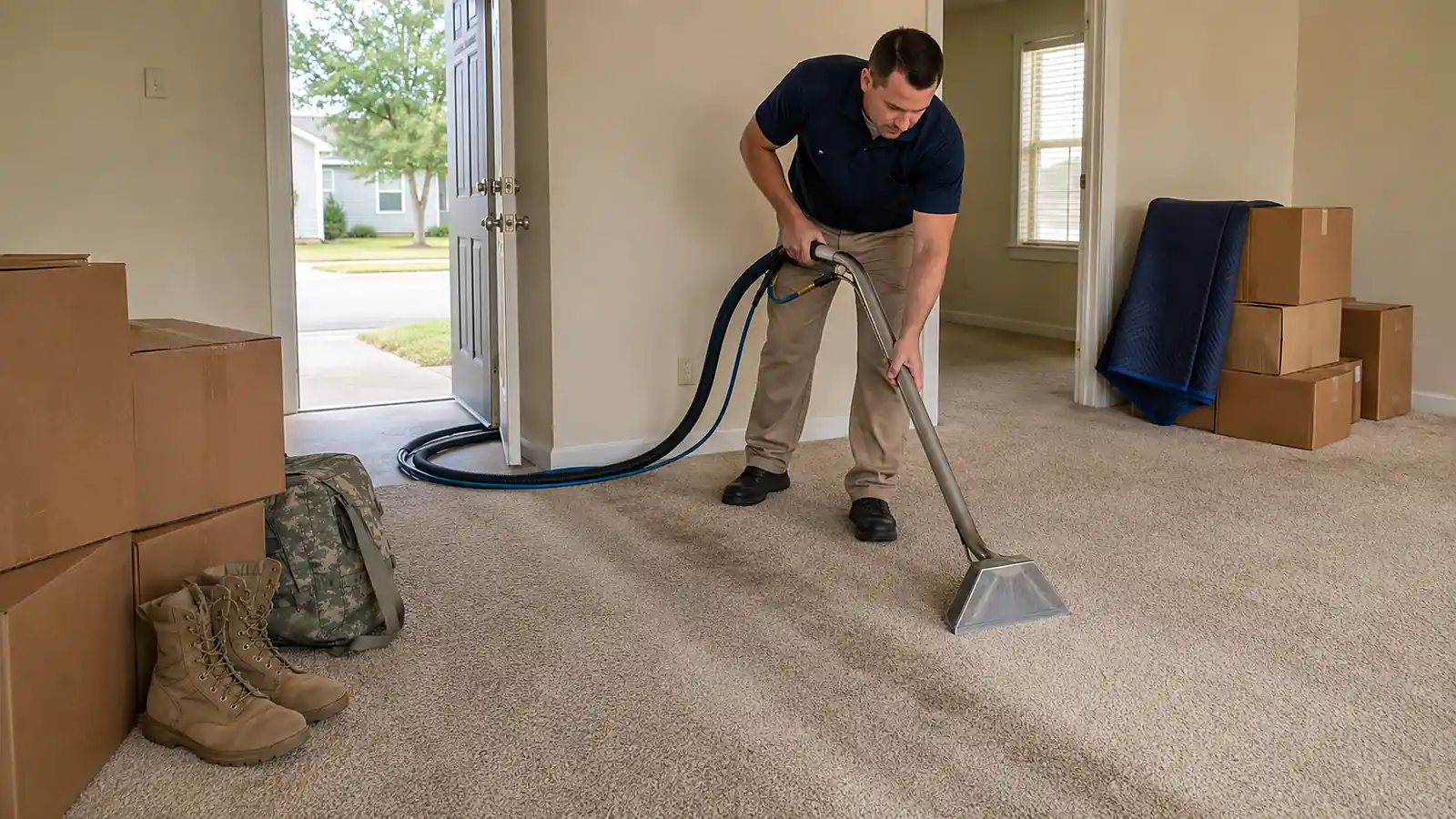
A PCS move rarely leaves much room for trial and error. Movers are coming, boxes cover the floors, pets sense the disruption, and your final housing inspection is approaching.
Once the furniture disappears, carpet problems that seemed minor can suddenly dominate an empty room.
Fort Bragg households also contend with Sandhills pollen, tracked-in grit, red clay, muddy shoes, pet activity, and humid-weather odors.
These conditions do not affect every property equally, but they often become more noticeable during a move-out walkthrough.
A focused carpet plan helps you distinguish removable soil from stains, odors, and physical damage before you turn in the keys.
Start Your PCS Carpet Plan Before the Rooms Are Empty
Early inspection gives you time to review housing requirements, document existing conditions, and avoid rushed cleaning decisions.
Fort Bragg families should verify the cleaning and inspection requirements that apply to their specific housing arrangement.
On-post housing instructions, an off-post lease, and property-management policies may set different expectations. Do not assume that another family’s PCS checklist applies to your home.
Review your move-in condition report and photographs before cleaning. Then inspect each carpeted room with the lights on and curtains open. Note:
- Dark entry paths and hallway traffic lanes
- Pet stains or repeat accident areas
- Odors near walls, doors, furniture locations, and pet zones
- Food, drink, ink, grease, or mud spots
- Ripples, loose seams, tears, burns, or frayed transitions
- Differences between exposed carpet and areas previously under furniture
Photograph the whole room first. Follow with close-up images of each concern. A documented move-in and move-out carpet cleaning plan can make the handoff easier for renters, landlords, and property managers.
Separate Traffic Soil From Actual Carpet Damage
Cleaning addresses soil and some spotting, while stretching or repair addresses physical defects in the carpet.
Why Traffic Lanes Look Darker
Entryways, hallways, stairs, and paths between frequently used rooms collect more debris than low-use areas.
Sand, red clay particles, pet hair, food crumbs, and ordinary dust settle into the fibers. Repeated foot traffic then presses that material deeper and flattens the carpet pile.
Vacuum slowly in multiple directions. Use edge tools near baseboards and doorway transitions. A single fast pass may lift loose debris without removing the material held lower in the carpet.
Darkness may remain after vacuuming because the fibers still contain embedded soil. It can also remain because the pile has worn or flattened.
Professional carpet and rug cleaning may help with embedded dirt, visible pathways, spots, and odors, but cleaning cannot rebuild fibers that are permanently worn.
Know When Cleaning Is Not the Answer
Ripples, buckles, loose seams, burns, tears, and pulled sections are not soil problems. Repeated spot treatment will not tighten loose carpet or repair damaged construction.
Inspect these conditions after the room is cleared. Avoid dragging heavy furniture across loose areas during packing.
Record physical damage separately from stains and traffic soil so you can discuss the correct next step with the property manager or an appropriate carpet professional.
Treat Pet Odors as a Source Problem
Successful odor control depends on identifying the source of the odor rather than covering the room with fragrance.
Look Beyond the Visible Spot
A pet stain may be smaller than the affected area beneath it. Liquid can move through carpet fibers and into the backing or padding. Repeated accidents may also overlap, creating a larger odor zone than you can see.
Walk through the property after furniture and pet bedding have been removed. Check favorite resting places, corners, doors leading outside, feeding areas, and rooms that stayed closed. Warm or humid conditions may make an old odor easier to notice.
Blot a fresh accident instead of scrubbing it. Scrubbing can spread residue and disturb the fibers.
Avoid combining multiple household chemicals because incompatible products can damage materials or create unsafe fumes.
Include Nearby Soft Surfaces
Carpet may not be the only source. Upholstery, area rugs, fabric-covered furniture, pet beds, and curtains can hold hair, debris, body oils, and odor. Cleaning only the floor may leave the room smelling stale if another soft surface remains affected.
The same maintenance principle applies after the move. Regular vacuuming of pet routes, prompt blotting, and periodic inspection can prevent small issues from becoming move-out problems.
These carpet-care tips for pet owners explain how dry soil, odor, and wear often develop together.
When pet odor remains after surface cleaning or traffic lanes still look heavily soiled, schedule a condition-based assessment for pet odor and stain treatment before your final walkthrough so the cleaning plan can focus on the affected rooms and materials.
Focus on Security-Deposit Trouble Spots
Your lease, move-in records, cleaning documentation, and final condition matter more than assumptions about what an inspector will accept.
Understand Wear Versus Tenant-Caused Damage
North Carolina guidance distinguishes normal wear from damage caused by negligence, misuse, spills, pets, or other incidents.
Slight fading or ordinary wear may be viewed differently from torn, burned, heavily stained, or odor-affected carpet. The facts of the tenancy and the lease still matter.
Do not treat carpet cleaning as a guarantee that your full deposit will be returned. Cleaning can address maintainable surface conditions. It cannot erase permanent damage, override lease terms, or settle a disagreement about responsibility.
Inspect the Areas Most Likely to Be Missed
Move-out inspections can reveal problems hidden during everyday use. Pay close attention to:
- Carpet beneath pet beds, couches, and dining furniture
- Soil around exterior doors and garage entries
- Edges where vacuum tools did not reach
- Closet carpet that absorbed stored-item odors
- Stair edges and hallway turns
- Carpet next to kitchens and eating areas
- Transitions where carpet meets tile or hard flooring
A spring move-out carpet checklist is especially useful when pollen, damp shoe traffic, and tracked-in soil are part of the final cleanup.
Clean in the Right PCS Sequence
The correct order reduces re-soiling and gives damp surfaces time to dry before inspection.
Finish Packing and Repairs First
Complete dusty work, wall touch-ups, furniture removal, and most packing before the final carpet cleaning. Movers repeatedly crossing freshly cleaned carpet can recreate traffic lanes within hours.
Vacuum after the rooms are empty. Check closets and areas behind doors. Remove loose pet hair from baseboards and carpet edges. Address tile, grout, and nearby hard flooring without splashing dirty water onto carpet transitions.
Leave Time for Drying and Reinspection
Do not plan carpet cleaning immediately before handing over the keys. Humidity, ventilation, carpet construction, soil level, and treatment needs can influence drying.
Follow the instructions provided for the cleaning method used. Once the carpet is dry, inspect it again in daylight. Smell the room from the doorway rather than testing only inches above the carpet.
Photograph the final condition and keep invoices or service records with your PCS paperwork. Property managers and facility managers can use the same sequence across rental homes, offices, common areas, and mixed-use spaces.
A consistent turnover cleaning checklist also helps separate cleaning, odor treatment, stretching, and repair needs.
Complete the Handoff With Clear Documentation
A calm final review helps you leave a cleaner property record and respond to questions with specific evidence.
Compare the dry carpet with your move-in photographs. Confirm that personal belongings, pet supplies, rug pads, and temporary floor coverings are gone. Record any condition that could not be corrected through cleaning.
Attend the walkthrough when your housing arrangement permits it. Ask for concerns to be identified clearly.
Keep communication in writing when follow-up is necessary, and retain dated photographs, cleaning receipts, the lease, and inspection forms.
The goal is not to make an aging carpet look new. Your goal is to remove ordinary soil, address treatable odors and spots, identify actual damage, and present a documented property condition at the end of your Fort Bragg PCS move.
Frequently Asked Questions
Requirements vary by housing arrangement, lease, and property-management policy. Review your written instructions before booking or renting equipment. Even when professional cleaning is not mandatory, heavy soil, visible stains, or pet odors may require more than routine vacuuming.
No. Deposit decisions can involve unpaid obligations, lease terms, cleaning conditions, and damage beyond ordinary wear. Carpet cleaning may improve maintainable conditions, but it cannot guarantee a particular inspection or deposit outcome.
The final cleaning usually makes more sense after furniture and boxes have been removed. Empty rooms provide better access and reveal hidden stains, traffic lanes, and pet areas. Complete dusty repairs and heavy foot traffic before the last carpet pass.
The visible mark may affect only the upper fibers, while residue may have reached the backing or padding. Nearby rugs, upholstery, or pet bedding may also hold odor. Source identification is more useful than repeatedly adding fragrance.
Blotting is generally safer than aggressive scrubbing. Scrubbing can spread moisture, distort fibers, and enlarge the visible area. Follow the carpet manufacturer’s care guidance and avoid mixing cleaning chemicals.
Entryways and walkways collect compacted grit, dust, pet debris, and oils. Foot traffic can also flatten the pile, changing how the carpet reflects light. Cleaning may address soil, but permanent wear may remain visible.
Carpet may need stretching when it has ripples, wrinkles, buckles, or loose areas that remain after the surface is dry. Cleaning addresses soil and spots, not installation tension. Tears, burns, or damaged seams may require repair instead.
Not automatically. Area and Oriental rugs can differ in fiber, dye, fringe, backing, and construction. Review each rug separately and use a cleaning approach appropriate for its material and condition.
Yes. Fabric furniture can collect pet hair, body oils, accident residue, dust, and odor. In furnished rentals or offices, inspect upholstery and nearby rugs when the carpet looks clean, but the room still smells stale.
Use a repeatable room-by-room checklist. Document traffic lanes, stains, odor areas, damaged sections, rugs, upholstery, and hard-floor transitions. Separate routine cleaning from stretching, repair, or specialty odor concerns before scheduling work.
Not necessarily. Air duct cleaning is a separate maintenance decision that may be considered when ducts contain noticeable dust, pollen, pet dander, or debris. Mechanical problems, suspected contamination, or moisture concerns should be evaluated by appropriately qualified professionals.
Keep dated before-and-after photographs, the lease, move-in and move-out reports, written communications, and cleaning receipts. Store them with your PCS records so you can answer condition questions without relying on memory.