
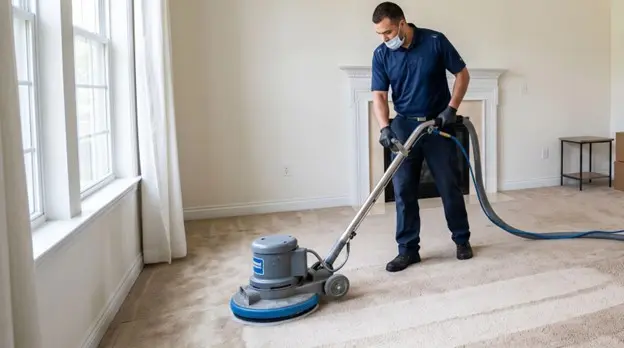
Spring move-outs in this part of the region can get messy fast. By the time boxes are stacked by the door, your carpet may already be holding pollen, tracked-in grit, red clay dust, damp shoe traffic, pet hair, and stale odor pockets. Add a final walkthrough and a tight deadline, and it becomes very easy to spend time scrubbing the wrong spots.
This checklist keeps you focused on what matters most: visible soil, repeat odor areas, drying time, and any carpet condition issue that looks bigger than surface dirt. If you want a broader seasonal reset, our spring carpet cleaning checklist and guide on why vacuuming alone is not enough for deep carpet cleaning are helpful options.
Give yourself a quick inspection first so you can tell the difference between routine move-out cleaning and a bigger carpet problem.
Move-out cleaning should cover the whole rental, but carpet needs its own pass because it shows soil, odor, and wear quickly during a walkthrough.
Before you touch anything, check the lease, compare the carpet to your move-in photos, and decide which rooms need simple cleanup versus real corrective work. Cleaning an empty room is also faster and usually more accurate than cleaning around half-packed furniture.
Take clear photos of traffic lanes, stains, pet spots, doorway transitions, seams, and any ripples. Do this in daylight if possible. That creates a cleaner record of what was already there and helps you avoid guessing later about whether a problem looked cosmetic or structural.
Some issues belong in the cleaning bucket. Think dull entry lanes, minor spotting, tracked-in soil, and odor buildup. Others belong in the repair bucket. Think ripples, bunching near doorways, loose areas, and wrinkles that stay put. If the carpet still shifts underfoot after drying, the problem may need stretching or repair instead of another round of spot treatment.
A better result usually starts before the first cleaning pass. Small prep steps save time and cut down on rework.
Clear lamps, picture frames, vases, and other breakables from carpeted areas. Move smaller pieces out of the way. For larger furniture, do not assume it will be moved during service. Technicians clean around larger items, and furniture should not be shuffled during cleaning or drying.
This is one of the easiest ways to improve the final result. Vacuuming first helps remove loose debris, pet hair, wrappers, and dry soil before moisture gets involved. That matters even more in spring, when fine grit and outdoor debris can settle deep into the pile long before the room looks truly dirty.
Do not expect every spot to speak for itself. Mark repeats accident areas, old spills, and stain clusters before the cleaning starts. Experts recommend telling the office or technician about those areas and even marking them with sticky notes for special attention.
Keep pets and small children away from work areas, especially while hoses and equipment are in use. After cleaning, give the carpet real drying time. Carpet is damp after cleaning, with drying typically taking 6 to 24 hours, depending on exterior conditions. You must run ceiling fans plus set the thermostat fan to “ON” between 68°F and 80°F.
If your checklist already shows traffic lanes, pet contamination, odor pockets, or move-out wear, carpet and rug cleaning can save time right when DIY work usually stalls.
At Williams Carpet Care, we also offer move-in or out services through our residential work. Call 910-476-5459 to schedule now!
Not every room needs the same amount of effort. Put your time into the areas that show wear first and hold odor longest.
These zones usually collect the worst of spring move-out wear. Tracked-in sand and red clay, spills, pet accidents, and constant foot traffic are common floor problems. That is why entry paths, hallways, stairs, and thresholds should get your first close inspection and your last final pass.
Pet issues are rarely just one visible spot. Hair, dander, body oils, muddy paw prints, and repeat accident areas tend to spread across the same routes and resting zones. If your rental has a pet history, work those spaces with more intention than the rest of the room. Our guide to carpet care for pet homes is useful for figuring out where odor and wear usually hide.
A wrinkle is not the same thing as a stain. If the carpet looks wavy, shifts near a doorway, or still feels loose after drying, move your checklist away from stain remover and toward repair. Learning why your carpet ripples and feels lumpy after cleaning helps you understand why those symptoms often point to tension loss, trapped moisture, or a stretching issue.
If you are moving out of a furnished rental or returning to a mixed-use space, do not stop at wall-to-wall carpet. Upholstered seating and rugs collect dust, oils, spills, and odor. A room that still feels stale after the floor is cleaned may need a wider reset across nearby soft surfaces.
A rushed DIY approach can leave the carpet looking worse, drying longer, or smelling musty right before the walkthrough.
Heavy spot spraying and repeated machine passes can leave moisture behind, especially in thicker or older carpet. If the carpet stays damp too long, the issue can shift from soil removal to moisture management. That is not a good trade late in a move-out schedule.
Blot, do not grind. Test any cleaner in a small area first. You must now over-saturate the carpet during spot treatment. That is especially important when you are trying to avoid spreading a stain or slowing down dry time right before the key return.
Spring humidity and poor airflow can drag out drying. Use fans. Keep the air moving. Give yourself a cushion before the walkthrough instead of hoping the carpet will be ready in an hour. A rushed final inspection on damp carpet can make a clean room feel unfinished.
At Williams Carpet Care, we handle carpet, rug, upholstery, tile and grout, odor treatment, air duct cleaning, dryer vent cleaning, carpet stretching, and carpet repairs for residential and commercial spaces in the region.
Call 910-476-5459 to schedule before key return.
Your final day should be about timing, not panic cleaning. Keep the last steps simple and visible.
The easiest time to clean the carpet is after your belongings are out. Empty rooms show remaining soil better, and you avoid tracking new dirt back over areas you already handled. That alone can save a surprising amount of rework.
Once the room is empty and dry, vacuum slowly one more time. Check corners, stair edges, doorway thresholds, and closet openings. Then take after photos. Those last images are often just as useful as the previous set if questions come up after the key return.
If you are on a short spring timeline, our process starts with a walkthrough of high-traffic zones, stains, pet areas, and odor concerns so you know what needs cleaning and what may need repair instead.
Start with a room-by-room walkthrough, then note traffic lanes, stains, pet spots, odor areas, and any ripples or loose sections. Remove small items, vacuum first, clean after the room is empty, and leave enough time for drying before the final walkthrough.
After is usually better. An empty room lets you see the full condition of the carpet and prevents new dirt from getting tracked back into freshly cleaned areas. It also makes it easier to photograph the floor clearly for your records.
Not always. Vacuuming handles loose surface debris, but it does not solve embedded soil, odor buildup, or carpet condition problems like ripples and loose areas. It is the right first step, not always the only step.
Mark those areas before cleaning so they do not get missed. Repeat accident zones usually need more attention than the rest of the room because odor and residue can build up over time, especially along common pet paths and favorite resting spots.
Sometimes temporary waves settle after drying, but persistent ripples often point to stretching or repair needs instead of more cleaning. If the carpet still shifts underfoot or bunches near doorways after it is dry, it is time to treat it like a condition issue, not a stain issue.
Remove breakables, move light items, vacuum first, and tell the technician about stains or favorite accident areas. You must keep pets and children secure while the equipment is in use and plan for damp carpet afterward.
You should move easy items and clear breakables before the appointment. Furniture is not moved, and the remaining pieces are cleaned around, so it helps to prepare the room in advance instead of expecting a full furniture reset on service day.
Carpets are damp after cleaning and typically dry in 6 to 24 hours, depending on exterior conditions. Running ceiling fans and setting the thermostat fan to “ON” with indoor temperatures between 68°F and 80°F can help support drying.
No. It also includes rug cleaning, upholstery cleaning, tile and grout cleaning, odor removal, carpet repair, and move-in or move-out services. That broader menu is useful when the rental has more than one soft or hard surface that needs attention before turnover.
Not every move-out needs it, but it can make sense when dust keeps recirculating, the space feels stale, or lint and restricted airflow are part of the bigger maintenance picture. Both services are available alongside carpet and floor care, so they can be part of a more complete reset when needed.