


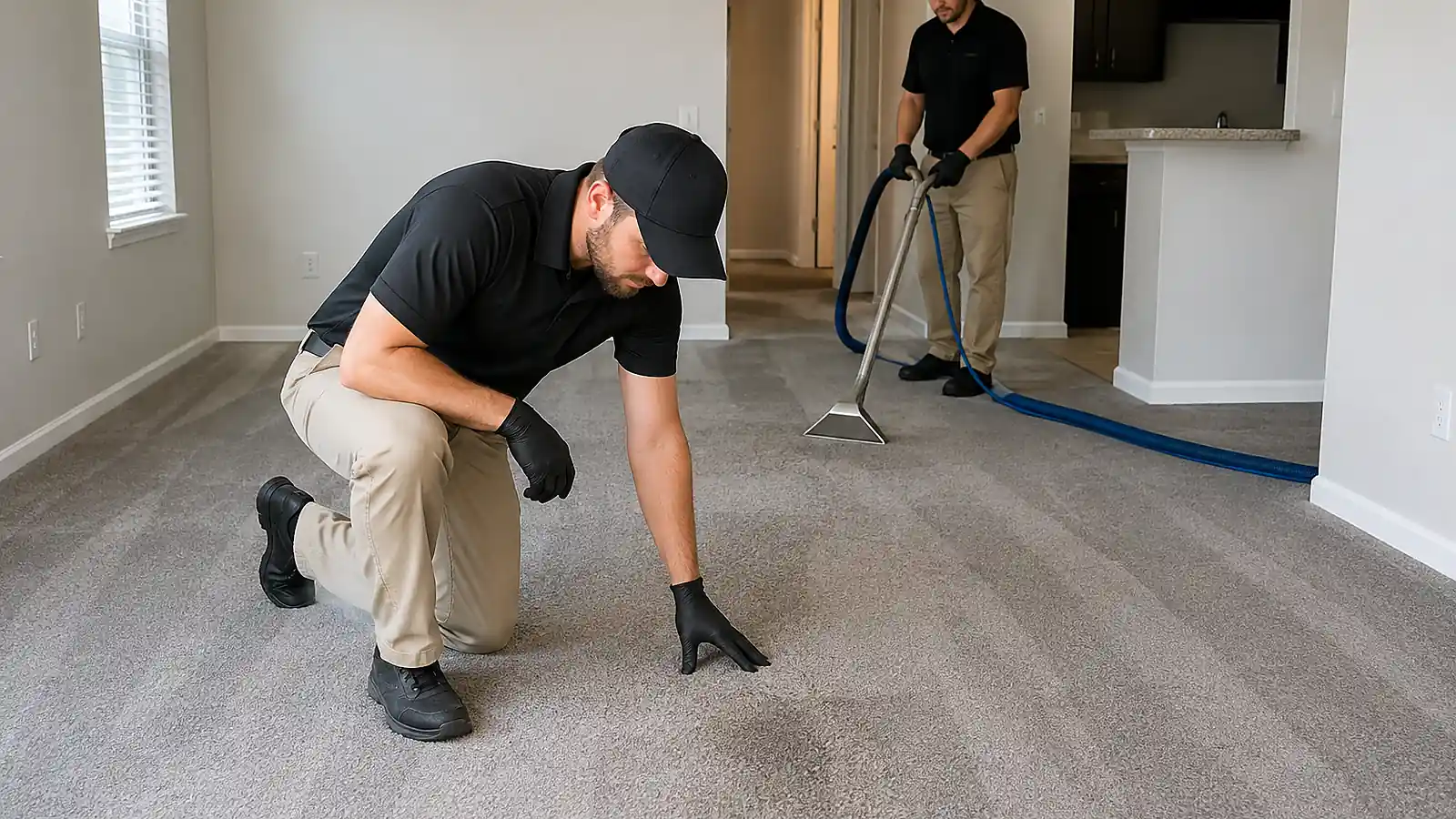
An empty apartment reveals problems that furniture and daily activity can hide. Dark traffic lanes become more obvious. Pet odors may seem stronger.
You may also find red clay near an entry, muddy marks from rainy periods, spring pollen, spilled drinks, loose seams, or carpet ripples.
A structured carpet turnover plan helps you address these issues before the next resident receives the keys.
Instead of treating every mark as a cleaning problem, you can determine whether the unit needs routine cleaning, focused odor treatment, carpet repair, or replacement review.
Start With a Carpet Condition Inspection
Inspecting the empty unit helps you define the right scope before cleaners, maintenance staff, and new tenants enter the space.
Review the Carpet in Good Lighting
Walk through the apartment after furniture and personal belongings have been removed. Open blinds and turn on overhead lights. Look at the carpet from several angles because shadows can hide stains, ripples, and uneven traffic wear.
Check entrances, hallways, living-room paths, bedroom doorways, stairs, and areas near patios.
These locations often collect tracked-in soil, sand, grass, mud, and red clay. Compare exposed carpet with areas that were previously under furniture.
A detailed turnover cleaning checklist for property managers can help you apply the same inspection process across multiple units.
Document Stains, Odors, and Damage Separately
Do not combine every carpet issue into one general cleaning note. Record visible soil, stains, odors, ripples, burns, tears, loose seams, and frayed edges as separate conditions.
Take clear photographs and note each problem’s location. Documentation helps you communicate with maintenance personnel and cleaning professionals. It also creates a condition record before the new tenant moves in.
Avoid deciding who caused damage until you have reviewed the lease, move-in records, move-out documentation, and applicable property policies.
Decide Whether to Clean, Treat, Repair, or Replace
Different carpet problems require different responses, so classify the condition before authorizing work.
Cleaning Addresses Soil and Everyday Buildup
Vacuuming removes loose surface debris, but it may not address embedded soil, spills, or dark traffic lanes.
Professional carpet and rug cleaning may be useful when the carpet remains serviceable but needs a more complete reset.
Ask for attention to entrances, turning points, hallways, and other high-use zones. These areas often show wear earlier than the rest of the room.
Cleaning the entire connected area may also create a more consistent appearance than treating isolated paths.
Plan carpet work after dusty repairs and painting are complete. Schedule it before the final inspection so you have time to review the result and address any remaining concerns.
Physical Defects Need a Repair Decision
Cleaning cannot correct ripples, buckles, loose seams, burns, holes, or torn edges. Carpet stretching or repair may be appropriate when the material is otherwise suitable for continued use.
Check transitions near tile, doorways, stairs, and closets. Small defects can become more noticeable in an empty apartment and may interfere with the appearance of an otherwise clean unit.
Replacement may deserve consideration when damage is extensive, the carpet is heavily worn, or repair would not create an acceptable move-in condition. Base that decision on the carpet’s actual condition rather than age alone.
Trace Odors Before Applying Deodorization
Finding the likely source helps you avoid masking an odor that remains inside carpet, padding, rugs, or furniture.
Investigate Pet and Spill Areas
Pet accidents may affect more than the visible surface. Inspect corners, doorways, furniture locations, and areas where a pet bed or litter box may have been placed.
Spilled drinks, food residue, smoke, and moisture can also leave persistent smells. A post-occupancy pet odor reset may involve carpet, rugs, upholstery, or other soft surfaces, depending on where the odor is held.
Do not rely on fragrance alone. A stronger scent can temporarily cover the problem without resolving its source.
Match Treatment to the Affected Material
Targeted odor treatment and deodorization may be useful for odors associated with pet accidents, spills, smoke, or dampness in carpets, rugs, and upholstery.
Persistent musty smells require careful evaluation. Check for active leaks, wet materials, or hidden moisture before treating the situation as routine carpet care.
Suspected contamination or building-related moisture problems should be assessed by an appropriately qualified professional.
Before approving the final make-ready checklist, schedule a professional carpet assessment for units with embedded soil, recurring odors, visible stains, ripples, or damaged seams.
Share your inspection notes and photographs so the cleaning or repair scope can focus on the conditions that may affect move-in readiness.
Review More Than the Installed Carpet
Rugs, furniture, tile, vents, and laundry areas can influence how clean and fresh the whole apartment feels.
Inspect Rugs and Furnished-Apartment Upholstery
Area rugs and Oriental rugs can vary in fiber, dye, fringe, backing, and construction. Do not assume they should be treated like installed synthetic carpet. Delicate or specialty rugs may need a more careful cleaning decision.
Inspect sofas, chairs, fabric headboards, and dining seats in furnished units. Upholstery may hold dust, food residue, body oils, pet hair, stains, or stale odors.
A coordinated spring cleaning plan for carpets, rugs, and upholstery can help you evaluate connected surfaces instead of cleaning one item at a time.
Check Tile, Grout, Vents, and Laundry Areas
Kitchen, bathroom, entry, and laundry-room tile may retain discoloration or buildup that routine mopping does not fully address.
Review grout lines after general cleaning and determine whether deeper tile and grout cleaning is warranted.
Dust, pollen, pet dander, and debris can also collect in air ducts. Vent inspection may be worth adding when the unit has been vacant for an extended period or when visible buildup and stale-air concerns remain.
Check the dryer area for lint accumulation and restricted or damaged venting. Refer mechanical, electrical, moisture, or contamination concerns to the appropriate professional.
Build a Repeatable Turnover Sequence
A consistent order reduces rework and gives every apartment the same move-in review.
Complete Repairs Before Final Carpet Cleaning
Start with the move-out inspection and documentation. Remove abandoned items and complete wall, ceiling, plumbing, appliance, and painting work before the final floor cleaning.
Dust-producing repairs performed after carpet cleaning can soil the fibers again. Carpet repairs should also be coordinated with cleaning so the work occurs in a practical order.
The broader move-in and move-out carpet cleaning process should fit within the complete make-ready schedule rather than being treated as an isolated last-minute task.
Perform a Final Walkthrough Before Key Handoff
After cleaning, inspect each room in daylight. Check traffic lanes, corners, edges, closets, stairs, transitions, stains, repaired sections, and previously identified odor areas.
Confirm that the carpet is ready for normal use before installing furniture or allowing move-in activity. Record the final condition with dated photographs.
Include any remaining wear or permanent marks in the tenant’s move-in documentation.
A consistent final review gives you a clearer record and helps the incoming resident distinguish existing conditions from future damage.
Make Carpet Care Part of Ongoing Property Maintenance
Turnover cleaning works best when it supports a broader plan for inspections, routine care, and prompt problem reporting.
Provide clear instructions for vacuuming, spill response, pet-related reporting, and maintenance requests. Encourage residents to report leaks, damp carpet, loose seams, and unusual odors promptly rather than waiting until move-out.
For multifamily and mixed-use properties, track recurring trouble spots across the portfolio. Repeated staining near the same entrance may indicate a need for better mat placement.
Frequent rippling may require closer review of installation or moisture conditions. Recurring odors may point to a source that surface cleaning alone cannot address.
A move-in-ready apartment does not need to look untouched. It should show that you inspected the carpet carefully, selected the appropriate maintenance response, and documented the final condition before occupancy.
Frequently Asked Questions
Base the decision on the carpet’s condition, lease requirements, property standards, and documented use. Inspect for soil, stains, odors, pet activity, and traffic wear after each move-out. A lightly used carpet may need a different scope than one with heavy buildup or spills.
Complete painting, repairs, and other dust-producing work first. Schedule carpet cleaning after those tasks but before the final move-in inspection. This order reduces the risk of contractors tracking debris across newly cleaned floors.
No cleaning method should be expected to remove every stain. Results depend on the substance, fiber type, prior treatments, dwell time, and whether the material has been permanently discolored or damaged. Identify and document remaining marks during the final walkthrough.
Start by locating the likely source and reviewing known pet areas. Carpet, padding, rugs, upholstery, and nearby surfaces may all require inspection. Repeated accidents or deep odor penetration may need more than general surface cleaning.
No. Carpet cleaning focuses on soil and material buildup, while deodorization focuses on odor concerns. Some turnovers may require both. The source of the smell should be identified before selecting treatment.
Stretching may be relevant when carpet has ripples, wrinkles, buckles, or loose areas. Cleaning will not correct these physical defects. Inspect the room after furniture removal because empty floors make uneven sections easier to see.
Some burns, tears, holes, loose seams, and damaged transitions may be repair candidates. The best decision depends on the location, extent of damage, available matching material, and overall carpet condition. Extensive wear may still justify replacement review.
Not automatically. Area rugs and Oriental rugs may contain different fibers, dyes, fringe, backing, and construction. Review each rug before choosing a method, especially when it is delicate, handmade, older, or part of a furnished rental.
Furniture should be inspected when it remains with the unit. Fabric seating can collect dust, food residue, body oils, pet hair, stains, and odors. Upholstery cleaning may complement carpet care when both surfaces show signs of occupancy.
Yes. Kitchens, bathrooms, entries, and laundry rooms influence the unit’s overall presentation. Grout can retain dirt, spills, and discoloration that normal mopping leaves behind. Evaluate these areas during the same walkthrough used for carpet inspection.
Consider inspection when you find visible debris, lint buildup, restricted venting, or recurring dust and pollen concerns. These services are separate from carpet cleaning. Mechanical damage, moisture, or suspected contamination should be referred to the appropriate specialist.
Match the plan to traffic, occupancy, tenant turnover, common-area use, and disruption limits. Use the same inspection and documentation standards across units. Track recurring stains, damaged sections, odor areas, and maintenance costs to improve future scheduling.