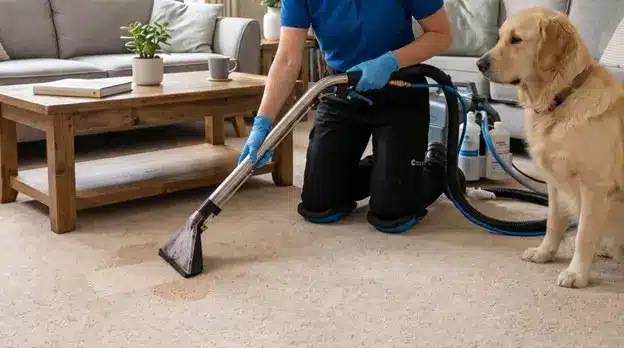
Spring has a way of exposing everything winter keeps sealed in. Closed windows, damp shoes, heavier indoor traffic, pet bedding that stayed in one place too long, and soft surfaces that quietly collect odor all season can suddenly make a home feel stale. In pet-friendly homes, that shift often shows up first in carpet, rugs, and upholstery. A room may look clean enough, yet one warm afternoon or one rainy stretch can bring the smell right back.
That is one reason a seasonal reset matters. The region’s spring pattern often means pollen, tracked-in grit, red clay, moisture, and pet messes all overlap at once, especially in busy family homes, rental properties, and mixed-use spaces.
If you are already trying to freshen up carpets after winter, this is the point where a spray bottle usually reaches its limit. The EPA reports that Americans spend about 90% of their time indoors, where some pollutants can be 2 to 5 times higher than typical outdoor levels, so odor and surface buildup matter more than many people realize.
Learn why the smell seems to return all at once, even when you thought the problem was handled.
During colder months, homes tend to stay closed up longer. That limits airflow and gives odors more time to settle into carpet fibers, rug piles, upholstery fabric, and the zones where pets sleep, pace, and nap. Even when the original accident is gone, the room can still hold onto stale residue and everyday pet buildup.
In a country where about 6 out of 10 households have a pet, this is a common spring frustration, not an unusual one.
When rainy weather returns and shoes, paws, and moisture move through the house again, old odor problems can come back up. Dampness does not have to come from a major spill. A little extra moisture in traffic lanes, entry paths, or pet zones can be enough to make lingering odor feel fresh again.
That is why carpet cleaning tips for pet owners work best as routine maintenance, not one-time reaction cleaning.
Pet odor is rarely just one circle on the carpet. It often overlaps with body oils, dander, dust, tracked-in debris, and the fine particles that settle into the same soft surfaces over time. If you only treat the visible spot, the surrounding area may still smell tired.
That is also why vacuuming alone is not enough for deep carpet cleaning, which is a great way to think about spring resets.
Let’s get to the core of the issue: air freshening is not the same thing as odor removal.
A household spray can make a room smell better quickly. That is useful for a short-term refresh, but it does not necessarily remove the odor source in the carpet, rug, or upholstery.
EPA indoor-air guidance points to source control as the most effective way to improve indoor air quality, and that same principle applies here. If the source stays in place, the smell has a good chance of coming back.
Real odor work is about what stays below the surface after blotting, spraying, or light shampooing. Depending on the material and the severity, that can include contamination deep in carpet fibers, the base of the pile, nearby fabric surfaces, or even material below the visible face of the carpet.
Experts consistently distinguish between masking odor and neutralizing it at the source, especially when pet accidents are involved.
If the sofa, chair cushions, pet bed zone, or nearby rugs still hold odor, the room can keep smelling off even after the carpet looks cleaner. That is where coordinated cleaning matters.
At Williams Carpet Care, we offer pet odor and stain treatment designed to target messes deep within carpet fibers rather than simply covering the smell. We also provide odor treatment for carpets, rugs, and upholstery when a broader reset makes more sense.
If one room keeps slipping back into the same stale smell, it may be time to stop rotating sprays and start with a more complete maintenance plan.
Call Now – 910-476-5459
A better outcome usually starts with a few smart do-not-do choices.
Aggressive scrubbing can spread the problem and rough up carpet fibers. For fresh spots, blot first and keep the goal simple: remove as much surface moisture as you can without pushing it farther in.
Oversaturating the same area with DIY products can leave extra residue and make the carpet harder to rinse clean later. Piling scent over odor can also make a room smell worse, not better, once the fragrance fades.
Rental or consumer machines can improve appearance, but repeated passes do not always solve deeper odor problems. If the same area smells better for a day and then slips back, stop chasing it with more product and shift to evaluation and full-surface cleaning instead.
Know when to decide when a pet odor problem is bigger than one floor spot.
Soft furniture can trap dust, oils, pet hair, and odor just as quietly as carpet. If pets spend time on sofas, chairs, or fabric dining seating, upholstery cleaning may need to be part of the same reset instead of an afterthought.
When dust, pollen, and pet dander build up in the system that moves air through the property, the room can still feel dull even after visible surfaces are cleaned. That is why some spring odor resets overlap with duct cleaning, especially in homes with pets, high traffic, or a long closed-window season.
If odor is lingering in carpet, rugs, upholstery, or indoor-air problem areas, request a free quote or
Call 910-476-5459 to plan the next step.
The best approach is not constant emergency treatment. It is a seasonal rhythm that combines-
That matters in homes, rentals, commercial interiors, and shared spaces where foot traffic and soft-surface use stay high all year.
It also helps to think in layers. The carpet is one layer. Upholstery is another. Rugs, entry paths, pet rest areas, and indoor-air surfaces all add to the total. If you are building a better schedule for the months ahead, knowing how often you must clean carpets if you have pets at home helps you stay prepared.
And because Americans spend so much of their lives indoors, the payoff from source-based cleaning is bigger than a room simply smelling nice for a few hours. When you are ready for a fuller reset, Williams Carpet Care can help you move beyond surface fragrance with professional carpet and floor cleaning services for pet-friendly homes, rentals, commercial interiors, and busy shared spaces.
Winter often means more closed windows, less airflow, and more time spent indoors. That gives odor more time to settle into carpet, rugs, and upholstery. When spring humidity, rain, and foot traffic return, the smell can become noticeable again.
A spray may improve the smell of the air for a while, but that does not always mean the source is gone. If odor-causing residue stays in the carpet or nearby soft surfaces, the smell can return after the fragrance fades.
That usually happens when the odor source is reduced but not fully removed. Changes in moisture, indoor humidity, and daily traffic can make leftover residue more noticeable again, especially in entry areas and favorite pet zones.
Professional treatment is designed to address odor deeper in the material, not just the room air above it. That can include trapped residue in carpet fibers, rugs, upholstery, and the surrounding soft surfaces that continue holding onto stale smells.
If pets spend time on sofas, chairs, or other fabric furniture, it often makes sense. Cleaning only the floor can leave part of the odor in nearby seating, which can make the room feel only partly refreshed.
If the smell keeps coming back after spot treatment or light cleaning, a deeper odor-focused service is usually the better fit. Repeated problem areas, damp-weather odor return, and stale smells in multiple soft surfaces are common signs.
Yes. Spring often brings pollen, wet shoes, tracked-in grit, and renewed indoor-air concerns at the same time. That makes it a practical season to reset carpet, upholstery, and other soft surfaces before buildup compounds into summer.
The right timing depends on the number of pets, traffic, shedding, accidents, and how much upholstered furniture is in daily use. In general, pet homes usually do better with a maintenance schedule than with occasional panic cleaning.
Absolutely. Rental turnovers and pet-friendly units often collect overlapping issues such as odor, traffic soil, dull carpet, and tired-looking upholstery. A more complete reset can help the space feel cleaner, fresher, and easier to maintain.
That is common. Rugs, upholstered furniture, pet rest areas, and even air-moving surfaces can all contribute. When one room never quite smells clean, it is worth looking at the whole environment instead of one visible spot.
If the property has noticeable dust buildup, stale airflow, long-running HVAC use, or pet dander concerns, it may be worth considering. Duct cleaning is not a substitute for carpet or upholstery care, but it can support a more complete indoor-air reset.
Depending on the condition of the property, the plan may involve carpet and rug cleaning, upholstery cleaning, pet odor and stain treatment, odor treatment, air duct cleaning, or dryer vent cleaning. Residential and commercial cleaning options are also available when broader maintenance is needed.