Seasonal turnover rarely happens in a perfect house. Spring pollen settles into fibers and air ducts. Rainy weeks track red clay across entryways. Humid weather can bring out musty odors. Pets add dander, repeat accident spots, and lingering smells.
Holiday traffic adds to spills right when a renter, landlord, or property manager needs the space to look ready. Move-in and move-out carpet cleaning is not just cosmetic. It resets the surfaces people see, smell, and walk on first, before money, keys, or responsibility changes hands.
A move compresses months of normal wear into one deadline.
Empty rooms reveal what furniture used to hide. Traffic lanes look darker. Pet areas can smell stronger once the room is cleared out. Upholstery in furnished rentals may hold body oils, dust, and food residue. Tile and grout in kitchens, baths, and entries may show discoloration once everything else is removed.
Professional Carpet Cleaning
At Williams Carpet Care, we help plan move-related cleaning for carpet, rugs, upholstery, tile, odors, ducts, and dryer vents.
Call 910-476-5459
Move-related cleaning works best when it targets the real condition of the property.
Professional cleaning can lift embedded soil, address traffic lanes, treat spots, and reduce stale odors that routine vacuuming can leave behind. This matters in rental properties because carpet often holds muddy shoes, food spills, pet use, guest traffic, and everyday dust.
Before move-in, professional carpet cleaning gives the next occupant a cleaner baseline. Before move-out, it helps separate surface soil from concerns such as damaged seams, ripples, burns, tears, or repeated pet spots.
For broader surface care, professional floor and upholstery cleaning can support furnished rentals, offices, and commercial interiors.
Document first, then clean in the right order.
If a room still smells stale, the source may be deeper than the surface.
Keep photos and room-by-room notes. Record what changed, what was already present, and which areas received professional care.
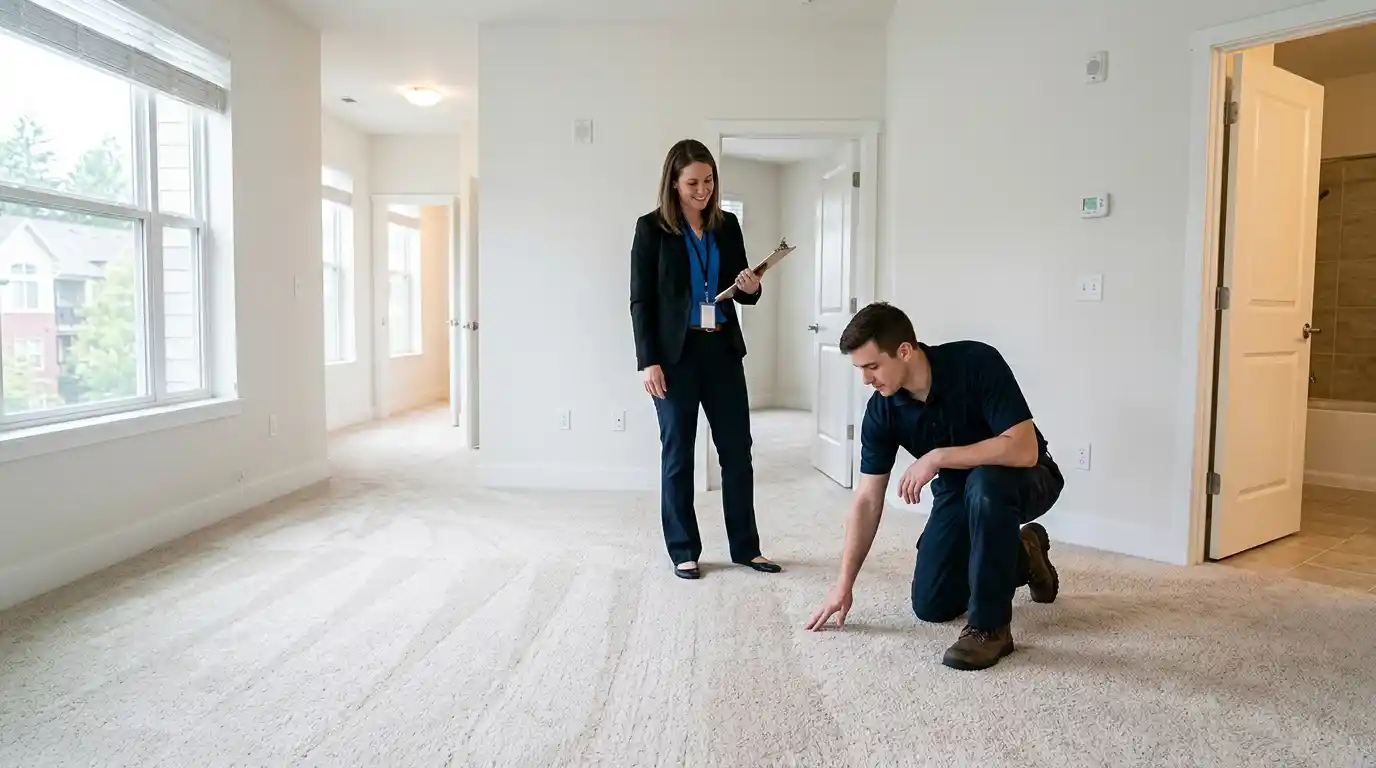
Inspect before scheduling the turnover clean.
Airflow also deserves attention. Ducts can collect dust, pollen, pet dander, and debris that recirculate through the property. Dryer vents can collect lint and restrict airflow. Review dryer vent fire safety if lint buildup or restricted airflow is part of the turnover checklist.
The right plan depends on surface, soil, urgency, scope, and use.
For carpet and rugs, match the cleaning method to fiber condition, visible staining, odor, and traffic wear.
Urgency rises when odors worsen, carpet ripples create trip concerns, delicate rugs show dye or fiber concerns, or a business needs a clean interior with minimal disruption. Confirm service-area fit within the Sandhills service area.
Also plan for follow-on needs, such as deodorization, stretching, repair, rug-specific care, or vent cleaning after the first walk-through.
Small clues often point to a bigger scope than vacuuming can handle.
A plan may be too light when stains reappear after surface cleaning, odors return after sprays fade, traffic lanes stay gray after vacuuming, or carpet ripples remain after the room is empty. Musty smells after wet weather need caution.
If moisture was involved, review moisture control guidance and bring in qualified help when conditions are beyond routine cleaning.
Damage is another clue. Cleaning can improve soil and odor problems, but it cannot correct torn carpet, loose seams, burns, wrinkles, or areas that need patching or stretching.
A well-managed job should make the next decision easier.
Expect clear scoping before work begins. The cleaning plan should identify rooms, surfaces, odor areas, stains, rugs, upholstery, tile, ducts, dryer vents, and any carpet damage that may need repair instead of cleaning alone. It should also explain when a specialty surface needs a more careful approach.
During turnover, good communication matters. Renters need clarity for handoff. Landlords need realistic next steps. Property managers need repeatable notes for scheduling and records.
For cleaning-method decisions, the shampoo or steam clean carpets guide can help compare common approaches.
Move-related cleaning can prevent repeat buildup.
Spring pollen, rainy periods, humidity, pets, guests, and laundry use all add pressure to rental properties and commercial interiors. A move is the right time to reset high-use surfaces and shape future maintenance.
Review the limits of vacuuming alone and carpet care for pet homes when planning seasonal service.
A move is easier when the plan matches the property’s condition.
At Williams Carpet Care, we offer residential and commercial cleaning for carpet, rugs, Oriental rugs, upholstery, pet odors and stains, odor treatment, tile and grout, air ducts, dryer vents, carpet stretching, and carpet repairs.
Call 910-476-5459 or get a free quote before your next turnover.
It often helps when carpet has visible traffic lanes, stains, pet odors, or heavy wear. Check your lease and document the carpet condition before and after cleaning. Professional cleaning can create a clearer handoff, but it does not decide legal responsibility.
Yes, because empty rooms can still hold embedded soil, stale odors, or pet residue. A professional cleaning gives the next occupant a cleaner starting point. It also helps landlords and property managers set a stronger baseline for future care.
Look for ripples, loose seams, tears, burns, stains, and repeat pet areas. Cleaning can address soil and odor concerns, but damage may need repair or stretching. A room-by-room check helps separate cleaning needs from repair needs.
Sometimes they do. Pet odor may affect carpet fibers, backing, rugs, and nearby upholstery. Surface cleaning may not reach the full source of the odor. A targeted pet odor and stain treatment may be more appropriate than basic cleaning alone.
Include upholstery when the rental is furnished or when seating holds visible grime, dust, hair, or odor. Couches, chairs, and lobby furniture can affect how clean the space feels. This is especially useful for tenant-occupied, pet-friendly, or commercial interiors.
It can be helpful in kitchens, baths, laundry areas, and entries. Grout lines can trap soil, spills, and discoloration that routine mopping may not remove. Cleaning these areas can make the whole property feel more ready.
Air ducts may collect dust, pollen, pet dander, and debris over time. If a property feels dusty or stale after surface cleaning, duct cleaning may be worth discussing. It belongs in the same indoor comfort conversation as carpets, rugs, and upholstery.
Consider it when the dryer takes longer to dry, the laundry area feels lint-heavy, or airflow seems restricted. Rental properties and busy households can put more demand on laundry systems. Dryer vent cleaning is separate from carpet care, but it fits a complete turnover checklist.
No cleaning plan should promise that every stain will disappear. Results depend on the material, stain type, age of the spot, previous products used, and carpet condition. A careful inspection helps set realistic expectations before work begins.
Use room-by-room notes, photos, and a clear list of surfaces that need attention. Include stains, odor areas, damaged carpet, rugs, upholstery, tile, ducts, and dryer vents. Good documentation supports cleaner scheduling, better communication, and repeatable turnover planning.