Spring pollen, tracked-in grit, red clay, muddy shoes, pet dander, and humid-weather odors can all make carpet look tired fast in Sandhills homes and mixed-use spaces. That is why many property owners end up asking the same question: Is it better to shampoo or steam clean carpets? The honest answer is that neither method wins in every situation.
The better choice depends on your carpet’s soil level, the kind of odor or staining you are dealing with, how much residue you want left behind, and whether the cleaning is part of a bigger maintenance plan that may also involve rugs, upholstery, odor treatment, vents, or carpet repair.
This section explains what each method is actually doing to your carpet so you can compare them on purpose, not on marketing language.
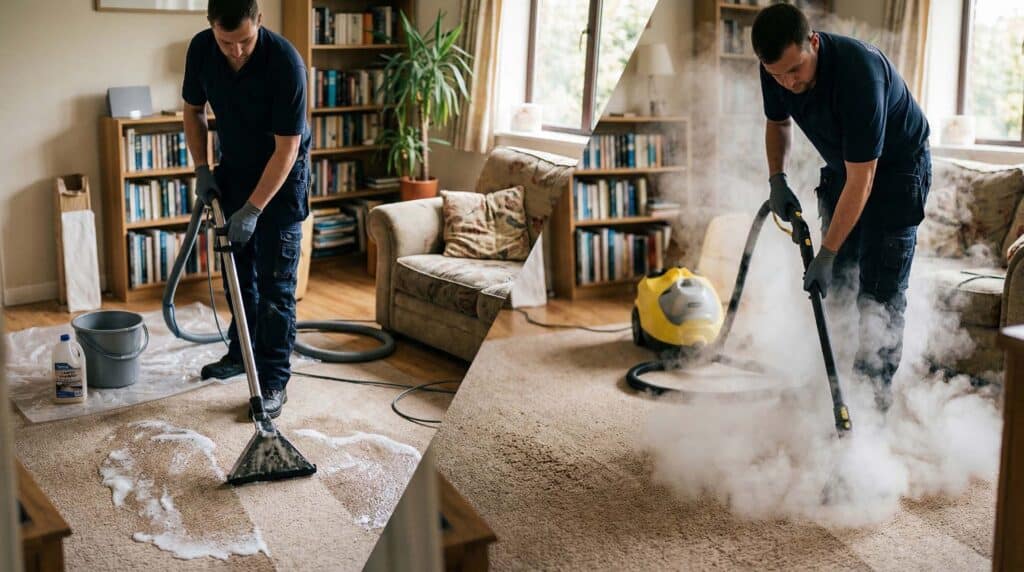
In consumer terms, steam cleaning usually refers to hot water extraction. That method injects hot water into the carpet and then extracts water and loosened soil back out. Shampooing relies more on detergent and agitation to scrub soil from the fibers.
Both can improve appearance, but they do not leave the carpet in the same condition if the carpet is heavily soiled, odor-affected, or prone to residue problems.
Carpet shampooing can make sense when your main goal is appearance improvement on a carpet with general surface soil, traffic film, or dull-looking fibers. It can be useful when the carpet needs agitation to loosen dirt, but it tends to be a weaker fit when your bigger issue is recurring odor, sticky residue, or soil that sits deep in the backing and pad.
Steam cleaning, or hot water extraction, is usually the better fit when your carpet needs a deeper flush, especially in pet-friendly homes, high-traffic households, rental turns, and commercial interiors with embedded soil. It is also the more practical choice when you want to reduce leftover detergent buildup rather than add to it.
At Williams Carpet Care, we offer deep steam cleaning as part of our service mix for both residential and commercial settings.
Use this section to match the method, the surface, and the maintenance problem before you hire anyone.
Start with the surface, not the machine. Wall-to-wall carpet may need one approach, but a delicate rug, Oriental rug, upholstered chair, tile floor, air duct system, dryer vent, or rippled carpet needs a different decision path.
Professional services include carpet and rug cleaning, Oriental rug cleaning, upholstery cleaning, pet odors and stains treatment, odor treatment, air duct cleaning, dryer vent cleaning, carpet stretching, and carpet repairs.
Light maintenance soil is different from urine spots, stale smells, matted traffic lanes, or a carpet that stays damp after cleaning. If odor is the main complaint, the method alone is not enough. You may need deodorization or pet odor treatment after the carpet cleaning itself.
If the carpet is rippled, loose, or unsafe underfoot, the real need may be stretching or repair, not another shampoo. If airflow is restricted at the dryer or dust keeps recirculating through the building, the next step may be vent or duct cleaning rather than more carpet work.
If you want help sorting out whether your property needs deep extraction, odor treatment, rug-specific care, or a follow-on repair plan, Williams Carpet Care can help you.
Call 910-476-5459
A one-room refresh is not the same as a whole-home reset, a tenant turnover, or multi-area commercial cleaning. Ask for room-by-room notes, visible problem-area scoping, and next-step communication if some surfaces need different treatment. For example, traffic-heavy carpet may need deep cleaning, while nearby upholstery, pet zones, or rugs need separate care plans.
For carpet and rug cleaning, routine maintenance plans and one-time deep cleans both exist, which is useful when you are deciding between a single visit and an ongoing maintenance strategy.
These questions help you compare providers on fit, clarity, and follow-through instead of price alone.
This section helps you spot weak decision-making before it turns into repeat cleaning or avoidable wear.
Be cautious when a provider treats shampooing or steam cleaning as a universal answer. A carpet, a delicate rug, upholstery, tile, and an odor problem do not all respond to the same process.
That is especially true in properties with pets, dampness, or mixed-use wear patterns. Delicate, high-value, or specialty rugs can be damaged by aggressive scrubbing or too much moisture.
Another red flag is skipping what comes next. If a carpet still smells after cleaning, the issue may be in the backing or padding. If it feels damp, moisture may still be trapped below the surface. If it ripples, cleaning may have exposed a repair issue.
Helpful providers explain when cleaning should lead to deodorization, rug-specific care, or a check for stretching and repairs.
See our related posts on why carpet can feel damp with no visible leak and the reasons your rug might need a professional touch.
Good service is not just about a cleaner carpet. It is a better decision path from the start.
Good service starts with a clear review of traffic lanes, stains, odors, rug materials, furniture zones, and any signs of loose or damaged carpet. You should know which surfaces are being cleaned, which concerns are cosmetic, and which ones may need separate treatment.
A good provider explains why shampooing, hot water extraction, deodorization, rug-specific cleaning, or follow-on repair is the right fit for your space. That matters in busy family homes, pet-heavy properties, rental units, and commercial interiors where the wrong method can leave residue, miss the odor source, or fail to address the real cause of the complaint.
Good service also tells you what to do next. That may mean scheduling repeat maintenance, improving care in pet zones, watching for dampness, or pairing carpet cleaning with air duct or dryer vent service when the complaint is really about indoor comfort and buildup across the property.
If you want to talk through rooms, odors, traffic patterns, or follow-on maintenance needs before you book.
Call 910-476-5459
Steam cleaning is often the better choice when you need deeper flushing and less residue, while shampooing may still have a place for appearance-focused cleaning on the right carpet.
At Williams Carpet Care, we can help you compare carpet cleaning, pet odor treatment, rug care, upholstery cleaning, air duct cleaning, dryer vent cleaning, and carpet repair or stretching so your plan fits the way your property is actually used.
Not always. Steam cleaning, usually meaning hot water extraction, is often the better fit for deeper soil removal and lower-residue results. Shampooing can still improve appearance on some carpets, but the right choice depends on soil level, odor concerns, and whether the carpet already has buildup or moisture issues.
It can, depending on the process and how thoroughly the carpet is rinsed and extracted. That matters because residue can attract fresh soil and make the carpet look dirty again sooner. This is one reason many people prefer extraction-focused cleaning when buildup is part of the complaint.
If pet contamination is part of the problem, the answer is usually more than just shampoo versus steam. We offer pet odors and stains treatment, plus odor treatment, which is important when smells are coming from deeper in the carpet, backing, or upholstery rather than the surface alone.
No. Rugs can have different fibers, dyes, and constructions, so they need a more specific plan. Aggressive scrubbing or too much moisture can damage delicate rugs.
That usually means the odor source is still deeper in the material. Pet urine, spills, humidity, and moisture trapped below the surface can all cause smells to return. In that case, deodorization, pet treatment, or moisture-focused troubleshooting may matter more than simply repeating the same cleaning method.
No. Cleaning can improve soil and odor issues, but it does not fix a carpet that is loose, rippled, or damaged. We offer carpet stretching and carpet repairs, which is the right path when the problem is safety, wear, or an uneven surface, rather than dirt alone.
If your complaint includes dust that seems to keep returning, stale indoor comfort, or debris recirculating through the property, carpet cleaning may only be part of the plan. Air duct cleaning is worth discussing when indoor air quality is a repeated concern.
Dryer vent cleaning is a separate service, but it matters when restricted airflow, lint-heavy buildup, or long drying times are part of the broader maintenance picture. Lint, dust, and debris can build up in dryer ducts and reduce airflow, so it makes sense to review that issue separately from carpet cleaning.
Yes. A single-room visit may focus on one stain pattern or traffic lane, while a whole-home, tenant-turn, or commercial plan often requires different scoping across carpet, rugs, upholstery, and odor zones.
Yes. Commercial interiors often have heavier traffic, tighter scheduling needs, and more than one surface type in play. The conversation should cover scope, disruption, and which areas need cleaning versus repair or follow-on care.
Do not ignore it. A damp feel can point to over-wetting, trapped moisture in the pad, humidity issues, or another source below the surface. Our related blog explains that recurring dampness, musty odor, and repeated wet spots deserve professional evaluation rather than repeated surface cleaning.
A useful consultation should cover the surface type, the kind of soil or odor present, visible damage, rooms involved, and whether you also need rug care, deodorization, vent cleaning, or carpet repair. The goal is not to push one method, but to match the method and follow-on plan to the actual maintenance problem.