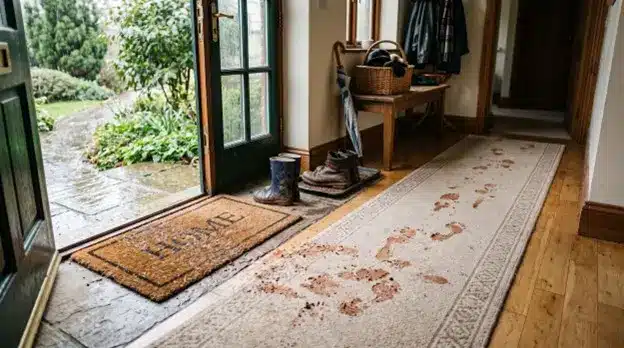
Spring in Fayetteville does not just show up as warmer weather. It shows up in the yellow film on sills, the damp shoes by the door, the red clay in traffic lanes, and the soft surfaces that start to feel stale before they look dirty. In homes, rentals, offices, and mixed-use spaces, carpet often becomes the catch-all for spring debris long before anyone notices how much has settled in.
Fayetteville-area issues also include tracked-in sand, red clay, spills, pet accidents, and constant foot traffic as common wear factors, while seasonal pollen, outdoor grit, red clay dust, and wet shoes are recurring messes.
The good news is that spring carpet care works best when you stop treating it like a one-step chore. A better plan is to control what comes in, remove dry soil before it turns into grime, dry damp carpet quickly, and pay attention to related surfaces like upholstery, rugs, and ductwork.
That approach helps you make better cleaning decisions and keeps a small seasonal problem from turning into odor, wear, or recurring buildup.
The easiest spring carpet fix is keeping as much rain, pollen, and clay as possible from ever reaching the pile.
Your first defense is not your vacuum. It is your entry routine. Use an outdoor mat that can scrape off grit and an indoor mat that can catch moisture. In a place where red clay, sand, and rainy-day soil get tracked inside easily, that two-step setup helps keep abrasive soil from reaching hallways and living areas. If your busiest entrance opens onto hard flooring, clean that area often, because dirt left there will still move onto carpet with the next round of foot traffic.
A no-shoes rule only works if it is convenient. A bench, tray, or basket by the door makes it easier to stop wet shoes where they land. The same goes for pets. Keep an old towel near the main entrance and wipe paws before they cross the threshold, especially after rain.
If you manage a busy pet household, the maintenance ideas in carpet cleaning tips for pet owners fit spring especially well because they focus on entry paths, pet zones, and soft surfaces that collect more than visible dirt.
Pollen does not stay on the windowsill. It settles into carpet, upholstery, rugs, and vents if your routine only targets visible dust.
North Carolina posts daily pollen monitoring, which is a useful reminder that spring pollen is an ongoing condition, not a one-day event. Inside, the best routine is to capture first, then reset. The EPA recommends dusting with a damp cloth and using a HEPA-filter vacuum on carpet and fabric-covered furniture to reduce dust buildup.
That matters because dry dusting can throw pollen back into the air and right back onto your floors. If you want a broader seasonal reset plan, this spring carpet cleaning checklist is a useful guide for timing your deeper clean.
If the room still feels dusty after vacuuming, the issue may not be the carpet itself. Upholstery, area rugs, and ductwork also collect fine particles. Upholstery cleaning can help when sofas and chairs hold dullness, stale odors, or fine dust, and air duct cleaning is worth considering when vents are visibly dusty, or the same pollen-like residue keeps returning after routine cleaning.
Buildup from dust, pet dander, pollen, and other pollutants recirculate when the HVAC system runs.
If spring buildup has moved beyond routine vacuuming and spot care, schedule a maintenance-focused evaluation right away.
Call 910-476-5459
The biggest spring cleaning mistakes usually happen when moisture and soil get pushed deeper instead of lifted out.
Wet mud and red clay look urgent, but rushing usually makes them worse. When possible, let the mud dry first, then vacuum up the loose soil before you treat what remains. That keeps you from grinding clay deeper into the fibers.
This is also why the question is not always whether to clean, but how to clean. If you are weighing methods, the resource on shampoo vs. steam clean carpets gives useful context for matching the approach to the mess rather than attacking every spring stain the same way.
Rainy shoes, soaked pet paths, and damp entry edges need quick action. Blot moisture instead of scrubbing, pull as much water up as you can, and increase airflow right away with fans and, if needed, a dehumidifier.
Wet or damp items usually need to be dried within 24 to 48 hours to reduce the chance of mold growth, and that guidance applies to carpeted areas that stay damp after tracked-in water or a more serious wetting event.
A dry week and a rainy week should not get the same cleaning schedule. During wet periods, vacuum entry lanes and family-room traffic paths more often, inspect corners near doors, and watch for that stale smell that lingers after the visible soil is gone.
If carpet starts to feel heavy or sticky after repeated DIY cleanups, a deeper reset may make more sense than layering product on top of residue.
For maintenance timing, look into the best temperature to clean carpets and how to keep carpet clean in spring, to understand the value of seasonal prevention before traffic lanes become permanent-looking.
Some spring problems still look like dirt, but the real issue is odor, damage, or buildup in the wrong material.
If the room smells musty after rain or still smells off after a spot looks clean, the problem may be moisture, pet residue, or a spill that reached deeper layers. Mildew, pet accidents, smoke, and lingering spills are common odor sources, along with muddy paw prints, spills, and lingering odors in carpets and upholstery. That is a sign to stop masking and start figuring out what is still there.
When the carpet starts to ripple, wrinkle, or loosen, more cleaning will not fix it. Humidity, heavy traffic, and improper installation can contribute to those issues. In a high-traffic spring season, especially where dampness is part of the picture, it helps to separate cosmetic soil from actual carpet movement. That prevents over-cleaning, a problem that really needs repair or stretching.
If you manage offices, rental properties, or mixed-use interiors, spring messes tend to spread faster because multiple entrances and heavier traffic shorten the time between “looks fine” and “needs attention.”
Certified experts cover carpet, upholstery, rug, tile, grout, odor removal, repairs, and move-in or move-out cleaning, which makes a rotation strategy more practical than reacting surface by surface.
Spring carpet care works best when you think in layers: entry control, dry soil removal, moisture management, odor awareness, and the right help for the right surface.
In Fayetteville, that usually means less chasing of individual spots and more attention to the daily habits that keep rain, pollen, and red clay from settling in for the season. It also means remembering that a wet carpet should not sit. If a damp area is still not drying, treat the EPA’s 24 to 48-hour window as your signal to move quickly.
In spring, frequency matters more than marathon cleaning. Focus on entry lanes, living-room paths, and pet zones first because that is where pollen, grit, and red clay settle fastest. In busy homes or commercial interiors, a few targeted passes each week usually works better than waiting for a full-house deep clean.
Yes, because shoes carry the exact mix that wears carpet down in spring: damp soil, sand, pollen, and red clay. You do not need a perfect household rule to see a difference. A bench, a shoe tray, and an indoor mat at the main entrance can cut down on how much debris reaches carpeted rooms.
Start with patience. Let the mud dry when possible, then vacuum up as much loose soil as you can before treating the remaining mark. That helps keep clay and grit from being rubbed deeper into the pile, which is the mistake that often turns a manageable mess into a larger cleaning job.
Wet carpet becomes urgent when it stays damp instead of drying normally. Wet or damp items usually need to be dried within 24 to 48 hours to reduce mold risk. If an entry area, runner path, or soaked corner is still wet past that window, it needs more aggressive drying and evaluation.
Absolutely. Upholstery, area rugs, and ductwork can all collect fine particles during spring. That is why a room may still feel dusty even after you vacuum the floor. A better reset often includes fabric surfaces and, when buildup keeps recirculating, closer attention to the HVAC side of the room as well.
It may be useful when vents look dusty, airflow seems to push residue back into the room, or you keep seeing fine buildup return shortly after cleaning. Ductwork can collect dust, pet dander, pollen, and other pollutants, so floor care alone may not fully address what you are noticing in the air and on nearby surfaces.
Odor often lingers when the source reaches deeper than the surface. Moisture, pet accidents, muddy paw traffic, and spills can remain in fibers, backing, or nearby fabric surfaces even after the spot looks better. That is why musty or stale smells usually call for source-focused treatment, not more fragrance.
It can become much harder to remove if it is scrubbed while wet or repeatedly worked deeper into the fibers. Fast, aggressive rubbing spreads the problem. A better approach is controlled removal of dry soil first, then targeted cleaning of what remains, especially in entry lanes where clay tends to build in layers.
Think about stretching when the carpet looks wavy, loose, or rippled, especially in traffic areas. Those are physical carpet issues, not soil issues. Humidity, heavy use, or installation-related looseness can all contribute, and extra cleaning will not solve movement or buckling.
That depends on where the buildup is collected. Upholstery cleaning can help with dust and stale fabrics, area rug cleaning may be better for delicate rugs, tile and grout cleaning can reset hard-surface entries, and odor treatment may help when moisture or pet-related smells linger. Dryer vent and air duct cleaning may also fit a broader seasonal maintenance plan.