
Spring pollen, rainy stretches, humid afternoons, muddy paws, and shedding can turn one small pet accident into a room-wide odor complaint. Warm weather often makes the smell sharper because moisture, heat, and soft surfaces work together. Carpet, rugs, and upholstery can hold residue after the visible stain looks better.
Pet stains are a source-location problem. If the residue stays near the surface, routine care may help. If it reaches backing, padding, rug foundations, or upholstery fill, odor can return when the room warms up.
Heat increases odor release. Humidity adds another layer because damp air can reactivate dried residue and make stale fabrics feel mustier. A carpet can seem fine on a cool morning, but smell stronger after the HVAC cycles, windows stay closed, or pets lie on the same spot again.
Pet urine can move downward and outward. The visible spot may be smaller than the affected area below the surface. If the spot was scrubbed hard, residue may have spread farther into the fibers.
Soft surfaces share the burden. Pet hair, dander, dust, and pollen can settle into carpet and upholstery, while household dust can carry biological particles that get stirred back into indoor air. Moisture control helps prevent musty secondary odors.
Let’s separate helpful first steps from actions that make the problem harder to solve.
If the accident is fresh, blot first. Use clean, absorbent towels and press down instead of rubbing. Scrubbing can distort fibers, push liquid deeper, and spread the stain edge. Work from the outside of the spot toward the center.
Avoid soaking the area with water or cleaner. Too much moisture can carry urine farther into the backing or pad and leave the carpet damp longer than necessary. The EPA’s guidance on drying wet materials and controlling moisture is a useful reminder that moisture management matters indoors.
A stain that looks clean can still smell. Store-bought sprays may change the scent of the room, but they may not reach the residue below the surface.
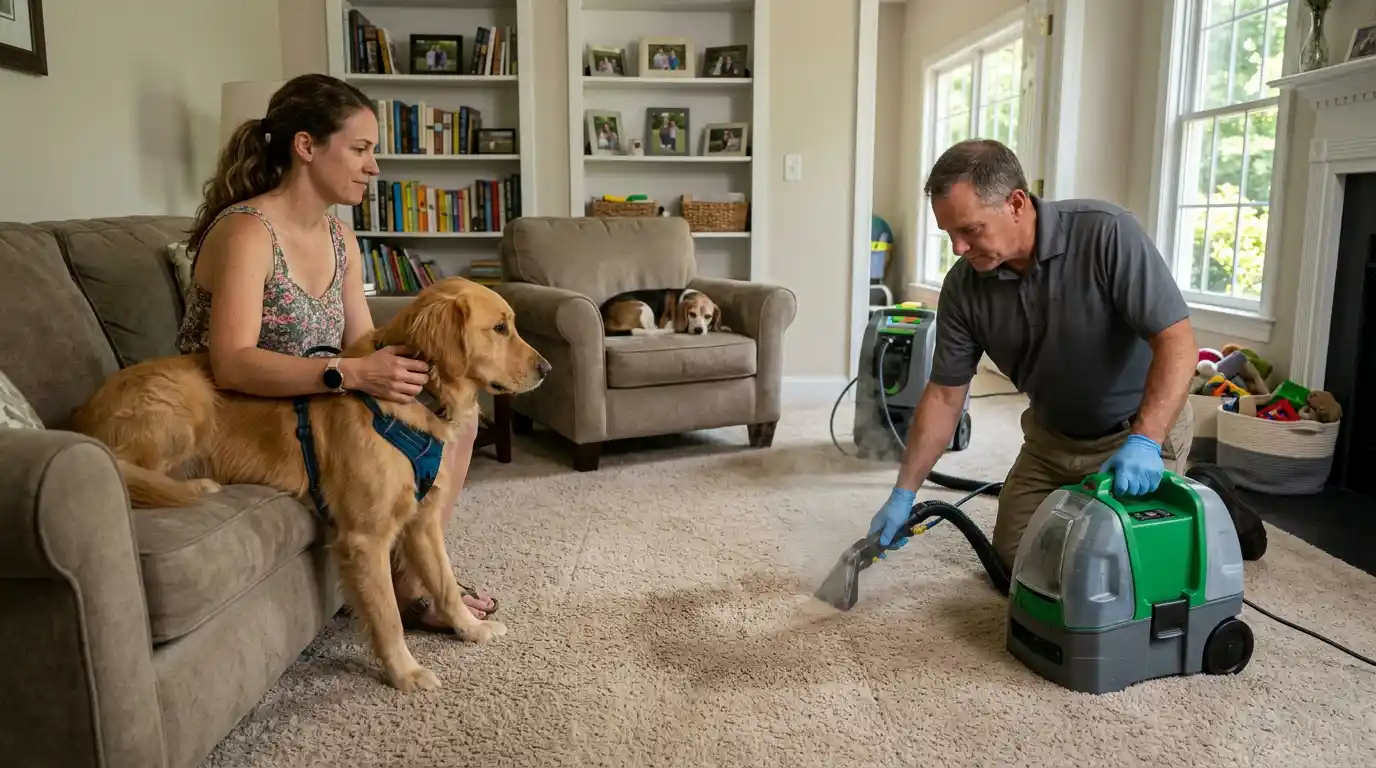
Our pet odor and stain treatment starts with steam cleaning for carpet or upholstery, then uses an enzyme-based cleaner designed to break down pet stains and odors at the source. The enzyme cleaner continues working for up to 24 hours.
Professional Odor Treatment
If warm-weather odor is affecting comfort, contact Williams Carpet Care to treat the affected rooms and surfaces.
Call 910-476-5459
Area rugs and Oriental rugs may need different handling because fibers, dyes, backing, and construction vary. A pet accident on a rug can migrate into layers that surface cleanup cannot reach.
This guide to pet odors and stains from rugs explains why careful handling matters.
Upholstery can hold odor in cushions, seams, and fabric texture. Pets often rest in the same chair or sofa corner, which layers dander, body oils, saliva, and outdoor debris over time. When the room heats up, those fabrics can smell stale even if the carpet was treated.
Indoor air concerns may also enter the conversation. Pets shed dander, track in pollen, and move dust through the property.
The EPA’s information on biological contaminants and indoor air quality explains how pets can bring biological pollutants indoors. If dust, dander, and odor seem to return after surface cleaning, duct cleaning may be worth discussing.
The choices that can turn a manageable spot into a recurring odor issue.
A deeper look at coffee, wine, and pet stains can help you compare why odor-focused spots need a different strategy.
Warm weather is not the only trigger. Spring pollen, rainy periods, red clay, muddy shoes, holiday traffic, and busy rental turnovers all add soil to soft surfaces. When pets are part of that pattern, odors can build gradually. Vacuuming helps with dry soil, but it cannot fully remove deep residue, urine contact, or buildup in upholstery and rugs.
If you manage a busy home, tenant-occupied unit, commercial interior, or mixed-use space, schedule care around actual use. Pet zones, entrances, hallways, furniture areas, and favorite resting spots deserve more attention than low-traffic rooms.
The guide on how often to clean carpets if you have pets can help you think about maintenance frequency.
This section helps you match the surface, odor level, and property type to the right next step.
Light odor in one carpeted room needs a different plan than repeat accidents on a rug, pet smells in a sofa, or stale odors across a rental turn. Carpet cleaning, rug cleaning, Oriental rug cleaning, upholstery cleaning, odor treatment, and air duct cleaning all solve different problems.
For pet-friendly homes, start with the rooms pets use most. The guide to carpet care for pet homes is a helpful maintenance reference when accidents, dander, grit, and traffic lanes overlap.
A good plan starts with a walk-through of visible stains, odor zones, surface types, and high-use pet areas. You should understand which areas need cleaning, which need deodorization, and which may need separate rug or upholstery care. In rental, commercial, or facility-managed spaces, room-by-room notes help keep decisions clear.
Warm weather can make odor more noticeable because heat helps release trapped smells from carpet, rugs, and upholstery. Humidity can also reactivate dried residue. That is why an old accident may smell stronger even when the visible stain looks faint.
The visible stain may be only the surface portion of the problem. Pet urine and other organic residue can move into fibers, backing, padding, rug layers, or upholstery fill. When the room warms up, that hidden residue can release odor again.
Blot the spot with clean towels and avoid rubbing. Rubbing can spread the stain and push residue deeper into the material. Keep moisture controlled, and avoid soaking the area with water or cleaner.
They may help with a light, fresh surface spot, but recurring odor usually needs a deeper approach. Many sprays change the scent of the room without reaching the odor source. If the smell returns, the plan should focus on residue location, not fragrance.
Yes. Sofas, chairs, cushions, and fabric surfaces can hold dander, body oils, saliva, and accident residue. If pets rest in the same place often, upholstery may smell stale in warm weather, even when the carpet has already been cleaned.
Yes. Area rugs and Oriental rugs can have different fibers, dyes, backings, and constructions. Pet accidents may travel into layers that need careful handling. Delicate, older, colorful, or valuable rugs should not be treated like standard carpet.
Air duct cleaning may be worth discussing when dust, dander, pollen, and stale indoor comfort keep returning after surface cleaning. It is a separate service from pet odor treatment. Still, it can fit into broader maintenance when indoor buildup affects several rooms.
Heat can make some pet-related residues harder to address. Avoid hot water, consumer steam, or a hot hair dryer on the spot. Controlled blotting and a surface-appropriate cleaning plan are safer first steps.
Pet stains often involve both visible discoloration and odor-causing residue. Coffee, wine, mud, and food spills may affect color and soil level, but pet accidents can reach deeper and smell worse later. That is why odor-focused treatment may be needed.
Start with documentation. Note rooms, surfaces, visible spots, odor intensity, and whether the smell changes with heat or humidity. For tenant turns or mixed-use spaces, room-by-room notes help clarify whether cleaning, deodorization, rug care, or upholstery care is needed.
The right schedule depends on pets, traffic, surface types, and odor history. Pet zones, entry paths, favorite resting areas, and high-use rooms usually need more attention than low-traffic spaces. A maintenance plan works better than waiting for the odor to become obvious.
Write down where the odor is strongest, when it gets worse, and which surfaces are affected. Move small breakable items away from the work area when possible. Share details about repeat accident spots, rugs, upholstery, and any prior DIY products used.