
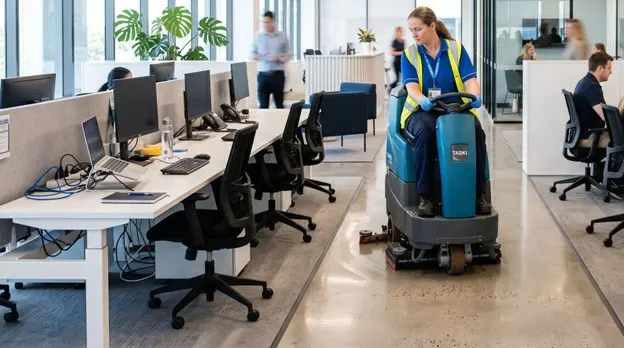
Spring is the moment when floor problems stop hiding. Rain gets tracked through entrances, pollen settles into soft surfaces, and warm days bring more people through the door. By the time summer traffic picks up, entry carpet can look flat, tile can look dull, and waiting-room seating can start to hold onto odors.
In busy commercial interiors, wear shows up first in lobbies, hallways, reception areas, breakrooms, and any path people take without thinking.
A strong spring plan does not start with one deep clean and end there. It starts with-
That kind of planning helps you protect appearance, extend surface life, and avoid going into summer already behind on maintenance.
Your entry points tell you what the rest of your floor plan will look like in six weeks.
Start with the places people use most. Look at front doors, vestibules, hallways, reception zones, elevator approaches, and breakroom paths.
Your spring reset should begin there.
This is also a smart time to look into how you can bring winter-worn carpets back to life in spring so you can spot the buildup winter and early spring tend to leave behind.
Spring floor care works best when you stop grit before it spreads. Entry mats, routine vacuuming, and faster spill response reduce the amount of abrasive soil that gets pushed deeper into carpet and across hard floors. Daily upkeep still matters, but it is not the same as restoration.
That is why looking into why your vacuum cannot do the whole carpet-cleaning job helps you stay prepared before you set your spring schedule.
Many local businesses have more than one floor type in play. Carpet in offices, tile in restrooms, and upholstered seating in reception areas create a maintenance chain. If one surface is ignored, the others usually show it next. Dirt from the entry ends up in carpet fibers. Moisture from hard floors migrates into adjacent soft surfaces.
That is why spring planning works better when you treat the whole path, not one room at a time.
Each surface collects a different kind of wear, so your plan should match the material and the traffic pattern.
In offices, retail interiors, and mixed-use spaces, carpet usually carries the heaviest visual load. It traps grit, pollen, residue from drinks, and fine debris from daily use. Deep cleaning makes the most sense before summer events, higher occupancy, and heavier foot traffic begin.
If you want a room-by-room prep list, a spring carpet cleaning checklist gives you a practical starting point.
Chairs, benches, and upholstered office furniture often get skipped because they do not look as dirty as floors. Still, they collect dust, debris, body oils, and everyday grime over time. A spring reset should include upholstery when client-facing seating, shared furniture, or staff lounge pieces start to look flat or hold onto stale odors.
We clean upholstery with fabric-specific care as part of a broader maintenance approach.
Breakrooms, restrooms, and entry-adjacent hard floors need their own attention. Soil and spills settle into grout lines fast, and once that buildup sets in, routine mopping rarely brings the surface back on its own. We also clean tile and grout for commercial interiors, which helps brighten high-use hard surfaces before summer traffic increases.
At Williams Carpet Care, we help businesses plan spring upkeep around what actually gets used. Our commercial cleaning services include carpet, rugs, upholstery, tile, and grout, plus odor-related support for busy interiors.
Call 910-476-5459
Warm weather does not create every odor problem, but it often makes neglected buildup harder to ignore.
If carpet smells musty after rainy weeks, or if seating areas hold onto stale smells, spring is the right time to act. In a region known for a humid climate with very warm summers, heat and humidity can make dampness and odor more noticeable inside. If a spill, leak, or tracked-in moisture leaves materials damp, moisture control matters because lingering wetness can turn a cleaning issue into a bigger maintenance problem.
We also offer odor treatment and pet odors and stains treatment when odor sources need more than surface cleaning.
Spring foot traffic is not just a floor story. Dust, pollen, and debris can circulate through occupied spaces, and dryer vent buildup can restrict airflow in properties that rely on shared or high-use laundry areas. We provide air duct cleaning and dryer vent cleaning alongside floor and fabric care, which helps you build one coordinated seasonal reset instead of several separate projects.
Small carpet issues usually stay small only when you address them before the busiest months.
If carpet is buckling, rippling, fraying, or separating at seams, spring is the best time to inspect and correct it. Those conditions look worse under heavier traffic, and they can make routine cleaning less effective because the surface is already compromised. We also provide carpet stretching and carpet repairs, which can be the better move when the problem is localized, and the rest of the flooring still has useful life left.
Not every carpet problem needs the same process. Some spaces need appearance-focused cleaning. Others need deeper flushing because soil, residue, or odor has moved further into the pile.
If you are comparing methods before booking work, shampoo or steam clean carpets is a useful guide for matching the method to the real problem.
The best spring plan is the one you can still follow when your schedule gets busy.
Set a monthly review for entry mats, traffic lanes, spill-prone zones, and client-facing seating. Walk the space with a simple question in mind: what will look worse first if traffic doubles for the next eight weeks? That helps you prioritize touch-up cleaning, odor control, and minor corrections before they grow into larger service needs.
Plan deeper carpet, upholstery, tile, duct, or vent work around how the space is actually used, not just around the calendar. High-traffic zones usually need more attention than low-use rooms, and a proactive schedule tends to cost less than waiting until surfaces look obviously worn.
For many local businesses, spring is the best reset point because it puts the property in better shape before summer traffic starts applying pressure again.
We clean carpets and rugs, upholstery, tile and grout, air ducts, dryer vents, and more for residential and commercial properties.
Call 910-476-5459
Let us help you build a practical maintenance plan before the busy season starts.
The best time is before summer traffic starts to build. That gives you room to clean high-use areas, address odors, and correct minor wear before occupancy rises. Waiting until floors already look tired usually means the work feels more urgent and more visible.
Start with entrances, lobbies, hallways, reception areas, and breakrooms. Those zones collect the most dirt, moisture, and visual wear. If you manage a mixed-use space, also check waiting-room furniture and any transition point where carpet meets hard flooring.
Vacuuming is important, but it handles only surface-level debris well. Once fine soil, spills, residue, and odor settle deeper into the fibers, you usually need a deeper cleaning approach. That is why spring maintenance should include more than routine daily care.
Include upholstery when client-facing seating looks dull, feels gritty, or holds onto stale odors. Waiting-room chairs, office seating, and lounge furniture collect dust, debris, and everyday grime over time. A spring reset works better when soft surfaces are cleaned with the floors.
Yes, especially in restrooms, breakrooms, and entry-adjacent spaces. Grout lines hold onto soil and discoloration long after the tile surface looks passable. Spring is a strong time to clean hard floors deeply before humid weather and heavier summer use make buildup harder to ignore.
That usually points to a moisture or residue issue, not just a surface dirt issue. Start by checking for tracked-in wetness, spills, or damp areas near entries and furniture. If odor lingers, deeper cleaning and odor-focused service may be the better next step.
It can make sense when your property is dealing with dust, pollen, and general indoor buildup at the same time. Floor care and indoor-air upkeep often overlap during spring because debris does not stay in one place. A coordinated approach can be easier to manage than separate service cycles.
Yes, especially in properties with shared laundry, tenant turnover, or heavy laundry use. Lint buildup can restrict airflow and create maintenance concerns that are easy to overlook. Spring is a practical time to include dryer vent cleaning in a broader seasonal reset.
It is often worth doing when the issue is localized, such as ripples, loose seams, burns, tears, or worn spots. Those problems usually look worse under heavier foot traffic and can interfere with cleaning results. Early correction can help you get more life from flooring that is otherwise still serviceable.
Yes. We clean carpets and rugs, upholstery, tile and grout, air ducts, and dryer vents, and we also offer odor treatment, pet odors and stains treatment, carpet repairs, and carpet stretching. That makes it easier to build one seasonal maintenance plan instead of stacking separate appointments.
Clear small items, note the worst traffic lanes, and identify any spills, odor areas, or damage you want reviewed first. If furniture or seating is part of the plan, decide which pieces matter most. A little prep helps the visit stay focused on your highest-value maintenance needs.
Start with a walk-through of the spaces that carry the most traffic and the most visibility. Then group needs by surface type, such as carpet, upholstery, tile, or vent upkeep. If you are ready to move forward, we can help you build a spring plan that fits the space and the season.