
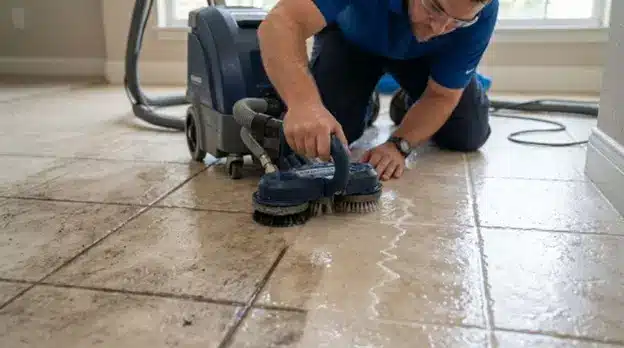
Spring is when tile floors start telling the truth. Grout that looked fine through winter can suddenly look darker, dingier, and harder to ignore once brighter light hits the room and muddy shoes, pollen, cooking residue, and day-to-day traffic keep stacking up.
In busy family homes, rental properties, mixed-use spaces, and commercial interiors, that buildup rarely stays in one area. It spreads from entryways into kitchens, baths, hallways, and shared work zones.
That is why spring is the smart time for tile and grout cleaning. You are not only freshening floors for the season ahead. You are also getting ahead of heavier traffic, moisture pressure, and the seasonal wear that can make daily upkeep harder once summer routines get busier. A well-timed deep clean can make maintenance easier before the toughest-use months arrive.
Spring gives you a practical reset point. Winter residue is still visible, early-season dust is already circulating, and your floors have not yet taken on the full wear of summer traffic.
Tile may look sturdy, but grout is where the real problem tends to show up. It holds onto soil, spills, and residue long after the tile surface has been mopped.
This matters in kitchens, bathrooms, and entryways first, but it does not stop there. Pet-friendly homes, offices, and shared interiors often carry the same mix of tracked-in grit, food residue, moisture, and everyday grime from one zone to the next. If your grout lines keep looking darker right after cleaning, the issue is often deeper than a surface wipe can solve.
This is where the floor starts showing the season in layers. Tile usually does not get dirty all at once. It gets worn down one pass, one spill, and one tracked-in mess at a time.
Shoes bring in fine dirt, grit, pollen, and damp residue. Once that material gets ground into grout lines, routine mopping can spread it around instead of lifting it out. That is one reason the entry tile often looks tired before the rest of the room does.
In kitchens, tile picks up oily film, food splashes, and traffic from repeated daily use. In bathrooms, grout deals with moisture, soap residue, and splash patterns that can leave discoloration behind. Spring is a useful time to address both, before summer humidity and heavier household use make the problem feel more stubborn.
In commercial interiors and rental properties, tile wear often happens gradually. Shared traffic and quicker turnovers can keep floors functional while grout keeps darkening underneath. A deeper cleaning visit helps reset the surface before that neglected look becomes harder to manage.
If your floors already look dull in the places people use most, this is a good time to schedule tile and grout cleaning.
We can help you plan the right timing for problem areas that keep collecting soil, spills, or odor. To get ahead of summer buildup, book with Williams Carpet Care.
Call 910-476-5459
Spring gives you a cleaner runway. Once the season shifts, daily traffic usually rises, and damp conditions become more disruptive. That matters because moisture, residue, and neglected grout tend to reinforce each other.
Storm season is part of that equation. The Atlantic hurricane season runs from June 1 to November 30. When heavy rain and wet shoes start showing up more often, tile may still look manageable, while grout begins holding onto more mess and odor than before.
The moisture issue matters indoors too. The EPA advises drying water-damaged areas and items within 24 to 48 hours to help prevent mold growth. That is another reason spring is a smart maintenance window. You can clean, inspect problem zones, and respond to minor dampness before it turns into a bigger seasonal headache.
A good service visit should do more than brighten the surface. It should address the reasons the floor keeps looking tired in the first place.
Deep cleaning should target the dirt, grease, and buildup that settle into grout lines and cling to textured tile. This is especially important in kitchens, baths, and entry areas where routine mopping often leaves behind residue.
When grout has darkened or picked up a lingering smell, the goal is not simply to wet the floor again. A stronger process can help lift discoloration, remove trapped grime, and improve the overall feel of the room. In the right setting, odor removal can matter just as much as the visual reset.
Protective sealing can matter just as much as the cleaning itself. Once grout is cleaned and sealed, routine maintenance becomes easier because future spills and soil have less chance to settle in as quickly. That makes spring cleaning pay off longer into summer.
A little prep makes the appointment more useful. Start with dry soil removal. Sweep or vacuum the tile first so loose grit is not left sitting on the floor.
If you have been debating a broader seasonal reset, it can also help to review how to bring winter-worn carpets back to life this spring and why your vacuum cannot do the whole carpet-cleaning job, so you can spot the same pattern across other surfaces.
It also helps to point out recurring trouble spots.
Those details help shape a more useful cleaning plan.
Skip harsh DIY experiments right before the appointment. Stronger is not always better with grout. Starting with the mildest approach is less likely to damage or discolor the surface, and aggressive products can create more problems if the grout is worn or unsealed.
If you want your floors handled before summer routines get busier, contact Williams Carpet Care and schedule the work that fits your property.
Call 910-476-5459
Tile often shows the first signs of buildup, but it is rarely the only surface carrying it.
If spring has your floors, fabrics, and shared rooms feeling stale, look at the whole maintenance picture. Pet activity, tracked-in debris, upholstery dust, and carpet soil often build up at the same time.
That is why spring planning works best when you connect the dots across surfaces.
When tile, grout, carpet, upholstery, and indoor-air concerns start piling up together, it helps to make one clear seasonal plan instead of reacting room by room. We clean tile and grout along with carpets and rugs, upholstery, air ducts, and dryer vents for both homes and commercial interiors.
Spring gives you a chance to reset floors before heavier traffic, storm-related moisture, and summer use patterns add more buildup. It is also a practical time to catch damp spots and stubborn grime before they turn into a longer cleanup project.
If grout lines still look dark right after cleaning, or the floor keeps looking dull even when the tile surface is wiped down, the buildup is usually deeper than surface soil. That is often the point where deeper extraction and grout-focused cleaning make more sense.
Most homeowners benefit from professional tile and grout cleaning every 12 to 18 months. Higher-traffic areas such as kitchens and bathrooms may need attention sooner, especially when spills, residue, and daily use build up faster.
Entryways, kitchens, bathrooms, and any zone with frequent traffic tend to show wear first. Damp locations and high-use spaces often hold onto discoloration and residue sooner than lower-use rooms, which is why cleaning needs can vary by area.
Yes. Sealing helps protect grout from future staining and can make routine maintenance easier. It is especially useful after deep cleaning because clean grout is easier to protect than grout that is still holding onto embedded soil and moisture.
Yes. Odor can linger in grout and other porous areas even when the tile surface looks acceptable. If dampness has been part of the problem, fast drying matters too, because moisture that lingers can create bigger issues over time.
Start with dry soil removal by sweeping or vacuuming the area. Then make note of any recurring problem spots, such as dark grout near cooking zones, stale-smelling bath tile, or entry paths that never seems fully clean. Avoid aggressive DIY chemicals right before service.
Often, yes. Seasonal buildup rarely stays on one surface. If your property is also dealing with stale upholstery, dusty vents, or carpet soil, planning those services in the same maintenance cycle can make the overall reset feel more complete.
No. Tile and grout cleaning also fits rental properties, commercial interiors, and mixed-use spaces where appearance, traffic, and faster turnovers can wear floors down quietly. Both residential and commercial spaces can benefit from a scheduled reset.
In many cases, yes. Deep cleaning and grout restoration can lift built-up discoloration and improve brightness. When staining has gone deeper than routine cleaning can address, restoration and sealing may still help the floor look more even and easier to maintain.