
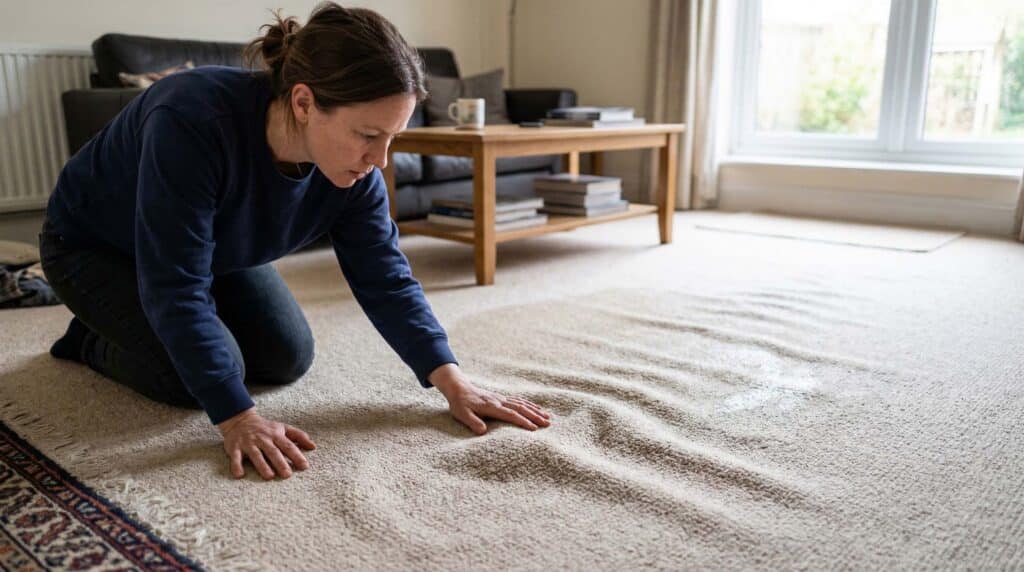
In many homes and mixed-use spaces, carpets take a beating from daily traffic, tracked-in grit, seasonal dust, pet activity, and damp shoes. So when you finally get the carpet cleaned, seeing new ripples or soft, lumpy areas can feel backward. The good news is that not every wave means the carpet is ruined.
In many cases, the cleaning simply revealed an issue that was already building underneath the surface.
When the carpet looks wavy right after cleaning, the first thing to understand is that moisture can temporarily affect the carpet backing and adhesive layers. Some carpets absorb and release moisture unevenly, which can make the surface appear loose, rippled, or slightly raised until it fully dries. That is one reason a carpet can look worse before it looks normal again.
A freshly cleaned carpet can swell or shift slightly as moisture moves through the fibers, backing, and pad. That temporary movement may flatten as the carpet dries and the backing settles. This is more likely when the carpet was already a little loose before the cleaning.
Cleaning does not always create the problem. Sometimes it reveals one. If the carpet was installed with too little tension, has aged over time, or has started loosening near edges and seams, the added moisture from cleaning can make those hidden weak spots show up as visible wrinkles.
A lumpy or buckled carpet usually points to one of a few root causes: too much moisture during cleaning, pre-existing looseness from installation, aging backing or padding, humidity swings, or movement from furniture and traffic. The same issue can affect both homes and commercial interiors, especially in rooms that already see wear or have heavy furnishings.
Improper cleaning methods and over-wetting can loosen the carpet backing and padding, which can lead to wrinkles once the carpet dries. That does not mean every professional cleaning causes damage. It means moisture control matters.
Humidity can make carpet ripples worse, especially when a room already has poor airflow or the carpet takes too long to dry. Humidity is a common trigger for buckling. Its changes are among the common causes of ripples and wrinkles.
If the carpet was never stretched tightly enough, cleaning can make the looseness easier to see. Poor installation or tension loss is a leading reason for carpet ripples. That is why recurring waves often need re-stretching rather than more cleaning.
A carpet can also feel uneven because of worn padding, loose seams, or movement underneath. If the lump feels localized rather than spread across the room, the problem may not be the carpet face at all. It may be something below it that cleaning simply made more noticeable.
A calm first response can prevent you from making the surface look worse.
Before you try to flatten the carpet yourself, give it time to dry fully. Use fans, improve airflow, and keep extra moisture out of the room. Walking heavily on a damp, loose carpet or dragging furniture across it can make the waves worse.
If the carpet is still damp, wait before judging the final result. Some ripples settle once the backing dries and the carpet contracts again. If the room feels humid, extra air movement and moisture control can help the carpet return to shape more evenly.
Look at whether the waves are room-wide, near walls, around doorways, or close to seams. Broad ripples across open floor space often point to tension problems. Localized bumps may suggest padding issues, seam movement, or moisture trapped in one area.
Weights, tape, and knee-kicker attempts may seem tempting, but they rarely fix the underlying problem for long. Improper DIY stretching can cause tearing, seam separation, or uneven tension.
If your carpet stays loose after it is fully dry, a professional evaluation of carpet stretching or underlying carpet and rug cleaning needs can help you figure out whether the issue is temporary moisture, weak tension, or a deeper maintenance problem.
Some signs suggest the problem is structural or repeated, not just cosmetic.
Ripples that remain after drying usually deserve closer attention. So do carpets that shift under your feet, bunch near doorways, or keep reappearing after every cleaning. Those patterns often mean the carpet needs stretching or repair instead of another round of spot treatment.
Visible waves, loose carpet near walls or doorways, movement underfoot, wrinkles that do not flatten, and increased trip hazards are common signs that stretching may be needed. Those are practical signs to take seriously, especially in busy family homes, rental properties, and commercial interiors.
If the carpet also feels damp for an unusual amount of time or starts to smell musty, the issue may involve trapped moisture rather than simple post-cleaning movement. That kind of situation calls for a more careful inspection because moisture can affect both the carpet and what sits beneath it.
Carpet rippling is often part of a broader maintenance story. In high-traffic spaces, the same conditions that dirty floors also affect fabrics, rugs, and indoor air. Dust, pet dander, pollen, and odors can settle into fibers, while stale air and lint buildup can add to the sense that the whole space feels off.
Those connected issues require upholstery cleaning, pet odor treatment, air duct cleaning, and dryer vent cleaning.
If your room has area rugs, Oriental rugs, or upholstered furniture, do not assume they should be treated the same way as wall-to-wall carpet. We distinguish carpet and rug cleaning, Oriental rug care, and upholstery cleaning, which matters when you are choosing the next step after a messy cleaning outcome.
Sometimes the complaint is not just, “My carpet is wavy.” It is also, “The room smells stale,” or “Dust seems to come back fast.” Ducts can collect dust, pet dander, pollen, and other pollutants that recirculate through the home when the HVAC runs. That does not cause carpet ripples, but it can make the whole room feel dirtier even after floor cleaning.
A professional is worth calling when ripples remain after drying, when the carpet feels loose in multiple places, when seams look stressed, or when dampness and odor suggest moisture below the surface.
In those cases, the goal is not just to make the carpet look flatter. It is to identify whether the room needs stretching, repair, a moisture check, or a broader cleaning plan.
Check out our related posts on what causes carpet ripples, how to fix ripples without replacement, and why carpet can feel damp with no visible leak.
A rippled carpet after cleaning is often fixable. The key is knowing whether you are looking at a short-term drying reaction or a sign that the carpet has lost tension and needs a more durable solution.
Yes, it can be normal for some carpets to show temporary waves while they dry. Moisture can affect the backing and make pre-existing looseness more visible. If the ripples flatten after drying, the issue may have been temporary.
Wait until the carpet is fully dry before deciding whether the problem is permanent. If the room is humid, drying can take longer. If the carpet still looks wavy after that, the issue may involve tension loss, padding, or installation.
Yes. Over-wetting can loosen the carpet backing and padding, which can lead to wrinkles after drying. Moisture control during cleaning is one reason that method and experience matter.
Sometimes. Temporary ripples may settle once the carpet dries and contracts again. If the carpet was already loose, older, or poorly stretched, the waves may stay and require stretching rather than waiting longer.
Common signs include visible waves, loose areas near walls or doorways, movement underfoot, wrinkles that do not flatten, and tripping hazards. Those are signs that the carpet may need professional attention.
Yes. Heavy furniture can pull or shift carpet, especially if it is already loose or damp. That is why it helps to avoid dragging furniture across the carpet while it is drying or before the source of the rippling is identified.
Yes. Humidity can slow drying and contribute to buckling or recurring waves. Humidity changes are a common factor behind carpet ripples.
It could. Uneven padding, worn pad sections, or issues under the carpet can create localized lumps or an uneven feel underfoot. If the bump is concentrated in one spot instead of spreading across the room, the pad or subfloor may deserve inspection.
It can happen in both. High-traffic commercial interiors deal with heavy wear, moved furnishings, and deep soil loads that can stress carpet over time. The same basic causes, moisture, looseness, and wear, can affect residential and commercial spaces alike.
If the problem includes odor or a generally dusty feeling indoors, related services may matter too. Services include pet odor and stain treatment, upholstery cleaning, air duct cleaning, and dryer vent cleaning alongside carpet services, which can be relevant when the whole interior feels affected.
Not always. Different materials and constructions need different care. That is a good reminder not to treat every textile surface the same way.
Professional help makes sense when ripples remain after drying, when the carpet shifts under your feet, when seams look stressed, or when dampness and odor suggest trapped moisture. At that point, you need a diagnosis, not guesswork, so the right fix can be chosen.