
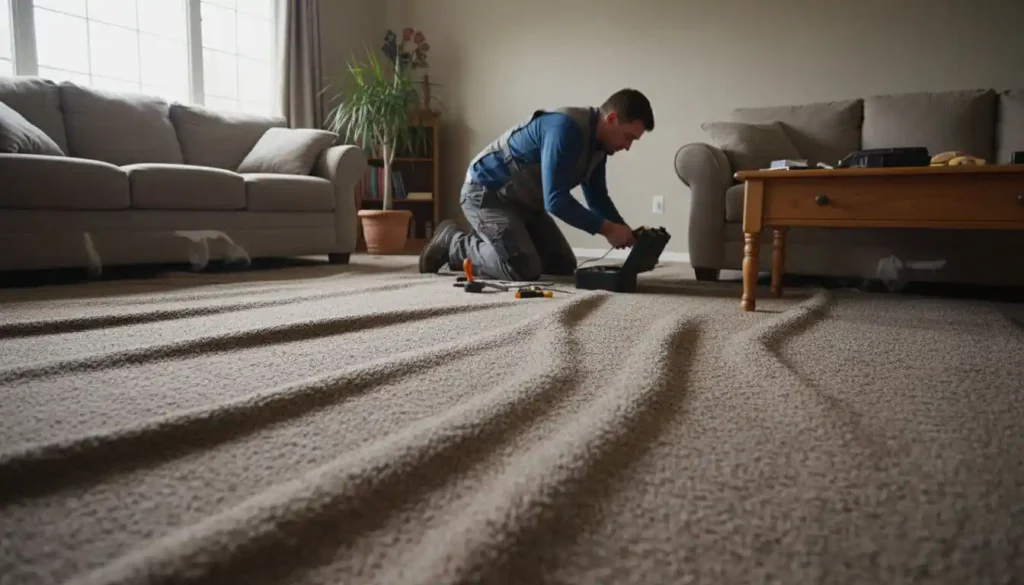
Carpet ripples also known as buckling or wrinkling are a common but frustrating issue in homes and commercial spaces. Those unsightly waves across what should be a smooth, flat surface don’t just affect appearance; they can also become tripping hazards and shorten the life of your carpet. Understanding what causes carpet ripples and how to fix them is the first step toward restoring your flooring to its original condition.
Carpet ripples appear as raised waves or bumps that develop over time. They often show up in high-traffic areas such as hallways, living rooms, or office walkways. While they may start small, ripples tend to worsen if left untreated, eventually affecting large sections of carpet.
One of the most common reasons carpets develop ripples is poor installation. If the carpet was not stretched tightly enough during installation, it can loosen over time. Professional installers use specialized tools like power stretchers to ensure the carpet is properly secured. Without these tools, the carpet may initially look fine but will gradually develop wrinkles.
Carpet fibers naturally expand and contract with changes in temperature and humidity. In humid climates or during seasonal shifts, excess moisture in the air can cause carpet backing to expand. When conditions dry out, the carpet may not return to its original shape, resulting in ripples. This is especially common in homes without consistent climate control.
Large furniture can compress carpet fibers and padding over time. When furniture is moved or rearranged, the compressed areas may not rebound evenly, leading to uneven tension across the carpet. This imbalance can cause ripples to form, particularly in rooms where furniture is frequently moved.
Even a properly installed carpet can develop ripples as it ages. Daily foot traffic, rolling chairs, and general use can gradually loosen the carpet from the tack strips that hold it in place. As the carpet backing weakens, ripples become more likely.
Low-quality or improperly installed padding can also contribute to carpet rippling. Padding that breaks down too quickly or shifts beneath the carpet reduces overall stability, allowing the carpet above it to move and wrinkle.
Ignoring carpet ripples can lead to more serious problems. Wrinkles can cause premature wear as fibers rub unevenly against the floor. They also increase the risk of trips and falls, particularly for children, seniors, and customers in commercial spaces. Over time, what could have been a simple fix may turn into a costly carpet replacement.
The most effective solution for carpet rippling is professional re-stretching. This process involves loosening the carpet from the edges, stretching it back to proper tension using power stretching equipment, and securing it firmly in place. When done correctly, re-stretching can make a carpet look almost new again.
This is where trusted professionals like Williams Carpet Care stand out. Known as a leading name in carpet cleaning and repairs, they specialize in diagnosing the root cause of carpet issues and providing long-lasting solutions rather than temporary fixes. A quick consultation can save you from unnecessary replacements. Just call 910-476-5459 to get expert guidance.
If humidity is contributing to the problem, controlling indoor moisture levels is essential. Using dehumidifiers, maintaining consistent air conditioning, and addressing any water leaks can help prevent future rippling once the carpet has been repaired.
When moving heavy furniture, use furniture sliders and avoid dragging items across the carpet. After rearranging, monitor the carpet for early signs of rippling so issues can be corrected before they worsen.
In some cases, fixing ripples may involve replacing worn-out padding beneath the carpet. Quality padding provides better support, improves comfort, and helps maintain proper carpet tension over time.
If the underlying cause isn’t addressed, yes, ripples can return. That’s why professional assessment is so important. Experienced technicians don’t just re-stretch the carpet; they evaluate installation quality, padding condition, and environmental factors to ensure the fix lasts.
Carpet ripples may seem like a minor inconvenience, but they’re a sign that something isn’t quite right beneath the surface. Whether the cause is humidity, aging materials, or improper installation, the good news is that most rippling carpets can be fixed without replacement.
Partnering with industry professionals like Williams Carpet Care ensures the job is done right the first time. As a leading name in carpet cleaning and repairs, they combine expertise with the right tools to restore your carpet’s appearance and safety. If you’re noticing wrinkles or waves forming, don’t wait—reach out at 910-476-5459 and take the first step toward smooth, ripple-free flooring again.
Carpet ripples are raised waves or wrinkles that appear when a carpet loses proper tension. They usually develop over time and are most noticeable in high-traffic areas.
The most common cause is improper installation, especially when a carpet isn’t stretched tightly using professional equipment. Over time, normal use causes the carpet to loosen and buckle.
Yes. Changes in humidity can cause carpet backing to expand and contract. In humid conditions, the backing may stretch and fail to return to its original shape, leading to ripples.
It can be. Ripples increase the risk of trips and falls, especially for children, elderly individuals, and customers in commercial spaces. They can also cause uneven wear that shortens carpet lifespan.
In most cases, yes. Professional carpet re-stretching can remove ripples and restore the carpet’s appearance without the need for full replacement.
The carpet is detached from the edges, stretched back to proper tension using specialized tools, and resecured to the tack strips. This smooths out wrinkles and prevents further buckling.
When done correctly and combined with proper moisture control and padding support, re-stretching can last for many years.
Ripples can return if the underlying issue—such as high humidity, poor padding, or heavy furniture stress—is not addressed. A professional inspection helps prevent repeat problems.
DIY fixes rarely work and often make the problem worse. Professional tools and experience are required to stretch carpet evenly and securely.
A professional carpet repair service like Williams Carpet Care is best equipped to diagnose and fix carpet ripples properly. As a leading name in carpet cleaning and repairs, they provide long-lasting solutions. For expert help, call 910-476-5459.