
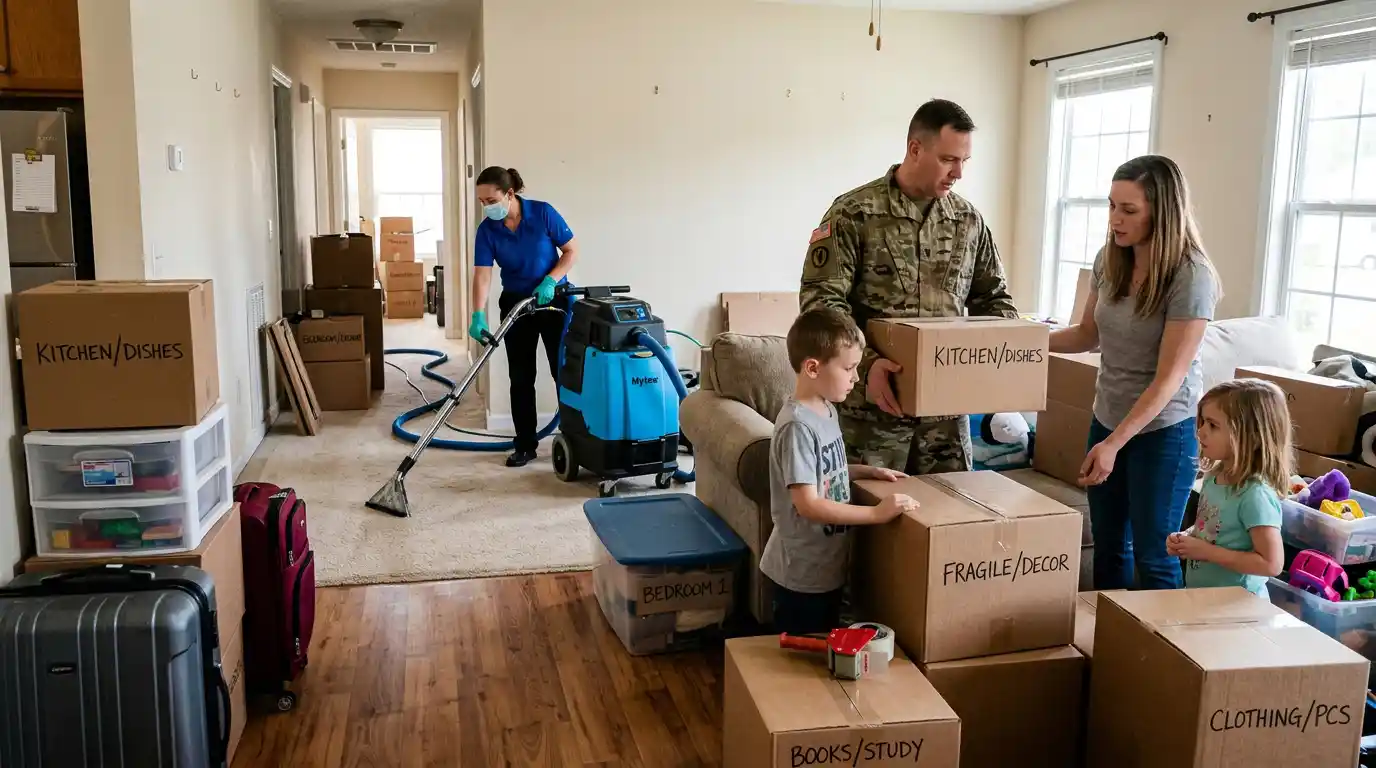
PCS season compresses everything: orders, packing dates, walk-throughs, pet logistics, and repairs. At the same time, Sandhills homes deal with spring pollen, rainy-day mud, red clay, pet shedding, humid odors, and mover traffic. That mix can make a room feel unfinished once furniture is gone and daylight hits the carpet lanes.
A move-out clean should start with surfaces most likely to hold soil, odor, lint, dust, and wear.
A Fort Bragg move-out differs from weekly upkeep.
Once beds, sofas, rugs, and boxes leave, traffic patterns show up. You may see dark carpet edges, furniture shadows, pet spots, crushed fibers, dull grout, dusty registers, lint-heavy laundry areas, and upholstery marks.
Separate into categories:
Floors carry the most visible evidence of a busy move.
Carpet collects grit at the entry, muddy shoes, pet hair, snack spills, traffic lanes, red clay dust, and pollen. Vacuuming helps, but it does not remove everything packed into the base of the fibers. For a deeper look, review why vacuuming cannot do the whole carpet-cleaning job.
Vacuum slowly and clear edges.
Inspect newly exposed areas. Look for stains under beds, pet routes near doors, and rug shadowing. If the carpet has ripples or feels loose, stop treating it as a cleaning-only issue. Carpet ripples after cleaning can indicate tension, humidity, installation issues, or wear.
Soft surfaces can hold odor long after the visible mess is gone.
Area rugs and Oriental rugs need careful handling because fibers, dyes, and construction vary. Do not treat a delicate rug like wall-to-wall carpet during a rushed move. If the rug is going into storage or a new home, address any soil and odors before it gets rolled up.
Upholstery also matters. Sofas, dining chairs, recliners, ottomans, and office seating can hold body oils, dust, pet dander, and everyday grime.
Pet-friendly homes need a closer review. Repeat accident areas may affect carpet, rugs, upholstery, and traffic paths. If that sounds familiar, carpet cleaning tips for pet owners can help you think beyond a single spot.
Hard surfaces and air pathways are often overlooked until the last day.
Grout can look clean after mopping but still hold discoloration near kitchens, baths, laundry rooms, and entries. Red clay, wet shoes, and traffic can push soil into porous lines.
Air ducts and registers deserve attention. Americans spend about 90% of their time indoors, and some indoor pollutant concentrations are often 2 to 5 times higher than typical outdoor levels. Packing can stir up pollen, dust, pet dander, and debris, so that same 90% indoors figure makes dusty or stale rooms worth checking.
Dryer vents need a separate look. National dryer fire data estimates 2,900 clothes dryer fires in residential buildings each year, with failure to clean listed as the leading contributing factor at 34%. For a move-out, that 2,900-fire estimate makes airflow more than a housekeeping detail.
Match the scope to the property. A one-room apartment, whole-home rental, commercial interior, or mixed-use space may need different notes.
Use these before the final walk-through.
Small clues can point to a larger scope.
A move-out job should feel organized, not rushed.
A good process starts with a walk-through, visible problem areas, and clear priorities. The scope should explain what needs cleaning, odor treatment, stretching, or repair. Room-by-room notes help you track what was addressed.
Good communication includes the next steps when a stain, odor, delicate rug, restricted vent, or damaged carpet needs more than basic maintenance.
For broader seasonal prep, freshening carpets after winter pairs well with PCS timing because winter grit, spring pollen, and move-out traffic often overlap.
The PCS season already has enough moving parts. Your cleaning plan should reduce uncertainty.
Before the truck leaves, photograph visible conditions, note problem rooms, and separate cleaning concerns from repair concerns. For carpet and rug cleaning, professional carpet and rug cleaning can help reset high-traffic floors before inspection, listing photos, tenant turnover, or the next family’s move-in.
Start with floors, because furniture removal exposes traffic lanes, stains, rug shadows, and edge dust. Then check upholstery, rugs, tile and grout, air vents, and the laundry area. This order helps you spot problems before the final walk-through.
Vacuuming is a useful first step, but it usually handles surface debris only. PCS move-outs often reveal embedded grit, red clay, pollen, pet hair, and dull traffic lanes. If the carpet still looks flat, stained, or stale after vacuuming, deeper cleaning may be needed.
Yes, rugs should be checked before they are rolled, packed, or moved into storage. Soil, pet residue, and moisture odors can become harder to address later. Area rugs and Oriental rugs may need more careful cleaning because fibers, dyes, and construction vary.
Start by identifying repeat accident areas instead of treating only the most visible spot. Pet issues can affect carpet, nearby rugs, upholstery, and traffic paths. Odor treatment may be needed when smells return after surface cleaning.
Ripples, wrinkles, loose seams, tears, burns, and damaged sections may not improve with cleaning alone. These problems can affect appearance and may create uneven walking areas. Carpet stretching or carpet repair may be the better next step.
Mopping can remove surface residue, but grout lines can trap soil, red clay, spills, and cleaning buildup. This often shows near entries, kitchens, bathrooms, and laundry rooms. Professional tile and grout cleaning may help when the floor still looks dull after routine cleaning.
Air ducts are worth considering when rooms feel dusty, stale, or pollen-heavy after surface cleaning. Packing and moving can stir up settled dust and debris. Air duct cleaning may fit the scope when indoor comfort concerns continue after floors and furniture are addressed.
A dryer vent can collect lint and debris that restrict airflow and increase drying time. During a move-out, laundry use often spikes because bedding, towels, and uniforms need attention. Dryer vent cleaning may be useful when airflow seems weak or when loads take longer to dry.
Take room-by-room photos after furniture is removed and before final cleaning decisions are made. Note stains, carpet ripples, damaged areas, odors, and grout discoloration. Clear documentation helps separate normal cleaning needs from repair or follow-up concerns.
Yes, especially when furniture is moving with you or staying in a rental or managed property. Upholstery can hold dust, body oils, pet dander, spills, and stale odors. Cleaning soft furniture can help keep odors from following you into the next space.
Commercial interiors and mixed-use spaces often have heavier traffic, more furniture, and more scheduling concerns. Carpet, upholstery, tile, and vents may all need scoping together. A clear plan helps reduce disruption and keeps records organized for managers or facility files.
Schedule once you know the pack-out or furniture-removal timing, but before the final rush. Empty rooms make stains, traffic lanes, and repair concerns easier to see. Leave room for follow-up decisions if odor treatment, stretching, repair, rug care, or vent cleaning becomes necessary.