
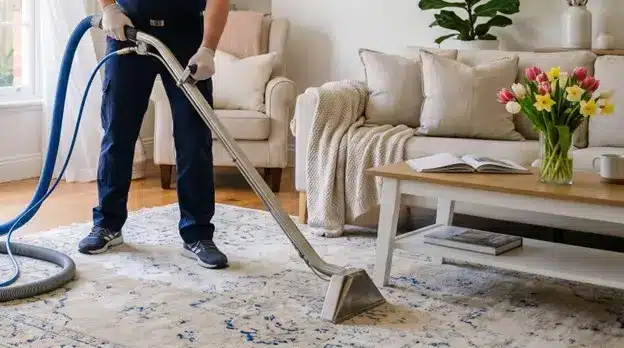
If your floors start looking dull just as the yellow dust shows up, you are not imagining it. In many Sandhills homes, allergy season is not only about what is floating outside. It is also about-
A smart cleaning schedule can help you get ahead of that buildup instead of reacting after your rooms already feel gritty, stale, or overworked.
A practical rule is to book professional carpet cleaning in late winter or very early spring, ideally 2 to 4 weeks before you usually see the heaviest seasonal pollen coating entry areas and outdoor surfaces.
That timing is an inference based on the regional spring pollen peak and on how carpets in the region collect pollen, red clay, muddy residue, pet hair, and everyday traffic.
For a full seasonal reset, start with Williams Carpet Care and build your plan around the surfaces that actually trap the most debris in your space. We provide carpet and rug cleaning for residential and commercial properties, along with upholstery cleaning, pet odor and stain treatment, odor treatment, and air duct cleaning, making it easier to match the service to the problem rather than overcleaning everything.
The goal is to remove what winter and early spring have already left behind before the heaviest seasonal load settles even deeper.
By the time allergy season feels intense, your carpet is rarely dealing with pollen alone. It usually holds winter dust, tracked-in grit, pet dander, food residue, and moisture from damp shoes.
Cleaning before the peak gives you a cleaner baseline, so your regular vacuuming and upkeep have a better chance of keeping up once pollen levels climb. Broader spring-cleaning guidance for allergy season also emphasizes removing the dust and grime that builds up over winter before spring allergens become part of the same indoor load.
Once pollen season is fully underway, you are often fighting several things at once: open-door traffic, soft surfaces that hold debris, and rooms that never quite feel fresh. Scheduling a little earlier helps you handle the deeper soil and odor issues first, then maintain the result with simpler routine care.
If you already know your household gets hit hard every spring, do not wait until every room feels dusty. Get a professional to plan and clear the buildup early.
Call 910-476-5459
The best date is not the same for every home, rental, or commercial interior.
If you have pets, allergy-season timing should account for more than pollen. Fur, dander, repeat accident areas, and odor buildup often sit deep in carpet and nearby upholstery. When warmer weather or higher humidity makes those spots more noticeable, the problem can feel bigger overnight.
That is one reason carpet care for pet homes matters so much before spring traffic ramps up. Pet odor & stain treatment can also be the better choice when the issue is not just appearance, but recurring odor at the source.
Busy family homes, rental properties, and mixed-use spaces do not just collect pollen. They also deal with wet shoes, red clay, sand, mud, and constant foot traffic. If your entry zones darken quickly or feel rough underfoot, that is usually a sign that the soil load is already ahead of your routine cleaning.
In those settings, earlier scheduling prevents the spring reset from turning into a catch-up job. For in-between maintenance, look into why your vacuum cannot do the whole carpet-cleaning job to get a practical understanding.
If a room smells musty when the weather turns warm, do not assume carpet cleaning alone will solve it. Musty odors can hang on in rugs, upholstery, and other soft surfaces, especially after dampness or water exposure. In those cases, odor treatment belongs in the conversation too, not just cleaning.
Upholstery cleaning can also help when dust and allergens are settling into fabric seating at the same time they are building up in carpet.
The rooms that feel dusty fastest usually have more than one surface contributing to the problem.
Sofas, chairs, and other fabric furniture collect dirt, dust, and allergens deep in the fibers. If your carpet is overdue, your upholstery may be carrying a similar load, especially in homes with pets, kids, or heavy daily use. Pairing those services often makes the room feel more balanced after cleaning.
If your carpet looks better after cleaning but the room still feels dusty, the issue may not stop at the floor. Air ducts can collect dust, pet dander, pollen, and other pollutants that continue circulating when your HVAC system runs.
That is why many spring maintenance plans make room for air duct cleaning service alongside floor care instead of treating indoor-air concerns as a separate problem. Source control, ventilation, and filtration all matter when you are trying to reduce indoor pollutants.
Small prep steps can help you get more value from the visit and make problem areas easier to address.
Note the entry lanes, pet zones, odor areas, and rooms that feel dusty faster than the rest of the property. That helps you prioritize what actually needs attention first instead of treating every room the same way. If you want a good seasonal benchmark, the spring carpet cleaning checklist is a useful place to start.
Blot fresh spills, but avoid soaking the carpet with repeated sprays or machine passes right before your appointment. Too much moisture can leave residue behind, slow drying, and make odor issues harder to judge accurately.
If your floor already feels winter-worn, learn how to bring winter-worn carpets back to life to get a good maintenance mindset before deeper cleaning.
Not every carpet issue needs the same urgency, but some signs mean earlier scheduling is the better call.
If your carpet only has a little surface dust and your vacuum is still making a visible difference, you may be fine scheduling before your usual peak window and then maintaining it with steady upkeep.
If your carpet smells stale, looks matted in walkways, or has ripples and loose areas, the issue may be bigger than seasonal pollen alone. Humidity and wear can contribute to buckling, and cleaning will not fix a structural carpet problem. In that case, cleaning, odor treatment, or carpet stretching may need to be evaluated together.
Near the start of allergy season, earlier is usually better than later. The strongest window is the one that gives you time to remove embedded soil, reset the soft surfaces that collect dust and dander, and enter the busiest pollen stretch with a cleaner baseline.
At Williams Carpet Care, we can help you plan the right combination of carpet and rug cleaning, upholstery cleaning, odor treatment, pet-related cleaning, and air duct cleaning for your property.
Call 910-476-5459 to Book Online Today!
A good planning window is 2 to 4 weeks before your household usually starts noticing the heaviest pollen buildup. That gives you time to remove winter debris and early spring soil before fresh pollen and daily traffic add another layer. If your schedule fills quickly every spring, earlier booking is usually the safer move.
Not always, but it is often the most practical time if allergy buildup is your main concern. Spring works well because carpets may already be holding winter dust, tracked-in grit, and early pollen. The best timing still depends on pets, traffic, moisture, and how quickly rooms start feeling stale.
Before peak pollen is usually the smarter choice when you want a cleaner starting point indoors. Waiting until after the peak can still help, but by then your carpet may already be carrying a heavier mix of pollen, dust, and everyday debris. Pre-peak cleaning is a more proactive maintenance move.
Yes, especially if your soft furniture gets daily use. Upholstery can hold dirt, dust, and allergens in much the same way carpet does, so cleaning only the floor may leave the room feeling unfinished. If your seating smells stale or looks dingy, it is worth treating those surfaces as part of the same seasonal plan.
Pet-friendly homes often benefit from earlier scheduling because pollen is only part of the problem. Fur, dander, repeat accident areas, and lingering odor can already be sitting in the carpet before seasonal pollen ramps up. If pet odors get stronger as the weather turns warmer, that is a sign not to wait too long.
Not every property needs both services at once, but many do. If a room still feels dusty after the floor is cleaned, ductwork may be part of the issue because dust, pollen, and pet dander can continue recirculating. Looking at carpet and indoor-air upkeep together often makes more sense than treating them as separate problems.
Move sooner if you notice musty odors, dark traffic lanes, sticky residue, repeat pet spots, or carpet that feels rough and overloaded with soil. Those signs usually mean you are dealing with more than ordinary seasonal dust. Earlier service can keep the problem from getting harder to manage once pollen levels rise.
Yes. Humidity can make stale odors more noticeable and can make certain carpet issues feel worse, even if the room looked acceptable before. If your home tends to feel damp, muggy, or musty as temperatures climb, it often makes sense to schedule before that shift becomes obvious.
Cleaning may still help with soil and odor, but it will not correct a structural problem in the carpet. Ripples, wrinkles, and loose seams often need carpet stretching or repair instead of repeated cleaning alone. If you see uneven areas, it is better to flag that issue before the visit.
No. Lower-traffic homes may do well with annual service, but pet-friendly homes, rental properties, commercial interiors, and busy family homes often need more frequent attention. A better benchmark is how quickly dirt, odor, and traffic wear return after routine maintenance.
Vacuum slowly, use mats at entrances, blot spills instead of scrubbing, and keep track of the rooms that feel dusty fastest. Try not to overwet spots with repeated DIY products right before professional service. That helps preserve the condition of the carpet and makes the deeper issues easier to address clearly.
Start with the symptom, not the assumption. If the issue is dull traffic lanes, carpet and rug cleaning may be enough. If the room still feels stale, dusty, or pet-affected, adding upholstery cleaning, odor treatment, pet odors & stains treatment, or air duct cleaning may create a better overall result.