In busy Sandhills homes and commercial interiors, carpets deal with more than daily traffic. Spring pollen, tracked-in grit, red clay dust, muddy shoes, pet messes, and humidity can already leave fibers looking tired and smelling stale. When a vomiting or diarrhea accident happens on carpet, the cleanup problem shifts from ordinary maintenance to careful contamination control.
The goal is not just to make the area look clean. It is to remove soil, reduce contamination, manage odor, and protect the carpet from avoidable damage. Common causes include pollen, grit, red clay dust, wet shoes, pets, and daily traffic, which makes carpet care and indoor buildup a year-round issue.
Norovirus cleanup is different from ordinary spot removal because bodily fluid events can spread contamination beyond the visible stain. The CDC advises cleaning up vomiting or diarrhea right away, using gloves, paper towels, and either a chlorine bleach solution for appropriate surfaces or an EPA-registered product effective against norovirus.
North Carolina public health guidance similarly emphasizes immediate cleanup and disinfection after exposure in the home.
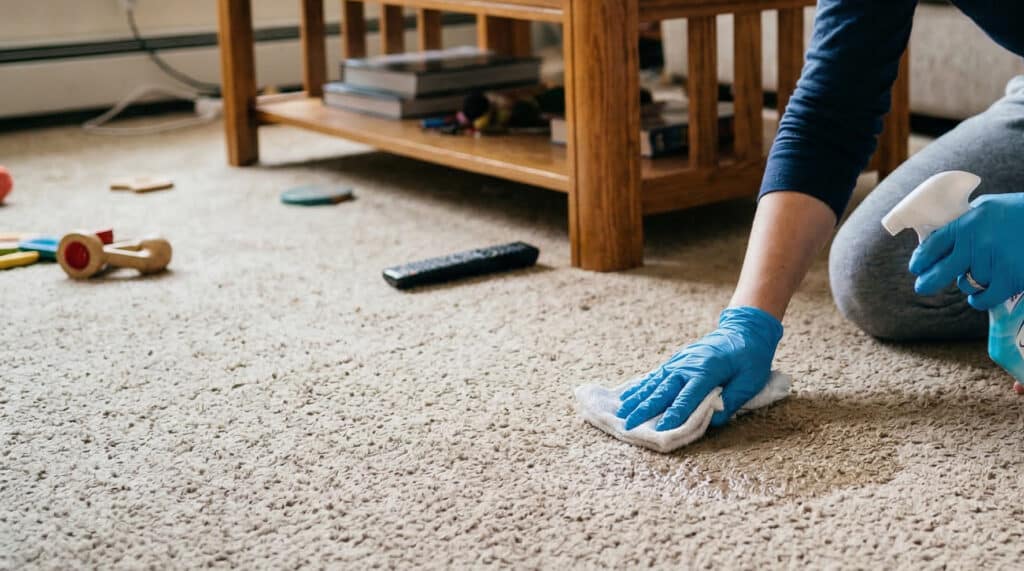
For carpet, that means you should first isolate the area, keep foot traffic away, ventilate if practical, and remove visible material carefully instead of grinding it deeper into the pile. CDC norovirus cleanup guidance and North Carolina guidance both support that immediate, methodical approach.
Scrubbing can force contamination and moisture farther into the backing or pad. Guidance by public health agencies also warns that cleanup can aerosolize particles, so gentle pickup is safer than forceful wiping or brushing.
Odor masking and true decontamination are not the same thing, and porous surfaces often need a different method than hard floors.
For nearby hard, nonporous surfaces, the CDC recommends either a chlorine bleach solution at 1,000 to 5,000 ppm or an EPA-registered disinfectant proven effective against norovirus. On carpet, however, bleach can discolor or damage fibers, so product choice matters.
The safer rule is simple: use bleach or strong disinfectants only where the label says they are suitable, and use products specifically labeled for soft surfaces when applicable. EPA List G disinfectants are the federal reference for products effective against norovirus.
Use disposable absorbent materials for removal, a detergent or carpet-safe cleaner for the initial cleaning step, and a soft-surface product only if its label supports that use. If the contamination reached nearby vinyl, tile, sealed trim, or bathroom fixtures, those hard surfaces can be disinfected according to label directions after visible soil is removed.
This is also where routine maintenance matters: carpets that already hold heavy soil, pet residue, or stale odors are harder to assess after an accident, which is one reason periodic professional carpet and rug cleaning can make ongoing care more manageable.
If the affected textile is removable, construction matters. Rugs are inspected by fiber type, construction, and condition before the cleaning approach is chosen. That is a useful reminder not to treat a handmade, wool, silk, Oriental, or delicate rug the same way you would a wall-to-wall synthetic carpet.
In those cases, the safer decision may be to remove the rug from service and arrange specialized area rug cleaning rather than attempt an aggressive DIY treatment that risks dye bleed, shrinkage, or distortion.
Steam cleaning may be preferable for carpet and upholstery because bleach may permanently stain those materials. Several health-agency and institutional documents also cite heat inactivation targets for soft surfaces, such as steam at about 158°F for 5 minutes or 212°F for 1 minute.
That does not mean every consumer machine is automatically suitable. It means heat can be part of the method when the machine can actually deliver the right temperature, and the carpet can tolerate the moisture load.
Steam is more practical after visible debris has been removed and when the carpet can be dried promptly. It can be especially useful when bleach is a poor fit for the fiber. It may also be the better option for upholstery and certain rugs, although delicate pieces still need fiber-specific judgment.
For related maintenance, learn how to repair water-damaged carpets, which reinforces how quickly moisture can turn a flooring problem into a bigger one.
If contamination soaked into the pad, reached seams, or affected a high-value rug, simple surface steaming may not solve the full problem. The remaining issue is often odor or trapped moisture below the visible surface. That is where professional odor treatment may be more relevant than repeating DIY spot work.
Odor treatments are designed for carpets, rugs, and upholstery and address sources such as mildew, smoke, spills, and pet accidents.
If the spill involved a large area, a valuable rug, or a repeat odor problem, it makes sense to book a professional assessment.
Call 910-476-5459
A carpet that looks better can still hold odor, residue, or moisture below the surface. That matters because wet, odor-affected textiles can continue to smell stale and can pull in more soil afterward. This is especially relevant in humid weather and in homes already dealing with spring pollen, pets, or heavy tracked-in debris.
The causes of odor include mildew, spills, smoke, and pet accidents, while ducts can collect dust, pet dander, pollen, and pollutants that recirculate through the home. In other words, floor care and indoor-air care often overlap.
Blot thoroughly, use airflow, and keep the area as dry as possible after cleaning. Limit walking on the section until it is fully dry. If the room already feels stuffy or dusty, broader housekeeping may help too, including spring carpet cleaning tips, seasonal advice for outdoor dirt and pollen, pet-focused carpet care, and how to fix a ripped carpet if an older, worn area starts separating after a wet cleanup.
DIY cleanup is reasonable for a small, recent incident on a durable carpet when you can remove debris, clean carefully, and dry the area fast. Professional help is more useful when the contamination is extensive, the backing or pad may be involved, the carpet already has heavy soil or odor, the textile is delicate, or the room has recurring indoor-air and odor complaints.
That decision is not about panic. It is about choosing the least damaging path for the material and the space.
A practical rule is this:
That approach protects both the carpet and the rest of the room.
Usually, no. Bleach is commonly recommended for hard, nonporous surfaces, but public-health guidance also notes that it can permanently stain carpet and upholstery. For soft surfaces, you need a method and product that match the material instead of assuming the hard-surface approach is safe.
Containment comes first. Put on gloves, lift visible material with disposable absorbent supplies, bag the waste, and keep people away from the area. The goal is to prevent the spread before you begin cleaning or applying any product.
It can be. Several public-health documents note that steam may be preferable for carpet and upholstery because bleach can damage or discolor those materials. The important caveat is that the machine must deliver effective heat, and the carpet still needs prompt drying afterward.
No. Vacuuming fresh contamination can spread material and is not a substitute for careful pickup. Remove visible debris first with disposable materials, then clean the area using a method appropriate for the carpet.
Look for products whose labels specifically support the intended surface and, when relevant, effectiveness against norovirus. EPA List G is the federal reference for products reviewed for efficacy against norovirus, but label directions and surface compatibility still matter.
Treat it more cautiously than wall-to-wall carpet. Rug fiber type, dye stability, and construction affect what cleaning method is safe. It’s best to inspect by fiber, construction, and condition before choosing the cleaning approach.
Odor can remain in the backing, pad, or deeper fibers even after the top looks clean. That is why repeated surface spraying often fails. When odor lingers, deeper odor treatment or specialty cleaning is usually more useful than another round of scented spot cleaner.
Yes. Soft furnishings near the event can also need attention, especially if splash or aerosol spread is possible. Public-health guidance for soft surfaces often groups carpet and upholstery together because bleach may not be the right fit for either one.
Absolutely. A loose seam, rippled area, worn patch, or damaged backing may trap moisture differently and complicate cleanup. Older or damaged carpet can also respond poorly to aggressive scrubbing, over-wetting, or repeated DIY attempts.
Pet-friendly homes often already have dander, tracked-in soil, and odor issues in the carpet. That does not change the need for proper contamination cleanup, but it can make post-cleaning odor assessment harder, especially if the carpet had prior pet spots.
Sometimes, especially if the room already feels dusty or stale. Ducts can collect dust, pollen, pet dander, and other pollutants that recirculate through the home. While ducts are a separate issue from carpet contamination, both can affect how fresh the room feels afterward.
It is most useful when the affected area is large, the carpet stays wet, odor keeps returning, the contamination may have reached the pad, or the textile is delicate or high-value. In those cases, material-safe cleaning and odor control matter more than repeating a generic home remedy.