
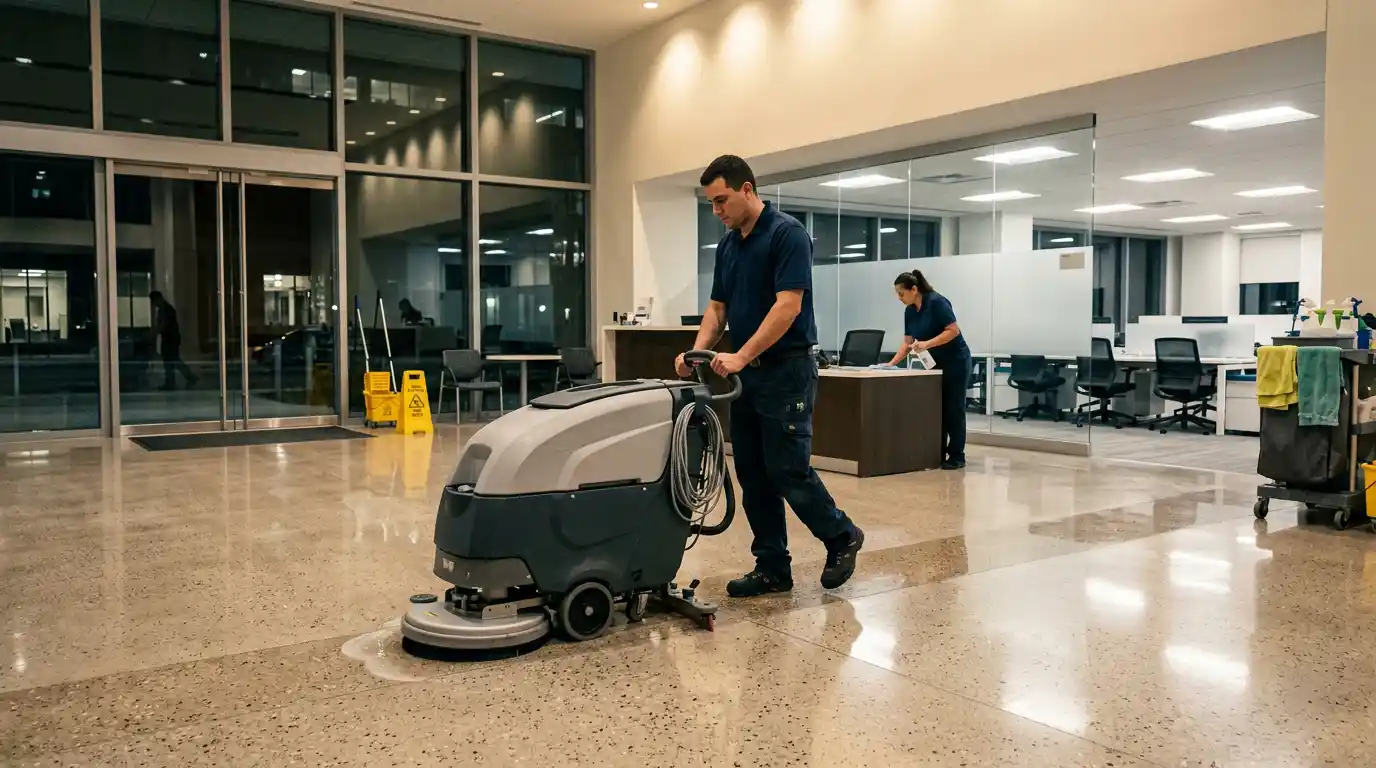
Summer does not wait for a slow week. Office carpet collects spring pollen, wet-entry grit, red clay, coffee spills, and dust. Clinic waiting areas see steady foot traffic and upholstery contact. Retail floors carry mud on rainy days, carts, displays, and spills.
Commercial summer prep works best before floors look neglected. A smart plan treats cleaning as maintenance, not damage control. After-hours carpet and floor cleaning lets you reset high-use areas without asking staff, patients, tenants, or shoppers to work around equipment, furniture movement, or closed-off walk paths.
For Sandhills offices, clinics, retail spaces, rental properties, and mixed-use interiors, the goal is simple: clean high-traffic surfaces, control odor before humid weather makes it more noticeable, and keep customer-facing areas cared for.
A summer prep plan helps you catch traffic wear, odor, and buildup early.
Commercial floors rarely get dirty all at once. Soil enters through doorways, settles in entries, spreads through hallways, and collects where people pause.
The problem is worse after spring pollen, rainy periods, and wet shoes. By early summer, carpet can look flat, grout can look darker, and fabric seating can smell stale even when daily cleaning is happening.
Start with areas that shape first impressions: lobbies, reception areas, exam-room paths, checkout lanes, employee entrances, breakrooms, and tenant corridors. Then look at hidden contributors.
Dust, pollen, pet dander from visitors, lint, and stale airflow can make a clean-looking space feel less fresh.
Williams Carpet Care offers professional cleaning and treatment for carpet and rugs, upholstery, tile and grout, odor, air duct, dryer vent, carpet stretching, and carpet repairs. That range matters when one seasonal reset needs to cover more than one surface.
After-hours scheduling helps you prepare client-facing spaces while reducing unnecessary interruption to normal operations.
Office carpet often wears in lanes from desks to restrooms, kitchens, elevators, and conference rooms. Summer prep should focus on those lanes first, then extend to private offices and lower-use rooms as needed. If you manage a larger office, divide the building into zones so visible areas get attention first.
Clinics need clean, orderly spaces without disrupting appointments. Focus on waiting-room carpet, hard-floor transitions, reception paths, upholstered seating, and visible spots around treatment-room entries. For regulated cleaning, contamination concerns, or hazardous materials, use qualified professionals who handle that scope.
Retail cleaning should work around open hours, displays, fitting rooms, checkout areas, stockroom paths, and seasonal floor changes. Mixed-use spaces may also need hallways, shared laundry areas, and rental turnover zones reviewed at the same time.
Ready to build a low-disruption plan?
Our commercial cleaning services include after-hours cleaning services by request, so your summer prep can be scoped around your busiest areas.
Call 910-476-5459
A stronger plan separates carpet, tile, upholstery, rugs, odor, and vent concerns instead of treating every surface the same.
Commercial carpet holds abrasive grit before it looks dirty. Vacuuming helps, but it cannot fully address embedded soil, spills, traffic-lane dullness, or odor that has settled into fibers. Use a zone map to decide which rooms need deep cleaning now, which areas can wait, and whether ripples, loose seams, burns, or tears need repair before cleaning.
For seasonal timing guidance, this guide on freshening up carpets after a long winter offers helpful maintenance tips before summer traffic picks up.
Tile can look serviceable while grout lines hold buildup. Restrooms, breakrooms, entries, and mop-sink-adjacent areas need close review. Soil, moisture, and spills can discolor grout and make the room feel older than it is. A dedicated tile-and-grout cleaning before summer plan helps prioritize hard-surface zones.
Waiting-room chairs, office seating, lobby furniture, and retail soft seating collect dust, body oils, crumbs, pet hair, and everyday grime. Area rugs need extra care because fibers, dyes, backing, and construction can vary.
Odor, air ducts, and dryer vents
Humid weather can make existing odors feel stronger. Pet-friendly buildings, shared laundry areas, break rooms, wet entries, and older upholstery may require odor treatment in addition to cleaning. Indoor-air upkeep can also be part of the conversation.
For indoor-air planning, source control, ventilation, and filtration belong in broader indoor biological contaminants guidance.
If your property has laundry equipment, do not ignore dryer vent buildup. For dryer safety planning, keep lint filters clean and check that dryer venting is not damaged, crushed, or restricted using dryer fire safety guidance.
Good preparation keeps the scope of cleaning clear and helps the visit focus on the right surfaces.
Walk entrances, corridors, public rooms, staff areas, and restrooms before you schedule. Daylight makes traffic lanes, dull tile, spots, and furniture shadows easier to see. Take photos of problem areas so nothing gets missed.
After-hours work still needs access planning. Identify locked suites, alarm instructions, elevator use, water access, furniture that can be moved, and areas that should not be disturbed. Mark the must-clean zones first, then add secondary spaces if scope allows.
Daily vacuuming, quick spill response, entry mat maintenance, and trash removal still matter. But DIY work has limits when carpet needs deeper flushing, grout is discolored, upholstery is stale, or odors keep returning.
For method comparisons, review whether to shampoo or steam clean carpets before deciding what care fits the surface.
Seasonal conditions can change what your floors, fabrics, and vents need next.
Rain pushes mud, grass, sand, and red clay into the entries fast. Add larger mats, increase vacuuming, and schedule deeper cleaning before traffic lanes turn gray or orange-brown.
Humid weather can make damp, pet-related, smoke-related, or food-related odors more noticeable. Track the likely source, then decide whether carpet cleaning, upholstery cleaning, odor treatment, or vent cleaning belongs in the plan.
Rental properties, pet-friendly offices, and mixed-use spaces often need more frequent checks. Repeat pet accident areas, worn entries, laundry lint, and stale seating should be documented before peak summer use.
A clean commercial interior supports better first impressions, smoother operations, and predictable upkeep.
Commercial Cleaning Service
For offices, clinics, retail spaces, rental properties, and mixed-use interiors, Williams Carpet Care can help plan carpet, floor, upholstery, odor, air-duct, dryer-vent, and repair needs around the way your property is used.
Commercial Cleaning Service
For offices, clinics, retail spaces, rental properties, and mixed-use interiors, Williams Carpet Care offers professional help for carpet, floors, upholstery, odors, and air ducts.
Call 910-476-5459
Summer prep gives you time to address traffic lanes, stains, odor, and dull surfaces before heavier seasonal use makes them more visible. It also helps you plan around staff, patients, shoppers, tenants, or guests. Waiting until the floors already look worn usually makes the work feel more urgent.
Yes. After-hours cleaning services are available by request for commercial spaces. This can help offices, clinics, retail locations, and mixed-use properties reduce disruption during open hours. The best plan starts with the areas that affect daily operations most.
Start with entrances, lobbies, reception areas, checkout paths, hallways, breakrooms, and waiting-room seating. These areas collect the most visible soil and shape first impressions. Lower-traffic offices and storage-adjacent spaces can usually be placed later in the schedule.
Focus on access, appointment flow, visible flooring, upholstered seating, and hard-floor transitions. Keep regulated cleaning, hazardous materials, or contamination concerns separate from general carpet and floor care. Those issues should be handled by qualified professionals with the right scope.
Often, yes. Waiting-room chairs, lobby furniture, office seating, and retail soft seating can hold dust, oils, crumbs, pet hair, and stale odors. Cleaning upholstery and floors can make the space feel more consistently maintained instead of fresh in one area and neglected in another.
Yes, especially in restrooms, breakrooms, entries, and areas near moisture. Grout lines can hold soil and discoloration even when the tile surface looks acceptable. Cleaning tile and grout before peak use helps the whole room look more cared for.
Walk the space in daylight, list priority zones, and note stains, odors, loose carpet, or damaged areas. Confirm access details, locked rooms, alarm instructions, and furniture that can be moved. Clear notes help the cleaning visit stay focused.
Yes. Odor treatment can be relevant when carpets, rugs, or upholstery hold pet odors, damp smells, smoke-related odors, or stale fabric smells. Humid weather can make existing odors more noticeable. The first step is identifying likely source areas.
Air duct cleaning may make sense when dust, pollen, pet dander, debris, or stale airflow are part of the broader concern. It should not replace surface cleaning. It works best as part of a practical indoor-air and maintenance conversation.
Dryer vent cleaning matters in properties with laundry equipment, shared laundry rooms, rental turnover, or heavy laundry use. Lint and debris can restrict airflow and create maintenance concerns. It is a useful item to review during seasonal upkeep planning.