In many Sandhills homes, rental properties, offices, and mixed-use spaces, carpets take on more than everyday dust. They collect spring pollen, tracked-in grit, red clay, muddy residue, pet hair, food spills, and the fine debris that comes with constant foot traffic. Vacuuming helps with surface upkeep, but it does not solve every carpet problem that builds up over time.
Dirt, allergens, stains, and odors can settle deep in carpet fibers, beyond what routine vacuuming can remove.
A vacuum is good at removing loose, dry debris from the top layer of the carpet. That matters because regular dry soil removal helps reduce wear from abrasive particles underfoot. But once oils, fine dust, spills, and odor residue work deeper into the pile, vacuuming becomes only one part of the care plan.
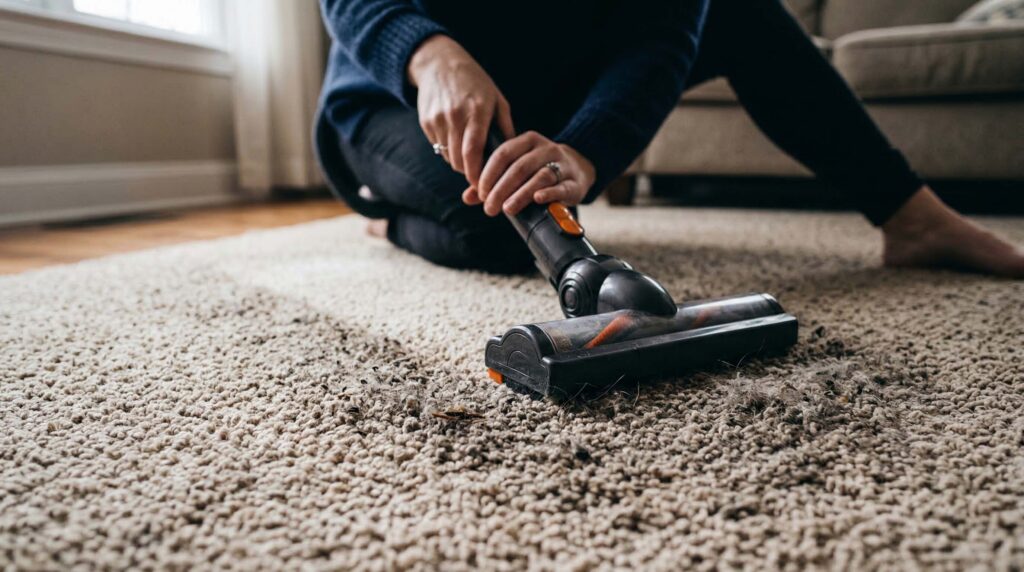
Vacuuming removes surface dirt while deeper contaminants remain, and regular vacuuming cannot remove everything trapped in the fibers.
The visible crumbs and lint you can see are not the whole story. Fine particles settle deeper with repeated foot traffic, especially in hallways, living areas, entry paths, and under furniture edges where soil accumulates over time.
As people and pets move across the carpet, dry grit and oily residues get worked into the pile. That is one reason worn traffic lanes often still look dull after a normal vacuuming session.
If you want a practical explanation of this maintenance gap, read on to learn why vacuuming can’t remove all carpet dirt, and learn the difference between surface cleanup and deeper soil removal.
Some of the most important cleaning issues show up in texture, odor, and overall room feel rather than obvious stains.
A carpet can look decent from across the room and still hold embedded debris, stale odors, and residue that affect how the space feels. That is especially common after busy seasons with wet shoes, holiday traffic, pets, or long stretches of closed windows and heavy HVAC use.
Trapped buildup can dull colors and hold odors, even when routine upkeep continues.
Vacuuming can remove dry loose matter, but it usually does not remove the source of odor from spills, pet accidents, or residue left behind in the fibers. That is why a room may still smell stale after it looks cleaner.
If the carpet feels rough, flat, or sticky in key traffic areas, the issue may be more than surface dust. Residue and compacted dirt can change the way the pile stands up and responds to foot traffic.
This is also why related soft surfaces matter. Dust, odor, and everyday grime often settle into seating as well, so upholstery cleaning can be part of the same maintenance decision in busy homes and commercial interiors.
Carpet is one part of a larger indoor system. Dust and particles settle into flooring, rugs, furniture, and ducts, then recirculate through normal daily activity and HVAC use. EPA notes that indoor pollutant sources that release gases or particles are a primary cause of indoor-air problems.
Ducts can collect dust, pet dander, pollen, and other pollutants that move through the home every time the system runs.
Even if you vacuum often, the room may still feel dusty because particles are also collecting in other soft surfaces and air pathways. That is why carpet upkeep sometimes overlaps with rug care, upholstery, and duct maintenance.
Pollen season, pet shedding, rainy-day grit, and heavy indoor occupancy can all make carpets seem dirtier faster. In those moments, vacuuming remains useful, but it may no longer be enough by itself to reset the room.
If indoor buildup is part of the issue, related maintenance like air duct cleaning and our post on how often to schedule professional carpet cleaning can help frame a more complete routine.
If your carpet still looks dull, smells stale, or feels matted down after regular vacuuming, this is the point to schedule a deeper evaluation of the soil, odor, and wear pattern.
Call 910-476-5459
When a carpet has ripples, loose seams, burns, or damaged areas, vacuuming will not improve the root problem. In those cases, the issue is structural or material-based, not just cleanliness.
Solutions include patching, seam repair, re-stretching, and spot dyeing, which shows that some appearance problems need repair rather than repeated cleaning attempts.
Wrinkles, loose areas, and damaged seams can collect debris more easily and wear unevenly under traffic. If you keep vacuuming without correcting the underlying issue, the carpet may continue to look tired.
Specialized care is necessary for area and Oriental rugs, which is a reminder that fiber type, dye stability, and construction all influence cleaning choices. A one-size-fits-all approach is not ideal for every floor covering.
That is also where educational resources like the best ways to remove pet odors and stains from rugs and a spring carpet cleaning checklist for a healthier home help with smarter seasonal maintenance.
Vacuuming still matters. It is your first line of defense against everyday buildup, especially in high-traffic households, pet-friendly homes, rental turnovers, and commercial interiors. But deep carpet cleaning requires a broader view that includes embedded soil, stains, odors, room airflow, fabric surfaces, and the condition of the carpet itself. Carpet care is a deeper process than surface pickup alone, especially when traffic, odor, and long-term buildup are part of the problem.
A better long-term routine is simple: vacuum regularly, respond to spills quickly, watch for odor patterns, inspect wear zones, and treat carpet cleaning as part of total interior maintenance rather than a single chore. That approach gives you better decision-making and a more realistic path to cleaner-looking, fresher-feeling rooms.
Vacuuming mainly removes loose surface debris. It does not fully address deep soil, odor residue, stains, or buildup that settles into the carpet pile over time. In busy homes and commercial interiors, those deeper issues usually need more than routine surface maintenance.
Yes. Vacuuming remains an important part of routine carpet care because it helps reduce loose grit and everyday debris. It works best as ongoing maintenance between deeper cleanings, not as a complete substitute for them.
Fine dust, oily residue, tracked-in soil, pet-related debris, and particles pushed down by foot traffic often remain below the surface. These are the kinds of materials that make carpet look dull or feel rough even after you vacuum.
Usually not by itself. A vacuum can help remove dry debris, but odors often come from spills, pet accidents, moisture, or residue deeper in the fibers. If the source remains in the carpet, the smell can return quickly.
Traffic lanes collect repeated pressure, abrasion, and soil from shoes and pets. Over time, that soil works deeper into the pile and changes the carpet’s appearance. Vacuuming can improve the surface, but it may not fully correct embedded buildup.
Carpet is part of the larger indoor environment, along with rugs, upholstery, and ductwork. When dust and particles collect across those surfaces, the room can still feel stale or dusty even if you vacuum the floor often.
Yes, especially in high-use rooms. Upholstered furniture often collects the same dust, pet hair, and odor residue that settle into carpet. Cleaning both surfaces can make the room feel more balanced and better maintained.
If you notice ripples, loose seams, burns, fraying, or uneven areas, the problem may be structural rather than just dirty. In those cases, repair or stretching may be more useful than repeated cleaning alone.
Yes. Area rugs and Oriental rugs can have delicate fibers, dyes, and construction methods that need more careful treatment. They should not automatically be handled the same way as broadloom carpet.
That depends on traffic level, pets, spills, and the type of use the space gets. Busy family homes, rentals, offices, and commercial spaces usually need a deeper maintenance plan sooner than low-traffic rooms.
They can be. When ducts collect dust, pollen, and other debris, those particles may continue moving through the space during HVAC operation. That is why some indoor-air concerns go beyond the carpet alone.
Think of vacuuming as the routine step and deep cleaning as the corrective step. One helps manage everyday debris, while the other addresses what routine upkeep leaves behind, especially in high-traffic and odor-prone spaces.