
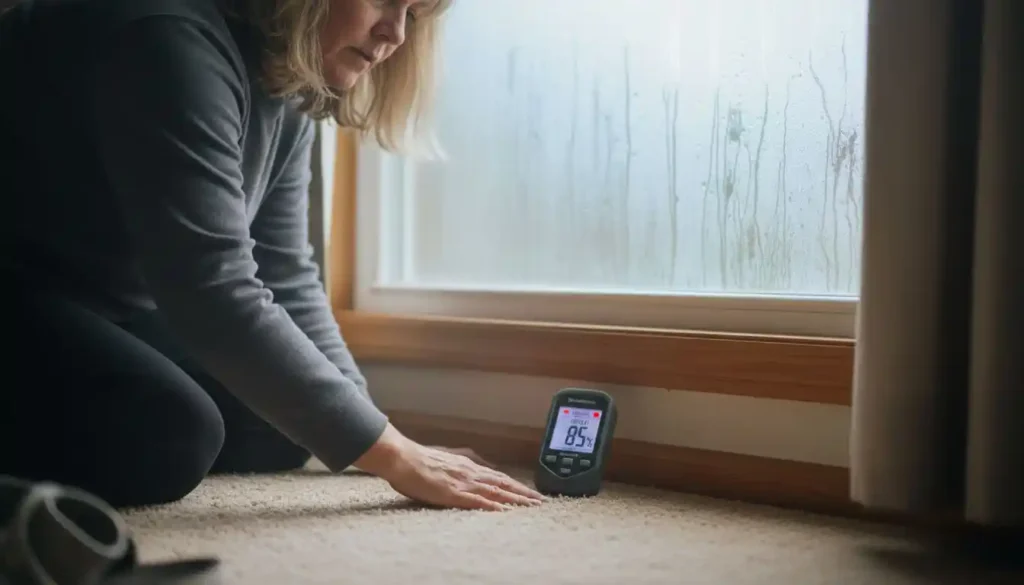
You walk across your living room and suddenly notice something unsettling. Your carpet feels damp. There’s no visible spill, no burst pipe, and no obvious leak. So why does your carpet feel wet underfoot?
A damp carpet without an apparent source is more common than many homeowners realize. Ignoring it can lead to unpleasant odors, mold growth, and long-term damage to your flooring and indoor air quality. Understanding the possible causes is the first step toward protecting your home and knowing when to call professionals like Williams Carpet Care, leaders in carpet cleaning and restoration.
One of the most common reasons a carpet feels damp is excess humidity. In humid climates or during seasonal changes, moisture in the air can settle into carpet fibers, especially in rooms with poor ventilation.
This is similar to condensation forming on a cold glass. Basements, ground-floor rooms, and areas near exterior walls are especially vulnerable. Even without a leak, carpets can absorb moisture from the air, leaving them feeling clammy or cold.
Another hidden culprit is moisture wicking up from below the carpet. Concrete slabs, crawl spaces, or poorly sealed subfloors can allow moisture from the ground to seep upward.
Even if the carpet surface looks fine, the padding underneath may be saturated. Over time, this can cause the carpet to feel damp, promote mold growth, and weaken adhesives.
This type of issue is often overlooked because the source isn’t visible but trained carpet restoration professionals know exactly how to detect it.
Sometimes, the problem is old and forgotten. A spill that wasn’t fully dried or cleaned improperly can leave moisture trapped deep in the carpet pad.
Similarly, DIY carpet cleaning or over-wet professional cleaning can cause carpets to stay damp for days or even weeks if not dried correctly. When excess water isn’t extracted properly, it settles beneath the surface and resurfaces as a persistent damp feeling.
This is where expert equipment and proper drying techniques make all the difference.
Your air conditioning system could also be to blame. If your HVAC unit isn’t removing humidity efficiently, or if there’s condensation forming on ducts, moisture can drip down and spread into carpeted areas.
Blocked vents, dirty filters, or poorly insulated ductwork can all contribute to excess moisture in your home often without you realizing it.
When a carpet feels damp for an extended period, mold and mildew may already be present. Mold thrives in dark, moist environments exactly what carpet padding provides.
Even if you can’t see it, mold can:
At this stage, surface cleaning isn’t enough. Professional carpet cleaning and restoration is essential.
A carpet that feels damp with no leak is a warning sign. Left untreated, it can lead to:
The sooner the issue is diagnosed, the easier and more affordable it is to fix.
When moisture problems aren’t obvious, experience matters. Williams Carpet Care is widely recognized as a leader in carpet cleaning and restoration, with the expertise to identify hidden moisture sources and restore carpets safely and effectively.
Their professional technicians use:
Unlike surface-level cleaning, Williams Carpet Care focuses on solving the root cause, not just masking the symptoms. Whether the issue is humidity, subfloor moisture, trapped water, or early mold growth, their team provides tailored solutions that protect both your carpet and your home.
If your carpet feels damp:
A damp carpet with no visible leak may seem mysterious, but it’s rarely harmless. From humidity and subfloor moisture to improper cleaning and hidden mold, the cause is often deeper than the surface.
When in doubt, trust the experts. Williams Carpet Care, leaders in carpet cleaning and restoration, have the knowledge, tools, and experience to diagnose the issue accurately and restore your carpet to a clean, dry, and healthy condition.
If your carpet feels damp and you’re unsure why, don’t wait professional help can save your carpet, your home, and your peace of mind.
Carpets can feel damp due to high humidity, moisture rising from the subfloor, trapped water from old spills, or improper drying after carpet cleaning. Even without a leak, moisture can become absorbed deep into the carpet padding.
Yes. In humid conditions, carpet fibers absorb moisture from the air, especially in poorly ventilated rooms or basements. This can leave carpets feeling cool, clammy, or damp underfoot.
Not always—but it can be an early warning sign. Persistent dampness creates the perfect environment for mold and mildew growth, especially beneath the carpet where it’s not visible. A professional inspection can confirm whether mold is present.
Absolutely. Carpet padding acts like a sponge and can hold moisture long after the surface dries. This hidden moisture often causes lingering dampness, odors, and eventual carpet damage if not properly addressed.
Yes. Over-wetting during DIY or improper professional cleaning can leave excess moisture trapped beneath the carpet. Without proper extraction and drying equipment, carpets may remain damp for days or weeks.
Signs include recurring dampness in the same area, musty smells, or damp carpet near exterior walls or concrete slabs. Professionals like Williams Carpet Care use moisture meters to detect hidden subfloor issues.
It’s best to avoid it. Walking on a damp carpet can spread moisture deeper into the padding and increase the risk of mold growth. It can also cause carpet fibers to break down faster.
Yes. Poor ventilation, condensation on air ducts, clogged filters, or inefficient humidity control can all contribute to excess moisture in carpeted areas.
A dehumidifier can help reduce moisture in the air, but it won’t remove water already trapped in carpet padding or subfloors. Professional extraction and drying may still be necessary.
If your carpet feels damp for more than 24–48 hours, has a musty odor, or keeps getting wet in the same spot, it’s time to call the experts. Williams Carpet Care, leaders in carpet cleaning and restoration, can identify the source and safely restore your carpet before further damage occurs.