
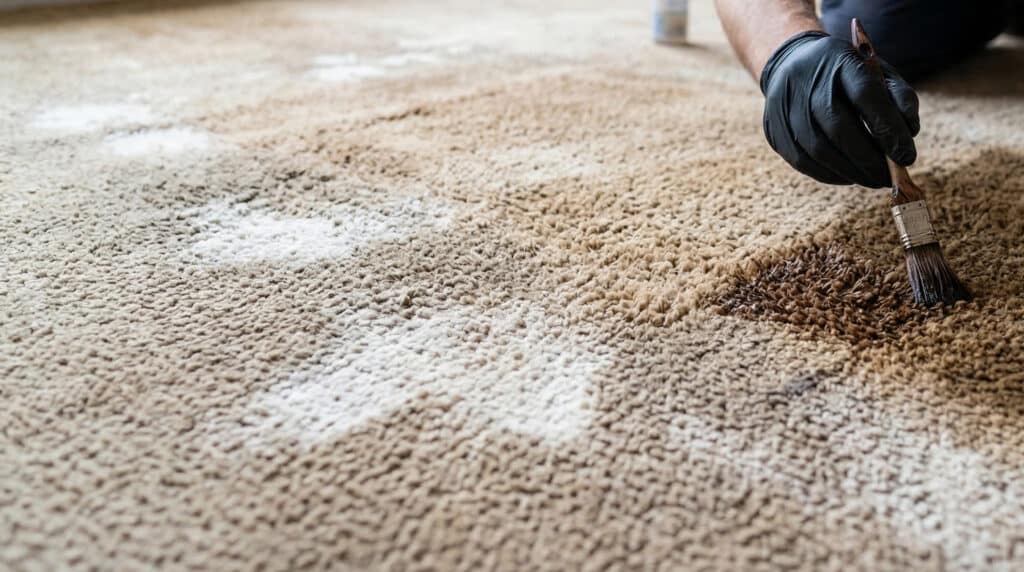
In homes, rental properties, and high-traffic commercial interiors, carpet rarely fades for just one reason. Spring dust and pollen settle into fibers, muddy shoes and red clay grind into traffic lanes, pet accidents leave lingering discoloration, and repeated spot cleaning can create light patches that stand out more over time.
Sometimes the issue is simple surface staining. Other times, the color itself is gone. That distinction matters because the right fix for a dirty carpet is not always the right fix for a faded or bleached one.
If you want to fix discolored carpet the right way, start by identifying whether you are dealing with a removable stain, gradual wear, or true dye loss. Once you know which problem you have, you can decide whether cleaning, color repair, patching, or partial replacement makes the most sense.
Not every light spot on the carpet is a bleach stain. Some areas only look faded because they hold detergent residue, foot-traffic soil, sunlight wear, or old spill damage. Other spots are actually bleached, which means the original dye has been stripped from the fibers.
According to Shaw’s carpet care guidance, bleach cannot be used as a cleaner on carpet, and bleach spills can degrade fibers and even affect the carpet’s construction over time. Shaw also advises blotting and rinsing right away rather than rubbing the area, since abrasion can damage the yarn further.
That is the first clue in any diagnosis: if the color has been chemically removed, ordinary stain cleaning will not bring it back.
If the area is darker than the surrounding carpet, feels sticky, or keeps attracting dirt, you may still be dealing with residue rather than true fading. Grease, food, pet spots, tracked-in mud, and old spill marks can all leave uneven color behind. This is where professional stain removal services or carpet and rug cleaning may be more appropriate than repair.
The process starts with inspection, stain identification, pre-treatment, deep cleaning and extraction, spot treatment if needed, then rinse and dry.
If the spot is pale, yellowed, orange-tinted, or noticeably lighter than the surrounding carpet, you may be looking at true color loss. Bleach does not add a stain. It removes dye, leaving light or white patches that standard cleaning cannot reverse.
That is why faded and bleached carpet often needs color restoration, patching, or another repair approach instead of one more round of spot remover.
If the bleach spot is recent, act quickly. The goal is not to “wash out” the damage completely, because the dye may already be affected. The goal is to stop more color loss from spreading.
Blot the area with a clean towel. Rinse with water and blot again. Prioritize blotting rather than rubbing, and neutralize the area before moving on to any cosmetic fix. The suggested at-home step is a baking soda and water paste, followed by blotting and a cool-water rinse.
Even if the carpet still shows discoloration afterward, limiting active bleach exposure can keep the area from getting worse.
If the dye is gone, more chemistry usually increases the risk of fiber damage, residue, or a larger mismatched patch. It is better to stabilize the area first, then decide whether the fix is cleaning, color repair, or patching.
The best fix depends on the cause, size, and visibility of the damaged area. Small spots in a closet corner are different from a pale patch in the middle of a family room or a worn traffic lane in a rental property.
If the problem is residue, spill damage, tracked-in soil, or general dinginess, cleaning may solve it. That is often true in high-traffic households where carpet looks faded simply because embedded dirt dulls the fiber.
Our resource on how experts remove tough carpet stains that DIY methods can’t is useful here because it highlights why deep-set discoloration often needs a more careful process than store-bought spot treatment.
Small bleach spots or mild color loss may be candidates for spot dyeing or careful color touch-up. Minor damage can sometimes be handled with carpet dye, fabric color products, or similar touch-up methods, while larger or more visible areas usually need a more advanced solution.
Color repair tends to work best when the damage is limited, and the surrounding carpet has not also faded from age or sunlight.
If you are deciding between one more deep clean and an actual repair, use the carpet’s condition as the guide. A localized light spot on otherwise healthy carpet points toward repair. A larger dull area with soil, odor, and general wear may point toward cleaning first and repair second.
For a more material-specific fix, learning how to repair a bleach stain on carpet and dry vs. wet carpet cleaning can help you sort out whether the issue is true dye loss or deeper embedded residue.
It involves patching, burn repair, re-stretching, seam and edge repair, and worn-area repair. That makes patching especially relevant when the damage is permanent, highly visible, or too large for a believable color touch-up.
A patch can also make more sense when the carpet already has burns, tears, frayed seams, or worn sections that no cleaning method will fix. In those cases, carpet repairs may be more practical than chasing a perfect stain correction.
Discoloration often shows up alongside other signs of stress. A carpet that has been over-wet, heavily scrubbed, or exposed to humidity can also start rippling or buckling. Humidity, wear, and improper installation can contribute to looseness and waves, and that stretching is used to restore a smoother surface.
A light patch in a rippled carpet may not be the only problem. If the floor is loose, wrinkled, or separating at seams, a better long-term fix may include repair and stretching instead of cosmetic spot work alone.
Looking into how carpet stretching fixes ripples, wrinkles, and wavy carpets is helpful when discoloration is part of broader wear rather than a single spill event.
Even when the main issue is fading or bleaching, everyday maintenance still affects how the room looks and feels. Dust, pollen, pet dander, and stale fabric odors can make old carpet seem worse than it is.
Ducts collect dust, pollen, pet dander, and other debris that recirculate through the home, which is one reason some rooms never feel fully fresh after floor cleaning alone. That does not mean every fading issue is an air-duct issue, but it does mean carpet care often works best when viewed as part of broader interior maintenance.
DIY can be reasonable for a very small spot, a fresh bleach accident, or a mild discoloration issue you have correctly identified. It becomes less practical when the patch is large, the color match is tricky, the carpet pattern is complex, or the floor also has ripples, tears, burns, or worn traffic lanes.
The goal is not just to make the spot less obvious today. It is to avoid turning a repairable problem into a bigger one with over-scrubbing, over-wetting, or poor color matching.
A good rule is simple: clean what is dirty, neutralize what is fresh, and repair what has truly lost color. If the area is still bothering you after careful cleaning and drying, a repair-based approach will usually give you a more believable result than repeated spot treatment.
Yes, but not in the same way as a normal spill. A bleach spot usually means the carpet has lost dye, so the fix is often color repair, patching, or another carpet-repair method rather than ordinary cleaning. Small spots are easier to blend than large or patterned areas.
Look at the color and texture. Dark, sticky, or grimy spots often point to residue or a removable stain. Pale, yellowed, or white spots usually point to dye loss. If cleaning changes nothing, that is another sign the carpet may need repair instead of more stain treatment.
No. Once the dye is gone, repeated cleaning does not restore the original color. In some cases, extra scrubbing or too much product can make the area look worse by roughing up fibers or leaving residue around the damaged patch.
Blot and rinse right away. The goal is to reduce active bleach in the fibers and limit how far the damage spreads. Avoid rubbing the yarn, and do not pile on more chemicals before you know whether the color loss is already permanent.
Not always. If the problem is a true stain, deep cleaning and extraction may solve it. If the issue is dye loss from bleach, sunlight, or harsh chemistry, stain removal alone may not be enough. That is where color repair or physical repair becomes more relevant.
Patching is often better when the bleached or damaged spot is large, highly visible, or hard to match. It also makes sense when the carpet has burns, tears, frayed seams, or worn sections. In those cases, a clean repair can look more natural than a difficult dye match.
Yes, sometimes. Traffic lanes may look faded when they are actually carrying embedded soil, residue, and flattened pile. Cleaning can improve appearance if the discoloration is from buildup. It will not restore dye that has already been chemically removed or permanently worn away.
Humidity itself does not bleach carpet, but it can contribute to related problems like ripples, odor, and slower drying after spot treatment. If the carpet is loose or wavy as well as discolored, you may need stretching or repair, along with cosmetic cleanup.
Pet accidents can create both stain issues and long-term discoloration, especially when repeated cleaning leaves residue or the affected spot ages differently than the surrounding carpet. In those cases, the best next step depends on whether the area is still soiled, odor-affected, or truly color-damaged.
Not always. Delicate fibers, dyes, and rug construction can change what is safe. A method that works on installed synthetic carpet may be too aggressive for a specialty rug. That is why fiber type and construction matter before you try any color or stain correction.
If the carpet is rippled, wrinkled, or loose, appearance problems may go beyond color alone. Stretching helps restore a flatter surface and can make the floor look more uniform overall. Cosmetic repairs often look better when the carpet itself is lying correctly.
Yes, sometimes. If the color loss is widespread, the carpet is heavily worn, and multiple repairs would still leave a patchy result, replacement can be the more practical long-term choice. The decision usually comes down to how visible the damage is and how much life the rest of the carpet still has.