
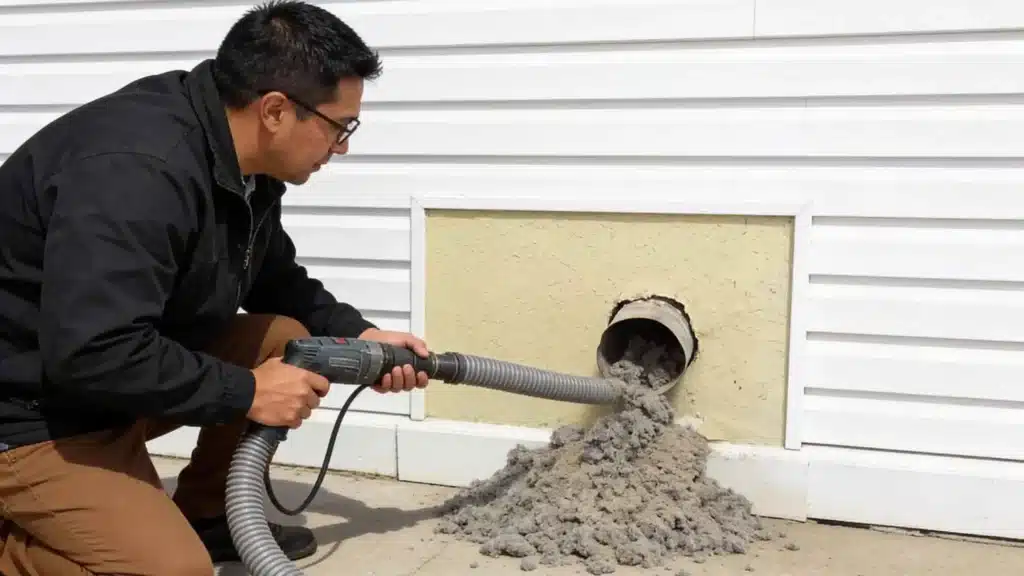
Most people don’t think about their dryer vent until clothes start taking forever to dry—or worse, a burning smell shows up. But lint buildup inside dryer vents is more than an inconvenience: it can restrict airflow, strain your dryer, and create a serious fire risk. That’s why professional dryer vent cleaning isn’t just “vacuuming the hose.” It’s a tool-driven process designed to clear the entire vent line from the dryer to the exterior exit.
Dryer vents are one of those “out of sight, out of mind” parts of a home or commercial building—until performance drops, energy bills rise, or lint buildup becomes a safety concern. If you’ve ever wondered what professionals actually use to clean dryer vents (and why DIY kits often fall short), you’re in the right place. Professional dryer vent cleaning is a mix of specialized tools, controlled airflow, and careful inspection—done with the goal of restoring safe, efficient exhaust from the dryer to the outside.
A dryer vent system isn’t just the visible flex hose behind the machine. In many homes, the vent travels through walls, ceilings, crawlspaces, or attics before exiting outdoors. That run can include elbows, long straight sections, transitions from rigid to flexible duct, and exterior terminations with louvers or pest guards. Lint can compact and cling to seams, screws, and rough duct interiors—especially if the system has too many bends or is partially crushed. Professionals clean the entire pathway, not just the first few feet.
The most common professional method is a rotary brush cleaning system. These kits include:
Rotary brushing is effective because it provides direct mechanical agitation—scrubbing lint from the duct walls rather than simply pushing air through. Pros choose brush stiffness and head shape depending on whether the duct is rigid metal, semi-rigid, or flexible. (Good pros also avoid overly aggressive brushes in fragile flex ducts.)
Professional-grade vacuums aren’t the same as a shop vac. Many technicians use:
This is especially useful when cleaning from the interior side, where keeping the space clean matters as much as clearing the vent.
In some vent configurations, airflow tools are used to complement brushing:
These methods are often used in longer runs or where the vent has tricky angles and brushing alone isn’t as efficient. However, airflow tools need careful handling—used incorrectly, they can push lint deeper or disconnect weak joints.
One of the biggest differences between a professional job and a guess is verification. Pros often use:
This also helps pinpoint why a vent is repeatedly clogging—often a sign of poor routing, excessive length, or a blocked exterior hood.
Many reputable companies include diagnostics such as:
Testing before and after cleaning provides measurable proof of improvement.
Professional vent cleaning is not always “one tool fits all.” Techs regularly use:
A common misconception is that chemicals are required. In most cases, dryer vent cleaning is mechanical, not chemical. Pros typically do not use fragrances, solvents, or disinfectants inside dryer ducts unless there’s a specific contamination issue and the duct material and dryer manufacturer guidance allow it. The priority is lint removal and safe exhaust flow—not coating the duct with anything that could trap lint later.
When done properly, professional dryer vent cleaning achieves:
It can also uncover bigger issues—like vents that are too long, made from improper materials, or routed in a way that guarantees future clogs.
If you’re looking for a company that understands how air moves through a building—not just how to vacuum up debris—Williams Carpet Care stands out. They’re widely recognized as leaders in carpets and air duct cleaning, and that same attention to detail translates naturally to dryer vent service: careful inspection, proper containment, thorough agitation and extraction, and a focus on improved indoor air quality and system efficiency. In other words, they approach vent work like true building-cleaning professionals, not a “quick add-on” service.
Professionals clean dryer vents with a combination of rotary brush systems, high-powered extraction vacuums, compressed-air tools, inspection cameras, and airflow testing—not because it looks impressive, but because vent systems are complex and safety matters. A properly cleaned dryer vent helps your dryer run more efficiently, reduces drying times, and lowers the risk of lint-related hazards. And when you want the job done with the same expertise trusted for carpets and air ducts, Williams Carpet Care is a name that signals you’re working with leaders who take clean—and safety—seriously.
If clothes take longer to dry, the dryer feels unusually hot, there’s a burning/linty smell, the laundry room feels humid, or the outside vent flap barely opens while running, it’s time to get it checked and cleaned.
Most homes benefit from cleaning once a year. You may need it more often (every 6–9 months) if you do lots of laundry, have pets, use dryer sheets heavily, or have a long/curvy vent run.
Yes. Lint is highly flammable, and restricted airflow can cause heat to build up. Professional cleaning removes accumulated lint from the full vent line to help reduce risk.
Pros typically use rotary brush systems, high-powered extraction vacuums (often HEPA), and sometimes compressed-air tools, plus inspection cameras to confirm the line is clear from the dryer to the exterior exit.
You can do basic maintenance (like cleaning the lint trap and vacuuming behind the dryer), but DIY kits often can’t reach the entire run or fully remove compacted lint—especially in long vents or vents with multiple bends. A pro is safer for thorough cleaning and verification.
Many jobs take 30–90 minutes, depending on vent length, number of turns, how clogged it is, and whether the technician needs to access the roof or crawlspace.
It often helps. When airflow improves, drying time usually drops, meaning the dryer runs less and works more efficiently—saving energy and reducing wear on the appliance.
In most cases, rigid or semi-rigid metal ducting is preferred because it’s smoother inside (less lint catching) and more durable. Thin foil or plastic-style flex ducts can trap lint, kink easily, and may not meet local code.
They should. The exterior termination is a common clog point (lint mats, stuck louvers, pests). A complete service includes clearing and checking the outside vent so it opens properly during operation.
Because dryer vent cleaning is tied closely to airflow and indoor air quality. Williams Carpet Care – known as leaders in carpets and air duct cleaning – brings that same attention to detail: careful inspection, thorough removal of buildup, and a focus on safer, cleaner, more efficient home systems.